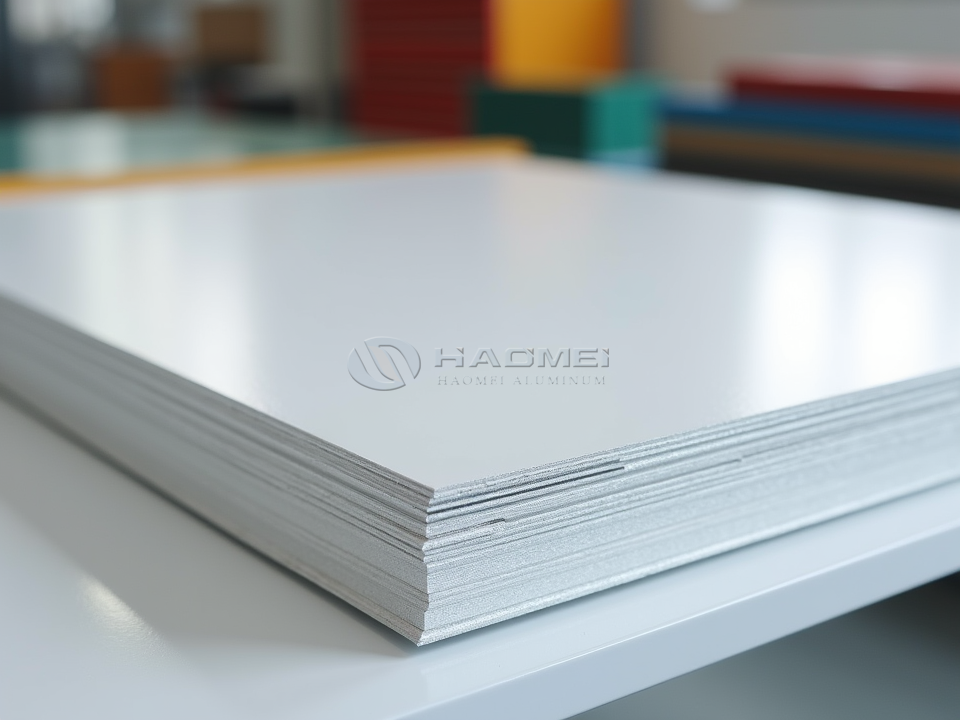
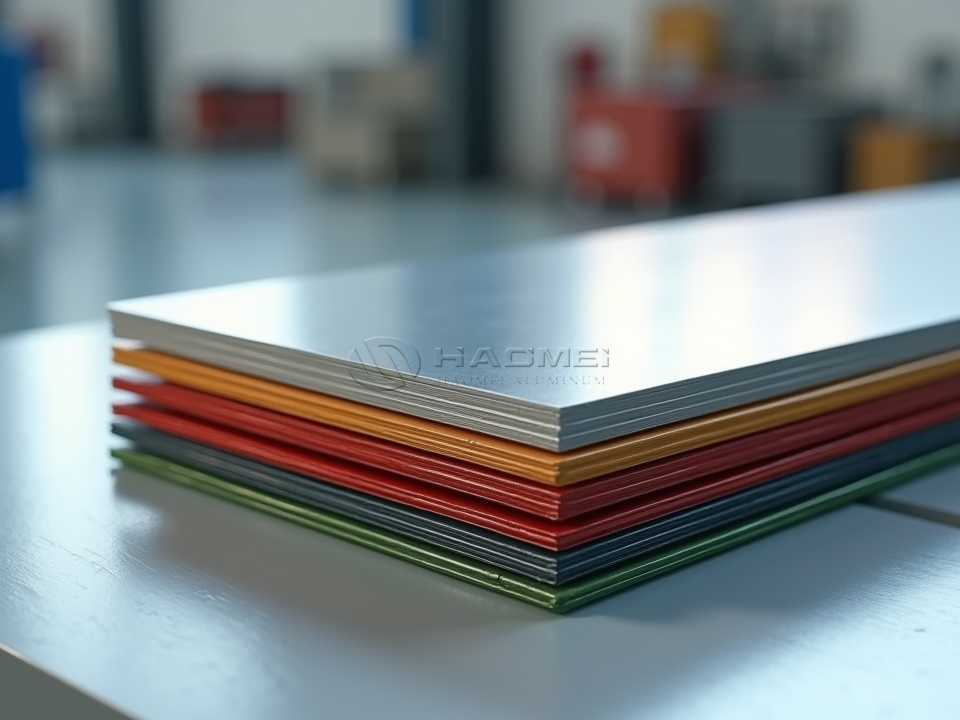
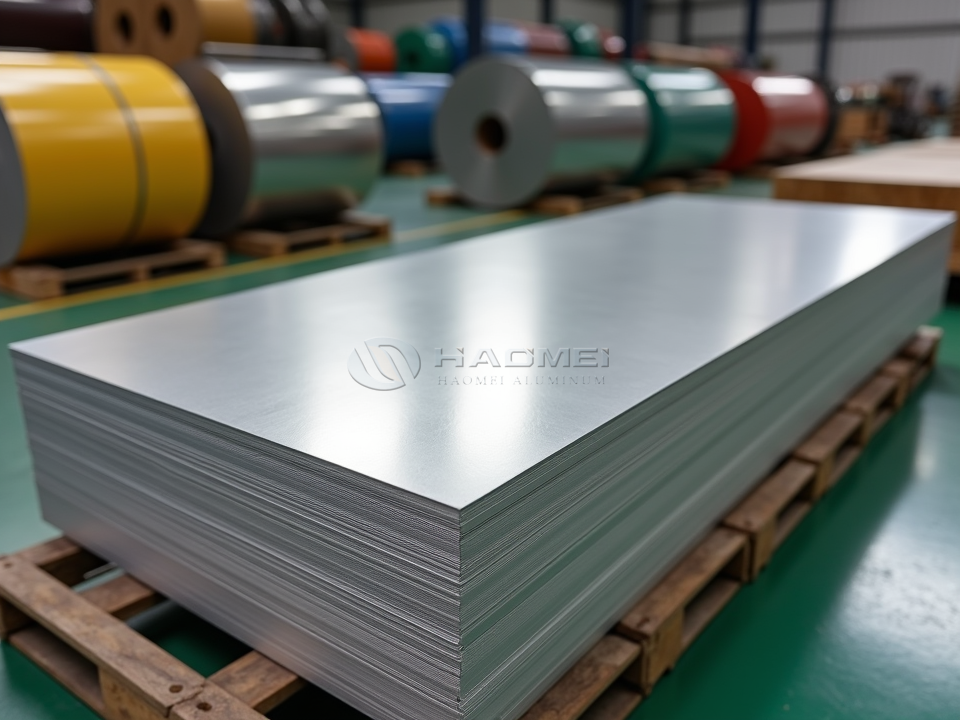
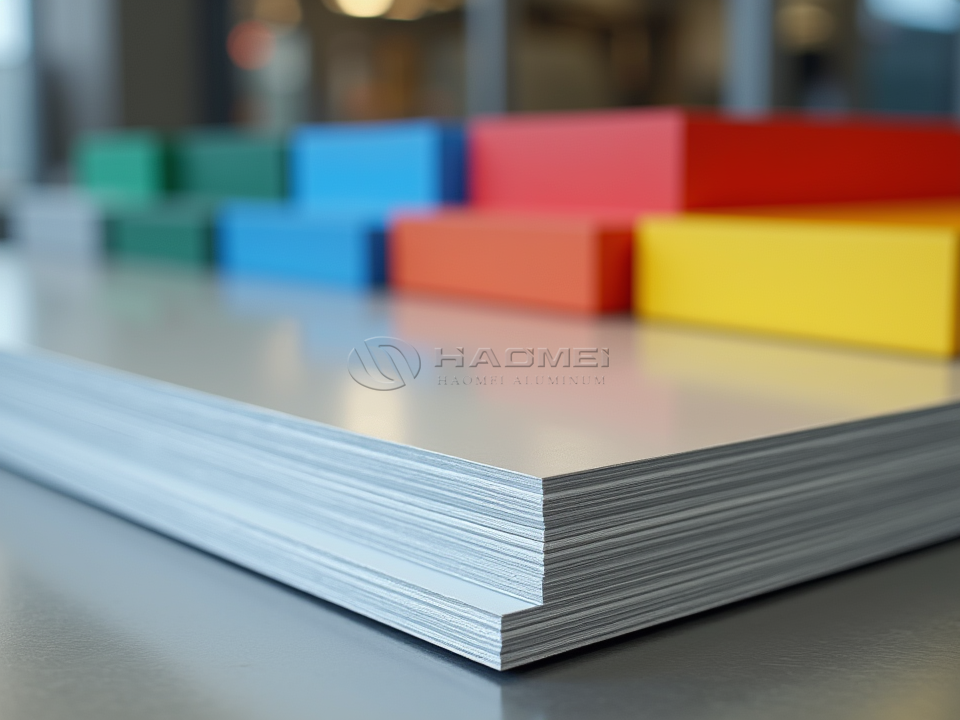
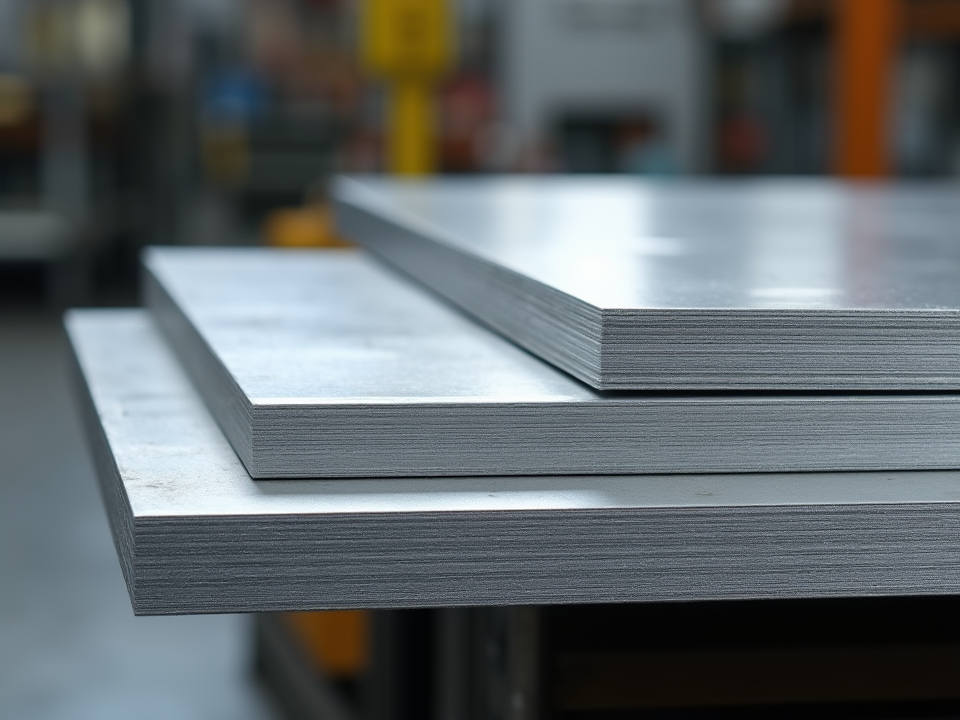
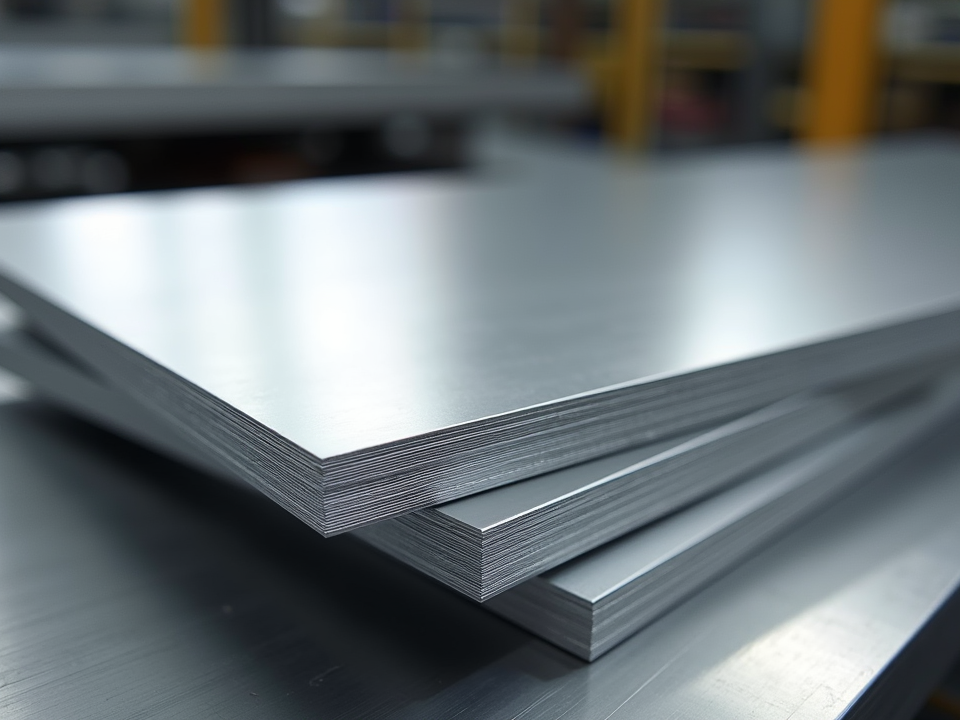
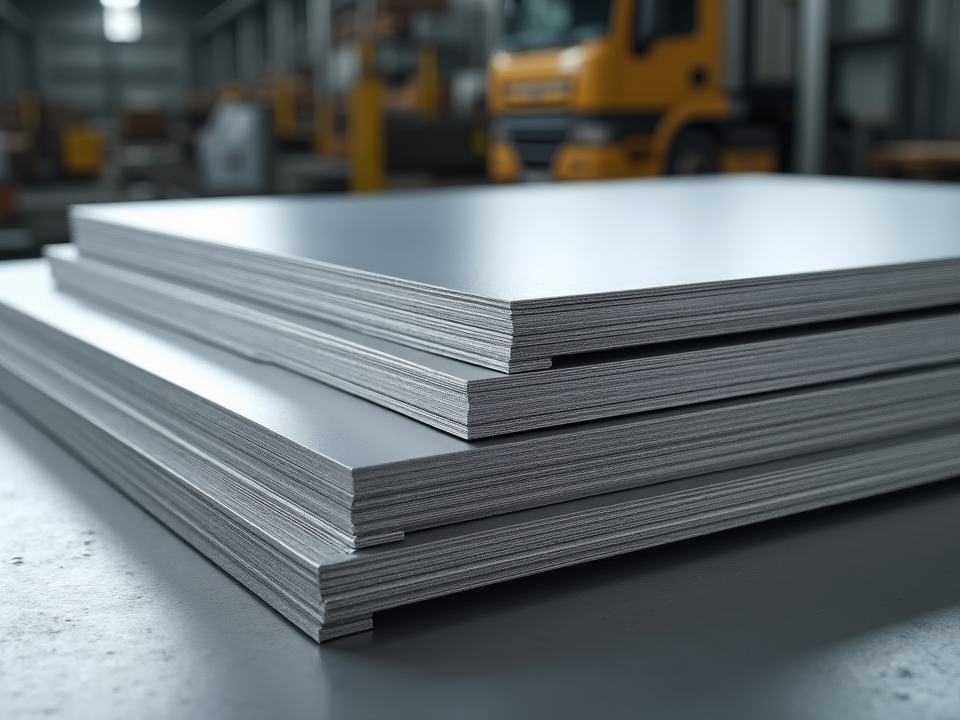
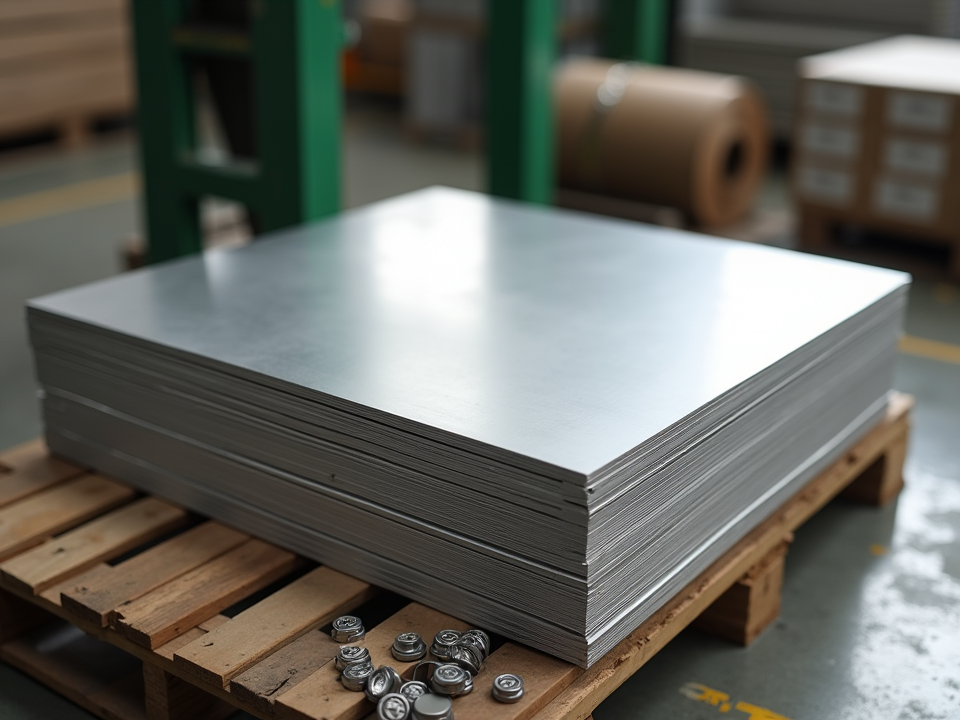
Wholesale Prepainted Aluminum Plates
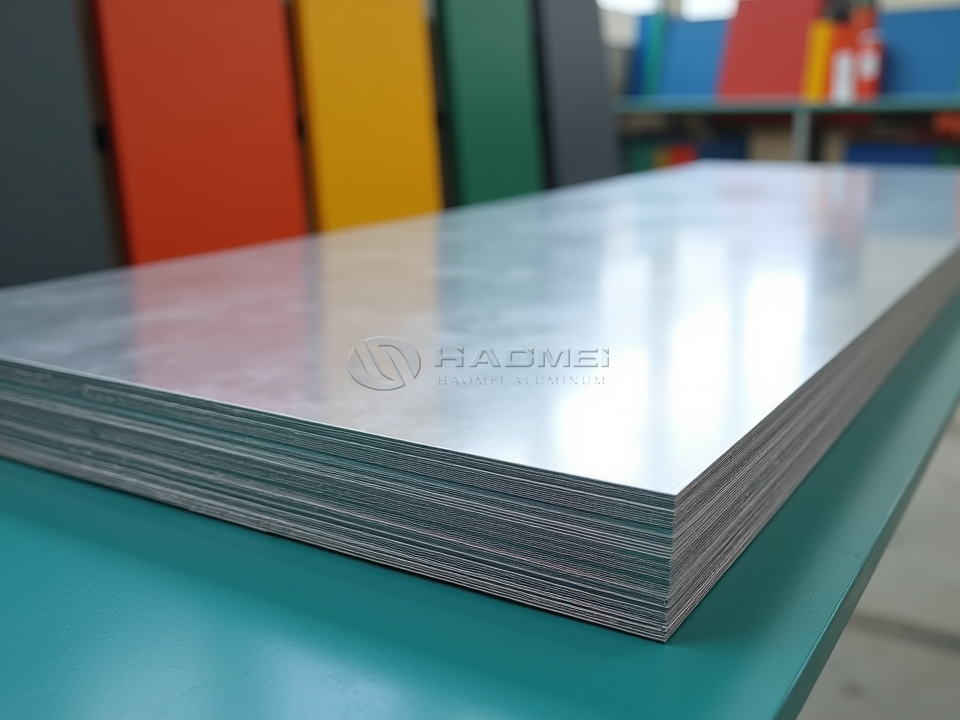
Wholesale prepainted aluminum plates are often selected for their appearance, but their real value is operational. A properly coated plate is not simply aluminum with color added. It is a layered engineered surface that protects the substrate, reduces downstream painting work, supports clean fabrication, and preserves visual consistency across large building or industrial projects.
For buyers managing façade panels, roofing, ceiling systems, transportation interiors, appliances, signs, or composite panels, the material acts as both a structural skin and a finished decorative face. Haomei Aluminum CO., LTD., Inc. supplies wholesale prepainted aluminum plates in coil, sheet, and cut-to-length plate forms according to processing and project requirements.
Why Factory Prepainting Changes the Production Chain
Traditional post-fabrication painting can create uneven film thickness, overspray, curing variation, and additional handling. Prepainted aluminum is coated in a continuous coil-coating line before slitting, shearing, bending, stamping, or laminating. This shifts surface control upstream, where coating weight, curing temperature, gloss, color, adhesion, and flexibility can be monitored consistently.
The result is especially practical for high-volume users. Fabricators receive material that is ready to form and assemble rather than bare aluminum that needs a separate paint shop. This shortens project cycles, reduces volatile emissions at the fabrication site, and lowers the possibility of shade differences between production batches.
The aluminum base contributes naturally low density, corrosion resistance, thermal conductivity, and recyclability. The coating system adds weather protection, chemical resistance, controlled reflectivity, and visual identity. In exterior applications, that combination turns a thin aluminum plate into a long-service envelope material rather than a simple decorative panel.
Coating Systems Matched to Service Conditions
PE coatings are economical polyester systems widely used for interior decoration, commercial signage, appliance shells, ceiling panels, and areas with moderate outdoor exposure. They provide broad color selection, good forming behavior, and an attractive finish at a practical cost. For projects with limited UV exposure, PE Color Coated Aluminum Sheet is a suitable choice.
PVDF coatings are intended for demanding architectural environments. Their fluoropolymer chemistry delivers stronger resistance to ultraviolet radiation, fading, chalking, moisture, and industrial atmospheres. Exterior curtain walls, airport buildings, coastal façades, premium roofing, and long-life cladding commonly specify PVDF systems. A project requiring high weatherability can use PVDF Coated Aluminum Sheet with a coating structure selected for the local climate and expected maintenance interval.
Other finishes include SMP, HDP, epoxy primer systems, powder-coated surfaces, matte textures, high-gloss colors, brushed effects, marble patterns, and wood-grain transfers. The correct finish should be chosen by exposure, forming method, cleaning regime, and visual target rather than color alone.
Typical Product Parameters
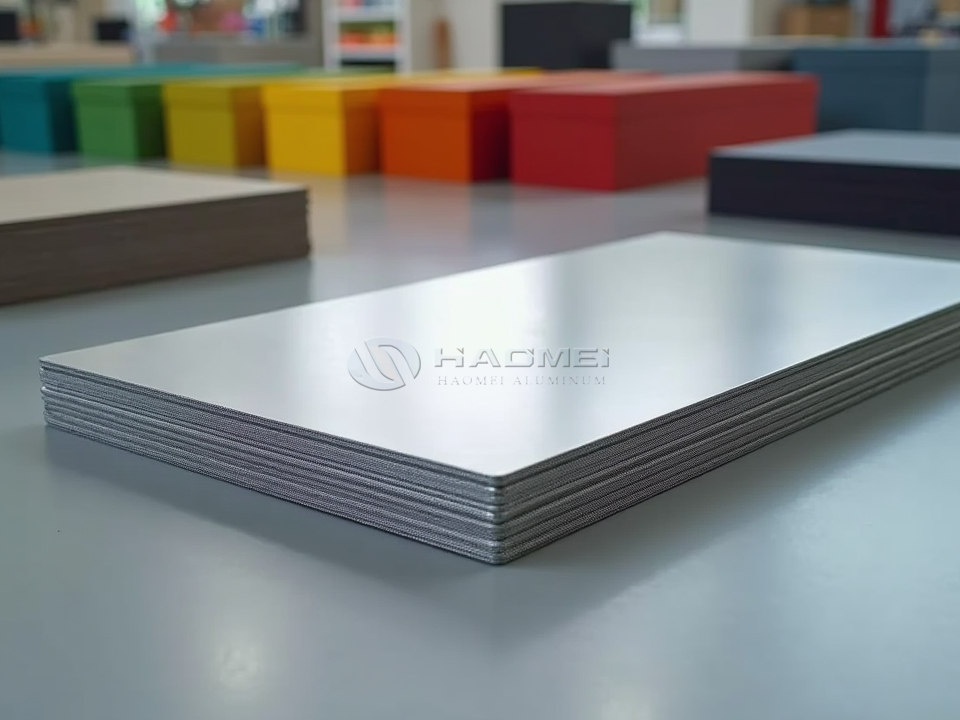
Wholesale prepainted aluminum plates can be produced in a broad dimensional range. Exact availability depends on alloy, coating line capacity, flatness requirements, and transport limitations.
| Parameter | Common Range or Option |
|---|---|
| Base alloy | 1050, 1060, 1100, 3003, 3004, 3105, 5005, 5052 |
| Temper | O, H12, H14, H16, H18, H22, H24, H26, H32, H34 |
| Thickness | 0.20 mm to 6.00 mm |
| Width | 600 mm to 1,600 mm |
| Length | Coil, standard sheet, or cut-to-length plate |
| Front coating thickness | Typically 15 to 35 μm for PE; 25 to 35 μm or more for PVDF |
| Back coating thickness | Typically 5 to 10 μm, adjustable for lamination or service use |
| Surface finish | Glossy, matte, textured, embossed, wood grain, solid color |
| Protective film | Optional PE film, generally 50 to 100 μm |
| Color control | RAL, Pantone, custom samples, metallic and special-effect colors |
Thickness should be evaluated as a function of panel span, wind load, forming depth, impact exposure, and support design. A thin gauge may perform well in bonded composite construction, while a freestanding façade cassette or transport component may need thicker material or a stronger alloy-temper combination.
Alloy and Temper: The Hidden Design Decision
The coating receives most of the visual attention, yet alloy and temper determine whether the plate can be bent, stamped, riveted, roll formed, or kept flat after installation.
Alloys in the 1xxx series are commercially pure aluminum grades with excellent corrosion resistance and formability. They are practical for general decorative sheet, reflector-related uses, and applications where high strength is not the main demand. Alloy 3003 contains manganese, providing higher strength than pure aluminum while retaining good workability. It is widely applied in roofing, cladding, ceiling, insulation jacketing, and general architectural sheet.
Alloy 3105 is frequently selected for painted building products because it combines adequate strength, good coating compatibility, and reliable roll-forming performance. Alloy 5005 is valued where anodizing-quality appearance or architectural finish consistency matters. Alloy 5052 has higher magnesium content and stronger corrosion resistance, making it suitable for marine-adjacent areas, transport equipment, and parts exposed to vibration or higher mechanical stress.
Annealed O temper offers maximum ductility for deep drawing and tight bends. H14 and H24 provide a balanced condition for many panel and roofing operations. Harder tempers such as H16 or H18 improve dent resistance but reduce the safe bend radius. The coating must also be flexible enough to follow the bend without cracking, which is why T-bend testing should be agreed before production.
Chemical Composition of Common Aluminum Substrates
Values are typical maximum percentages unless a range is stated. Balance is aluminum.
| Alloy | Si | Fe | Cu | Mn | Mg | Zn | Other Elements |
|---|---|---|---|---|---|---|---|
| 1060 | 0.25 | 0.35 | 0.05 | 0.03 | 0.03 | 0.05 | 0.03 each |
| 1100 | 0.95 Si + Fe | - | 0.05 to 0.20 | 0.05 | - | 0.10 | 0.05 each |
| 3003 | 0.60 | 0.70 | 0.05 to 0.20 | 1.0 to 1.5 | - | 0.10 | 0.05 each |
| 3105 | 0.60 | 0.70 | 0.30 | 0.30 to 0.80 | 0.20 to 0.80 | 0.40 | 0.05 each |
| 5005 | 0.30 | 0.70 | 0.20 | 0.20 | 0.50 to 1.10 | 0.25 | 0.05 each |
| 5052 | 0.25 | 0.40 | 0.10 | 0.10 | 2.20 to 2.80 | 0.10 | 0.05 each |
Standards, Testing, and Purchase Controls
Prepainted aluminum plate may be manufactured in reference to ASTM B209, EN 485, EN 573, EN 1396, GB/T 3880, JIS H4000, and related coating-performance requirements. The applicable standard should be confirmed in the purchase specification because metal tolerances and coating test methods are not always covered by the same document.
Quality verification commonly includes thickness measurement, width and length tolerance, coil camber, flatness, color difference, gloss, coating thickness, pencil hardness, impact resistance, solvent resistance, adhesion, T-bend flexibility, boiling-water resistance, salt-spray resistance, and accelerated weathering. For exterior work, buyers should define coating brand or resin type, total dry film thickness, primer requirement, approved color sample, gloss tolerance, and protective-film removal period.
Packaging also affects surface quality. Plates should be separated and protected against abrasion, wrapped against moisture, supported with stable pallets, and stored indoors away from condensation. Water trapped between sheets can cause staining or corrosion, even on painted aluminum.
Wholesale prepainted aluminum plates perform best when material selection begins with the finished product's real environment: sunlight, salt, pollution, forming radius, fastening method, and desired service life. With the right alloy, temper, coating, and inspection criteria, the plate becomes a dependable finished surface that saves time from fabrication through installation.