Weather Resistant Coated Aluminum
Weather resistant coated aluminum is engineered for outdoor environments where metal surfaces must handle sunlight, rain, salt, humidity, temperature swings, and airborne pollutants while keeping a clean decorative finish. It combines the light weight and natural corrosion resistance of aluminum sheet with a protective organic coating system such as PVDF, FEVE, PE, HDP, SMP, or powder coating.
For architects, contractors, appliance producers, sign makers, and transportation fabricators, the material offers a practical balance of service life, appearance, processing efficiency, and low maintenance. Compared with post-painted metal parts, pre-coated aluminum provides more consistent color, controlled film thickness, improved adhesion, and faster fabrication.
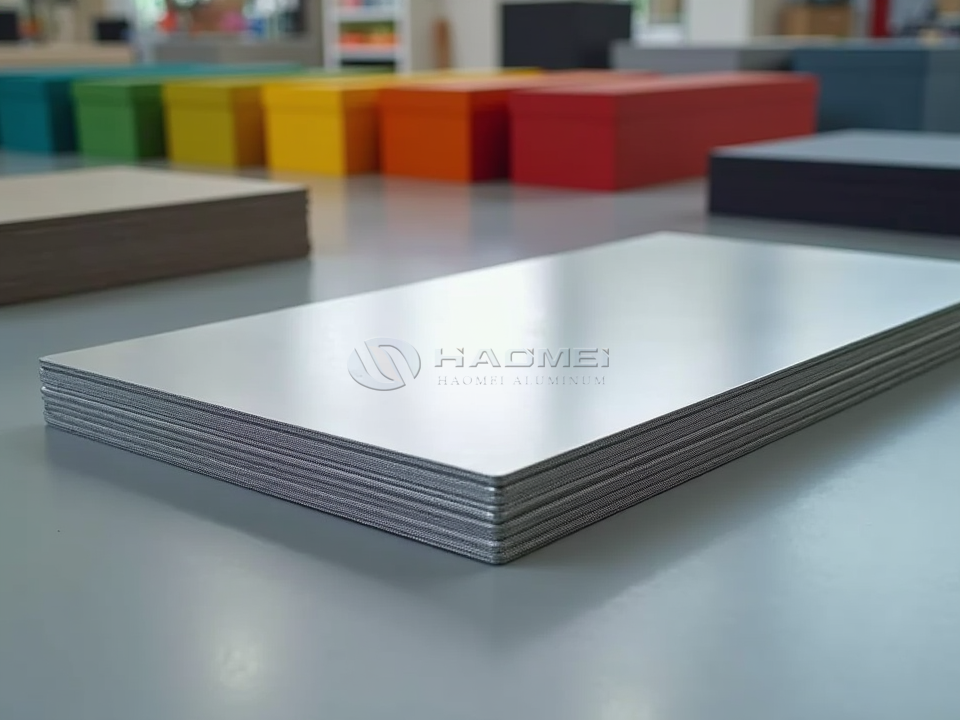
What the Weather Resistant Coating Does
The coating system acts as a shield between the aluminum substrate and the external environment. A complete system usually includes pretreatment, primer, topcoat, and sometimes a protective film for handling.
| Function | Performance Benefit | Typical Result in Use |
|---|---|---|
| UV resistance | Slows chalking and color fading | Stable appearance on facades and roofs |
| Corrosion protection | Blocks moisture, salt, acid rain, and industrial gases | Longer life in coastal and urban areas |
| Surface durability | Improves scratch, impact, and abrasion resistance | Lower damage during forming and installation |
| Chemical resistance | Resists mild acids, alkalis, detergents, and pollutants | Easier cleaning and reduced staining |
| Thermal stability | Handles hot-cold cycles without rapid cracking | Better performance on exposed building skins |
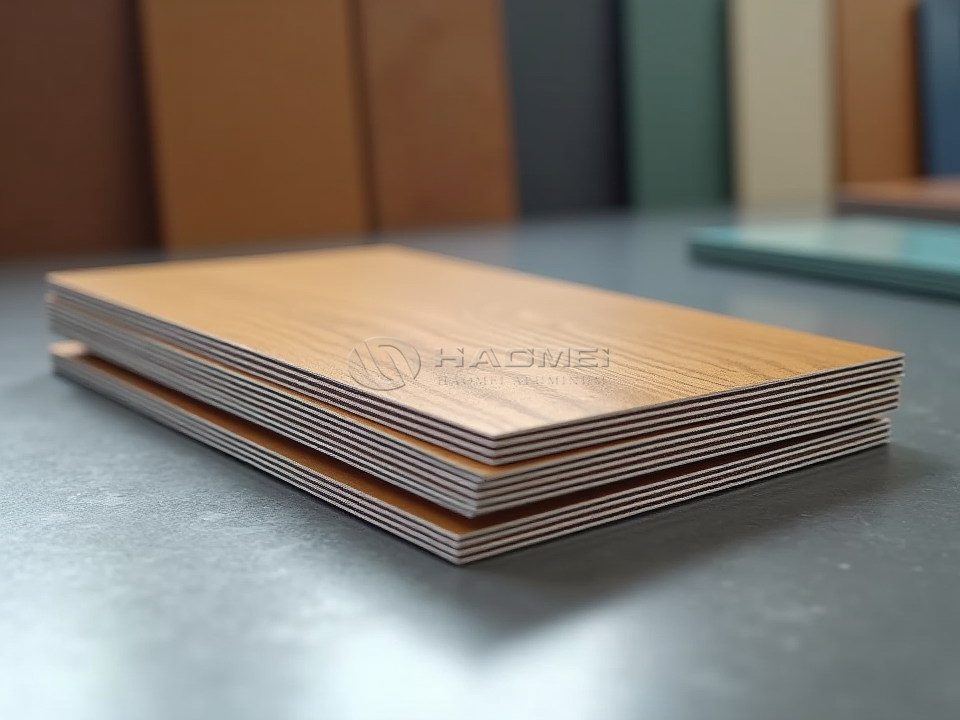
| Decorative finish | Supports solid colors, metallic effects, matt gloss, wood grain, and stone textures | Wider design choice without heavy materials |
The best coating choice depends on exposure severity. PVDF and FEVE systems are preferred for demanding exterior projects because of their fluoropolymer structure and strong resistance to ultraviolet degradation. PE coating is economical for interior or mild exterior use, while powder coating provides a thicker decorative layer for profiles, panels, and formed parts.
For long-life exterior cladding, many buyers select PVDF Coated Aluminum Sheet because it offers excellent weatherability, gloss retention, and color stability in harsh climates.
Common Coating Types and Service Environments
| Coating Type | Typical Dry Film Thickness | Main Strength | Recommended Environment | Common Service Expectation |
|---|---|---|---|---|
| PE polyester | 16-25 um | Good color range and cost efficiency | Indoor panels, mild outdoor signs | 5-8 years |
| HDP polyester | 20-30 um | Better weathering than standard PE | Roofing, wall panels, general exterior | 8-12 years |
| SMP modified polyester | 20-30 um | Better hardness and heat resistance | Roofing, garage doors, exterior panels | 10-15 years |
| PVDF fluorocarbon | 25-35 um | Excellent UV and chemical resistance | Facades, airports, stations, coastal buildings | 15-25 years |
| FEVE fluoropolymer | 25-35 um | High gloss and strong color retention | Premium curtain walls and decorative panels | 15-25 years |
| Powder coating | 60-100 um | Thick film, good impact resistance | Fabricated parts, trims, equipment covers | 10-20 years |
Service life varies with climate, color, installation angle, air pollution, cleaning schedule, and coating formulation. Dark colors and horizontal surfaces normally absorb more heat and may require higher-grade coating systems.
Applications Across Outdoor Projects
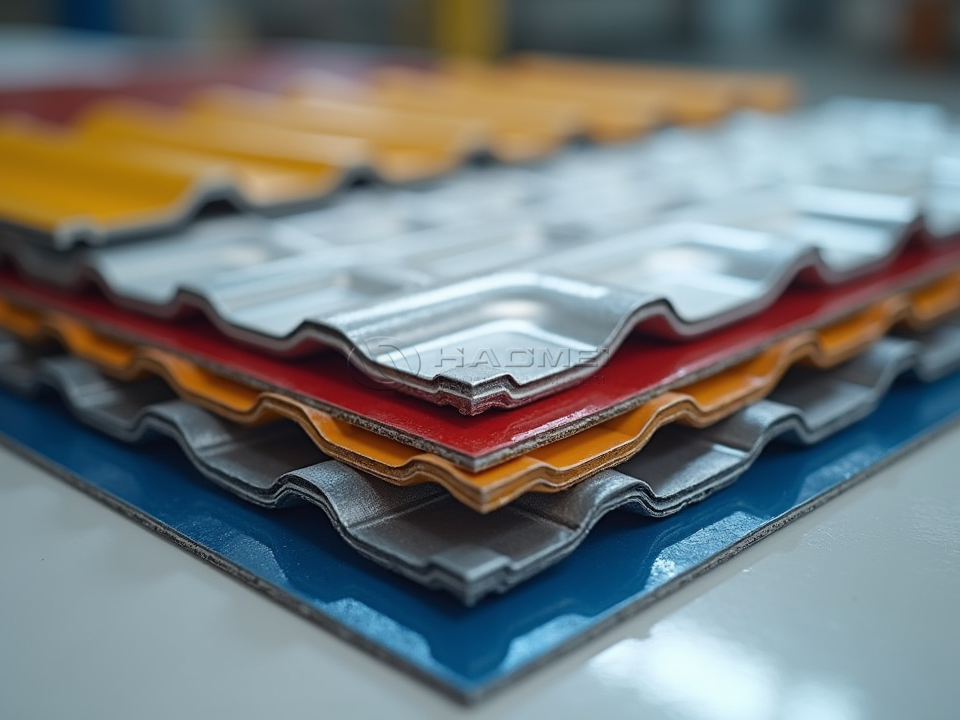
Weather resistant coated aluminum is used where durability, lightweight construction, and attractive finish are required. It can be slit, cut, bent, punched, roll-formed, embossed, laminated, and fabricated into many exterior products.
| Application | Suitable Alloy | Recommended Coating | Product Advantage |
|---|---|---|---|
| Roofing panels and standing seam systems | 3003, 3004, 3105 | HDP, SMP, PVDF | Lightweight, formable, corrosion resistant |
| Curtain wall and facade panels | 3003, 5005 | PVDF, FEVE | Flat appearance, color stability, low upkeep |
| Aluminum composite panels | 3003, 5005 | PE, PVDF | Consistent surface for ACP production |
| Gutters, flashings, and trims | 3003, 3105 | PE, HDP, PVDF | Easy bending and weather protection |
| Sign boards and advertising panels | 1100, 3003, 5005 | PE, PVDF, powder | Smooth surface and strong color options |
| Vehicle panels and caravan skins | 3003, 5052 | HDP, PVDF | Low weight and vibration resistance |
| Outdoor appliance housings | 3003, 5052 | Powder, PE, PVDF | Clean finish and forming reliability |
| Ceiling, canopy, and sunshade panels | 3003, 5005 | PVDF, powder | Decorative appearance with outdoor endurance |
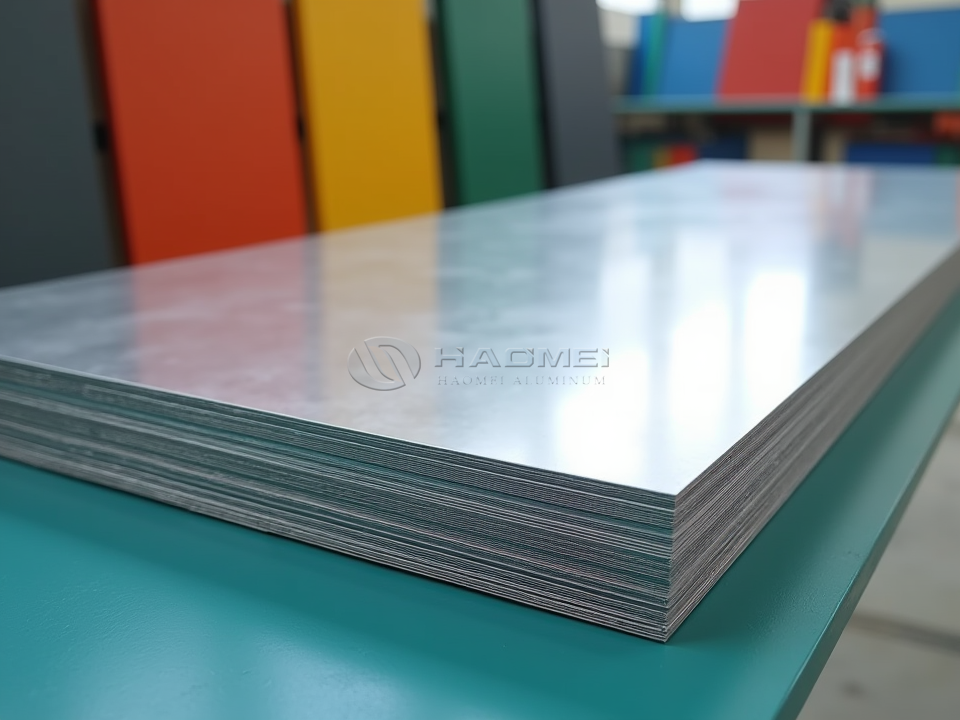
Alloy and Temper Selection
The substrate determines strength, formability, corrosion behavior, and processing response. Coated aluminum sheet is often supplied in 1xxx, 3xxx, and 5xxx series alloys, with temper selected according to forming depth and stiffness needs.
| Alloy | Temper Options | Main Features | Typical Use |
|---|---|---|---|
| 1050 / 1060 / 1100 | O, H12, H14, H24 | High purity, excellent formability, good reflectivity | Signs, trims, ceiling panels |
| 3003 | O, H14, H24, H26 | Good corrosion resistance and moderate strength | Roofing, wall panels, ACP skins |
| 3004 | H24, H26, H28 | Higher strength than 3003, good roll forming | Roofing sheets, exterior panels |
| 3105 | H14, H24, H26 | Good paintability, stable mechanical performance | Siding, gutters, building panels |
| 5005 | H14, H24, H34 | Fine surface quality, good anodizing compatibility | Facade panels, decorative sheets |
| 5052 | O, H32, H34 | Higher strength and marine corrosion resistance | Vehicle panels, marine parts, equipment covers |
| 5754 | H22, H24, H32 | Strong corrosion resistance and toughness | Transport and industrial outdoor parts |
Soft tempers such as O and H24 are easier to bend and form. Harder tempers such as H26 and H34 improve rigidity but require larger bending radii to avoid coating stress or micro-cracking.
Typical Technical Specifications
| Parameter | Common Range | Notes |
|---|---|---|
| Aluminum thickness | 0.20-4.00 mm | Thicker gauges available for panels and equipment covers |
| Width | 600-1600 mm | Wider coils may reach 2000 mm by request |
| Length | Coil or cut sheet | Custom cut-to-length supply available |
| Coating thickness | 16-35 um liquid coating, 60-100 um powder | Depends on coating type and exposure grade |
| Gloss | 10-90 GU | Matt, satin, semi-gloss, and high-gloss options |
| Color system | RAL, Pantone, custom sample matching | Metallic, pearl, wood grain, stone grain available |
| Protective film | 40-80 um PE film | Optional for fabrication and transport |
| Surface | Smooth, embossed, brushed, textured | Selected by design and processing method |
| Coil ID | 405 mm, 505 mm, 508 mm | Matched to uncoiling equipment |
| Package | Export wooden pallet or coil eye-to-wall/eye-to-sky | Moisture-proof wrapping recommended |
Chemical Composition of Popular Substrates
Values are typical maximum or range percentages by weight, based on common aluminum alloy standards.
| Alloy | Si | Fe | Cu | Mn | Mg | Cr | Zn | Ti | Al |
|---|---|---|---|---|---|---|---|---|---|
| 1100 | Si+Fe 0.95 | Si+Fe 0.95 | 0.05-0.20 | 0.05 | - | - | 0.10 | - | 99.00 min |
| 3003 | 0.60 | 0.70 | 0.05-0.20 | 1.00-1.50 | - | - | 0.10 | - | Balance |
| 3004 | 0.30 | 0.70 | 0.25 | 1.00-1.50 | 0.80-1.30 | - | 0.25 | - | Balance |
| 3105 | 0.60 | 0.70 | 0.30 | 0.30-0.80 | 0.20-0.80 | 0.20 | 0.40 | 0.10 | Balance |
| 5005 | 0.30 | 0.70 | 0.20 | 0.20 | 0.50-1.10 | 0.10 | 0.25 | - | Balance |
| 5052 | 0.25 | 0.40 | 0.10 | 0.10 | 2.20-2.80 | 0.15-0.35 | 0.10 | - | Balance |
| 5754 | 0.40 | 0.40 | 0.10 | 0.50 | 2.60-3.60 | 0.30 | 0.20 | 0.15 | Balance |
Mechanical Properties
Actual properties depend on alloy, temper, thickness, and coating bake cycle. The table gives typical reference values for ordering discussion.
| Alloy Temper | Tensile Strength MPa | Yield Strength MPa | Elongation % | Forming Character |
|---|---|---|---|---|
| 1100 H14 | 110-145 | 95 min | 3-8 | Easy bending |
| 3003 H24 | 145-185 | 115 min | 4-10 | Good roll forming |
| 3004 H26 | 220-285 | 190 min | 2-6 | Higher panel stiffness |
| 3105 H24 | 150-200 | 120 min | 4-9 | Good for siding and roofing |
| 5005 H34 | 160-210 | 130 min | 3-8 | Good facade flatness |
| 5052 H32 | 210-260 | 160 min | 8-12 | Strong and corrosion resistant |
Testing and Implementation Standards
Reliable weather resistant coated aluminum should be produced and inspected according to recognized metal and coating standards. Project specifications may combine aluminum sheet standards with coating performance standards.
| Category | Common Standard | Test or Control Item |
|---|---|---|
| Aluminum sheet | ASTM B209 | Aluminum and aluminum-alloy sheet and plate |
| Aluminum sheet | EN 485 | Mechanical properties, dimensions, tolerances |
| Chemical composition | EN 573 | Alloy composition limits |
| Temper designation | EN 515 / ASTM B601 | Temper definitions |
| Coil coating | EN 1396 | Coil coated aluminum sheet and strip |
| Architectural coating | AAMA 2603 | Basic exterior organic coating performance |
| Architectural coating | AAMA 2604 | High-performance exterior coating |
| Architectural coating | AAMA 2605 | Superior fluoropolymer exterior coating |
| Adhesion | ASTM D3359 | Cross-hatch adhesion |
| Color difference | ASTM D2244 | Color measurement by instrument |
| Gloss | ASTM D523 | Specular gloss |
| Pencil hardness | ASTM D3363 | Coating hardness |
| Bend test | ASTM D522 | Flexibility and cracking resistance |
| Impact | ASTM D2794 | Resistance to rapid deformation |
| Salt spray | ASTM B117 | Corrosion resistance in salt mist |
| UV exposure | ASTM G154 / G155 | Accelerated weathering |
Performance Reference Values
| Test Item | Typical Requirement | Premium Exterior Grade |
|---|---|---|
| Coating adhesion | Grade 0-1 | Grade 0 |
| T-bend flexibility | 0T-3T | 0T-2T depending on alloy and thickness |
| Pencil hardness | HB-2H | H-2H |
| Impact resistance | 50 kg.cm no peeling | 50 kg.cm no cracking or peeling |
| Salt spray resistance | 500-1000 hours | 1500-3000 hours |
| Artificial UV exposure | 500-1000 hours | 2000-4000 hours |
| Color difference after exposure | Project specified | Low Delta E target by color group |
| Gloss retention | Standard grade controlled | High retention for PVDF and FEVE |
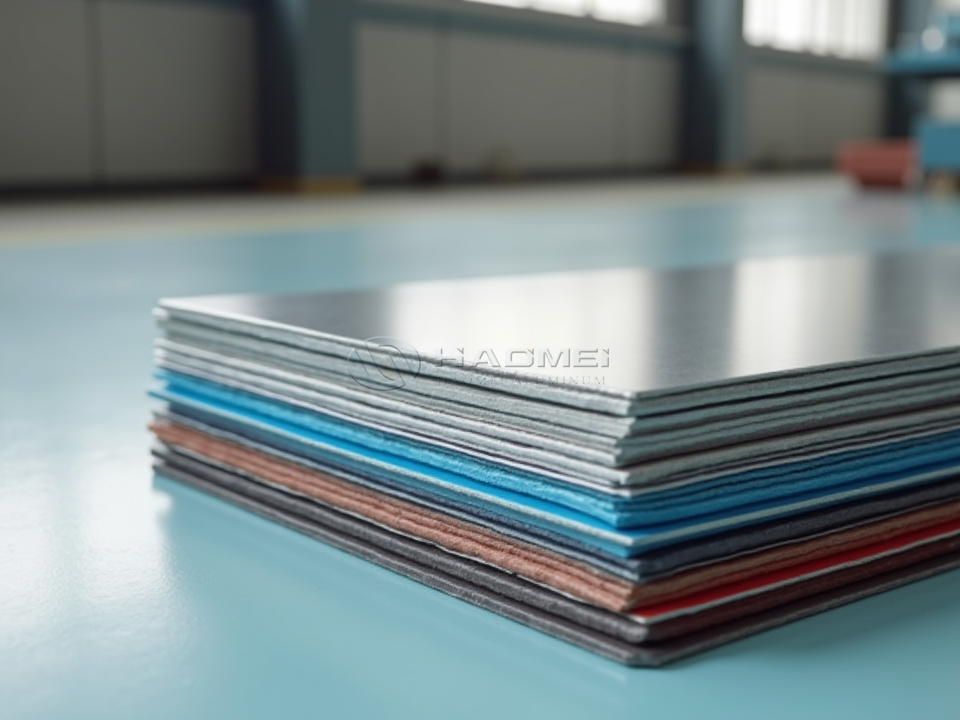
Fabrication and Installation Notes
Weather resistant coated aluminum performs best when fabrication is matched to the alloy temper and coating system. Bending should follow the minimum radius recommended for the sheet thickness, alloy, and coating. Sharp tooling, dirty rollers, or excessive forming speed can damage the paint film.
During installation, avoid direct contact with copper, untreated steel, wet concrete, and strongly alkaline materials. Use compatible fasteners, sealants, and isolation tapes where galvanic corrosion may occur. Protective film should be removed soon after installation, especially under strong sunlight, to prevent adhesive residue.
Cleaning is simple. Neutral detergent, soft cloth, and clean water are normally sufficient. Abrasive pads, strong solvents, and highly alkaline cleaners should be avoided because they can reduce gloss or stain the finish.
Purchasing Guidance
When requesting a quotation, provide alloy, temper, thickness, width, coating type, color code, gloss level, film thickness, surface finish, application, expected exposure environment, and required standards. For coastal, industrial, high-UV, or high-rise projects, PVDF or FEVE coating with verified salt spray and UV test data is recommended.
Weather resistant coated aluminum gives designers and fabricators a durable metal surface that is light, attractive, corrosion resistant, and easy to process. With the right alloy, temper, coating chemistry, and inspection standard, it can deliver dependable performance in roofing, facades, panels, signs, transport, and many other outdoor applications.