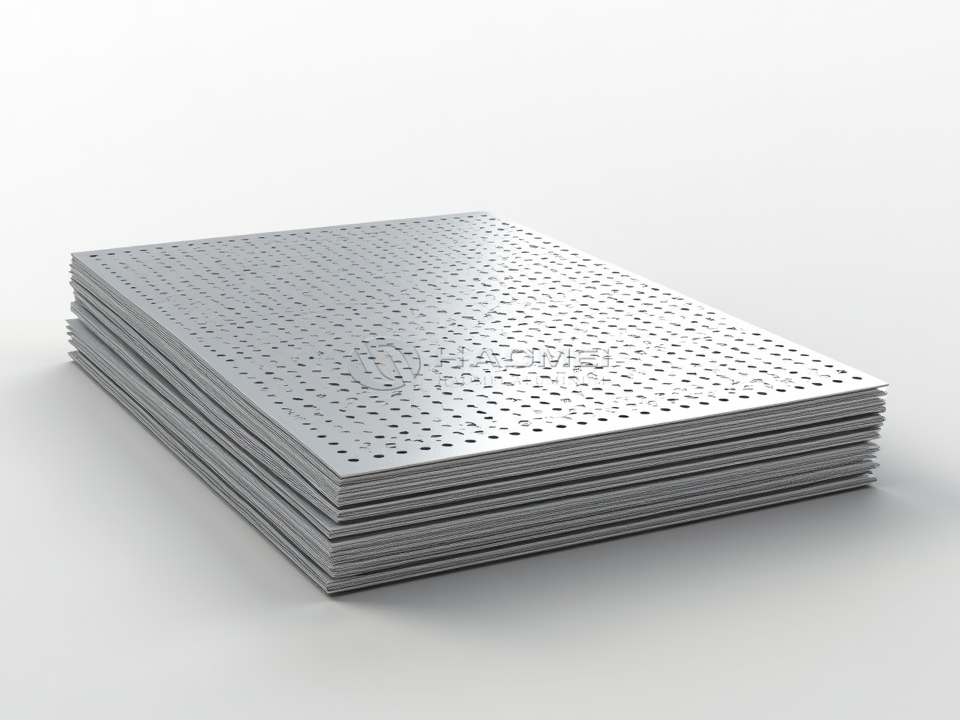
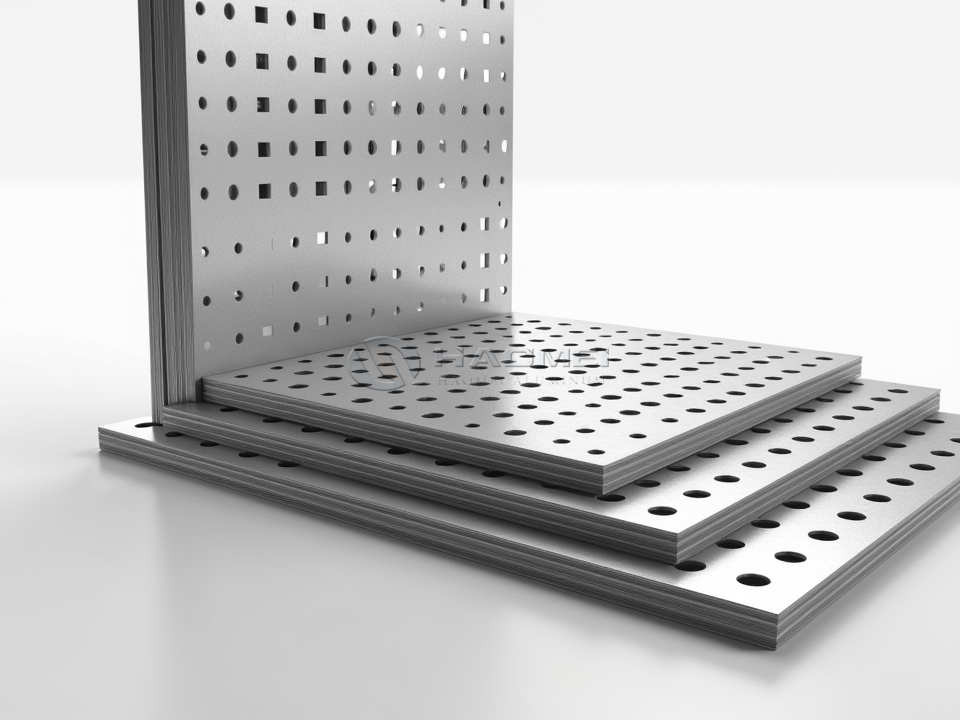
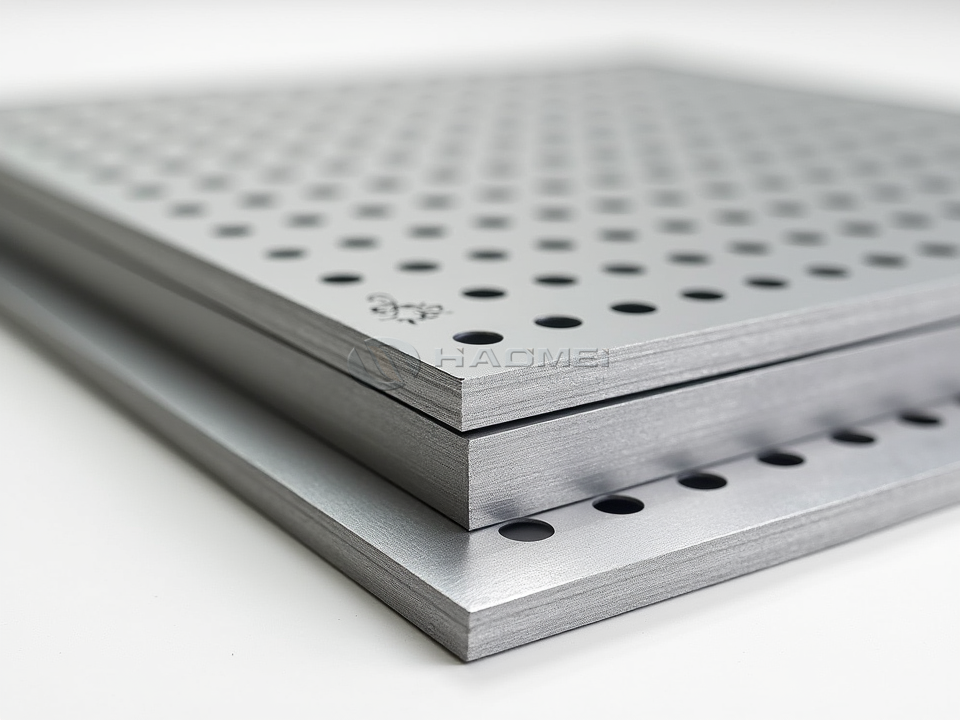
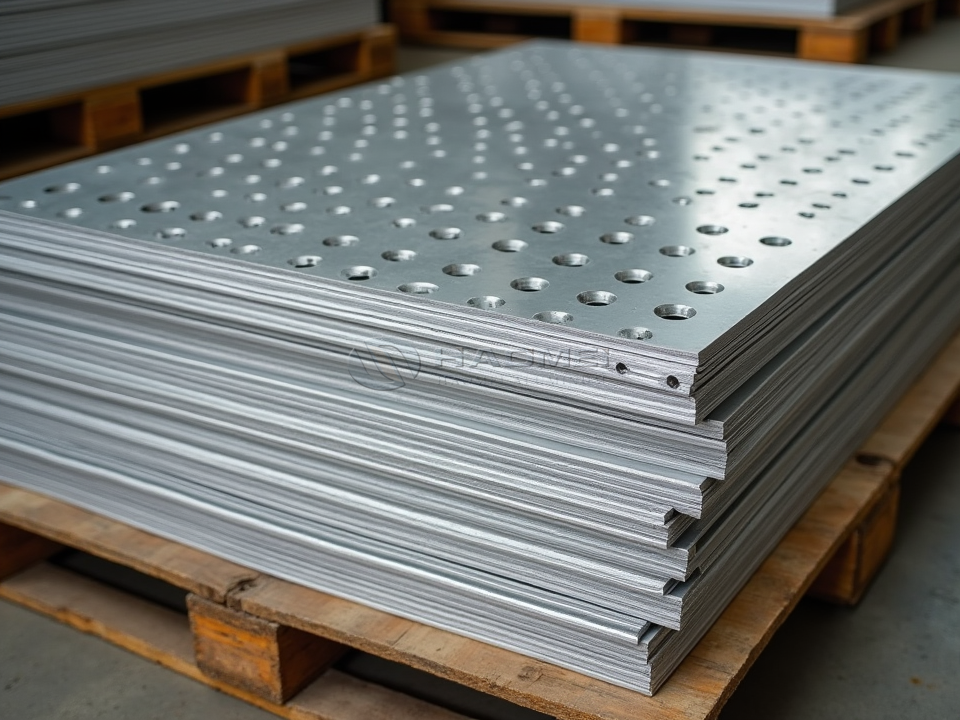
Staggered Hole Perforated Aluminum Sheet
A staggered hole perforated aluminum sheet is more than aluminum with holes punched through it. Its offset circular-hole arrangement creates a highly efficient balance between open area and remaining metal strength. Compared with straight-line hole layouts, the staggered pattern distributes material more evenly, allowing the sheet to pass air, light, sound, or liquid while retaining dependable structural continuity.
This makes staggered perforation a practical choice when one panel must perform several jobs at once. It can ventilate equipment, conceal mechanical systems, support acoustic absorption, screen sunlight, protect filters, or create a refined architectural surface. In many projects, the perforation pattern is not merely decorative; it is the working part of the design.
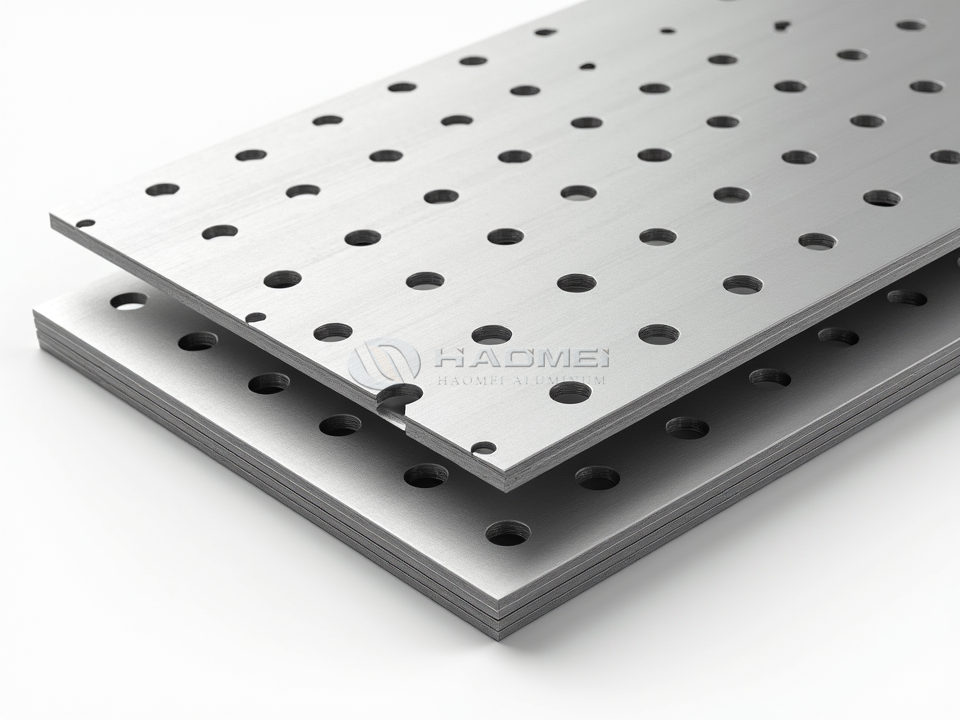
Why the Staggered Pattern Works Differently
In a staggered arrangement, the center of each round hole is offset from the holes in the adjacent row. The pattern commonly follows a 60-degree layout, similar to a triangular grid. This geometry creates more openings within the same surface area than a comparable straight-row pattern with equal hole diameter and pitch.
The practical result is higher open area without excessively weakening the sheet. For ventilation grilles, acoustic facings, and filtration guards, this efficiency is often more valuable than visual appearance alone.
For round holes in a standard staggered pattern, approximate open area can be calculated as:
Open area (%) = 0.907 × (D / P)² × 100
Where D is the hole diameter and P is the center-to-center pitch. A 5 mm hole on an 8 mm staggered pitch, for example, provides approximately 35.4% open area. Increasing hole size raises airflow and visibility, but reduces the remaining metal bridge between holes. Increasing pitch improves stiffness but lowers free passage.
This relationship turns the sheet into a tuning surface. A designer can adjust the hole diameter, pitch, sheet thickness, alloy, and finish according to the behavior required in service.
Functions That Begin With Hole Geometry
The first function is airflow management. Staggered holes create many evenly distributed air paths, reducing concentrated pressure zones in ventilation covers, HVAC return grilles, electronic cabinets, generator enclosures, and machinery guards. Open area should be selected according to required airflow, fan pressure, noise limits, and contamination exposure.
Acoustic performance is another major function. When a staggered hole perforated aluminum sheet is placed in front of mineral wool, fiberglass, or an acoustic backing, sound waves pass through the holes and are absorbed by the insulation layer. Hole size, perforation ratio, backing depth, and fabric layer all influence sound absorption. Smaller holes and controlled cavity depth can support tuned acoustic systems, while larger open areas generally favor broad sound transmission into the absorber.
For screening and shading, the material works as a visual filter. It can reduce solar glare and offer privacy while maintaining daylight and outward visibility. A facade panel with moderate open area can make a building feel lighter than a solid cladding panel, while also allowing natural air movement behind the skin.
In filtration and separation equipment, the sheet acts as a durable support medium rather than the final filtering layer. It supports mesh, filter cloth, activated carbon beds, or other media in liquid and air processing systems. The punched aluminum surface offers corrosion resistance with low weight, especially when alloy and finish are matched to the environment.
For projects needing different pattern options, a Round Hole Perforated Aluminum Sheet can be specified with staggered pitch, straight pitch, custom margins, or tailored panel dimensions.
Common Product Parameters
Staggered hole perforated aluminum sheet is normally produced from coil or plate, then punched using a press tool, CNC punching machine, or laser process for specialized patterns. Press punching is efficient for repeat production, while CNC processing provides flexibility for custom borders, mounting slots, and mixed perforation zones.
| Parameter | Typical Range or Option |
|---|---|
| Base material thickness | 0.5 mm to 6.0 mm, with heavier gauges available by agreement |
| Hole diameter | 1.0 mm to 30 mm or customized |
| Hole pattern | 60-degree staggered round holes |
| Pitch | Typically 1.5 to 3 times the hole diameter, depending on strength needs |
| Open area | Approximately 15% to 65%, depending on D/P ratio |
| Sheet width | Up to 1,500 mm commonly available |
| Sheet length | 2,000 mm to 6,000 mm commonly available, or custom cut length |
| Edge margin | Unperforated border available for framing, bending, or fastening |
| Surface options | Mill finish, brushed, anodized, powder coated, PVDF coated, painted |
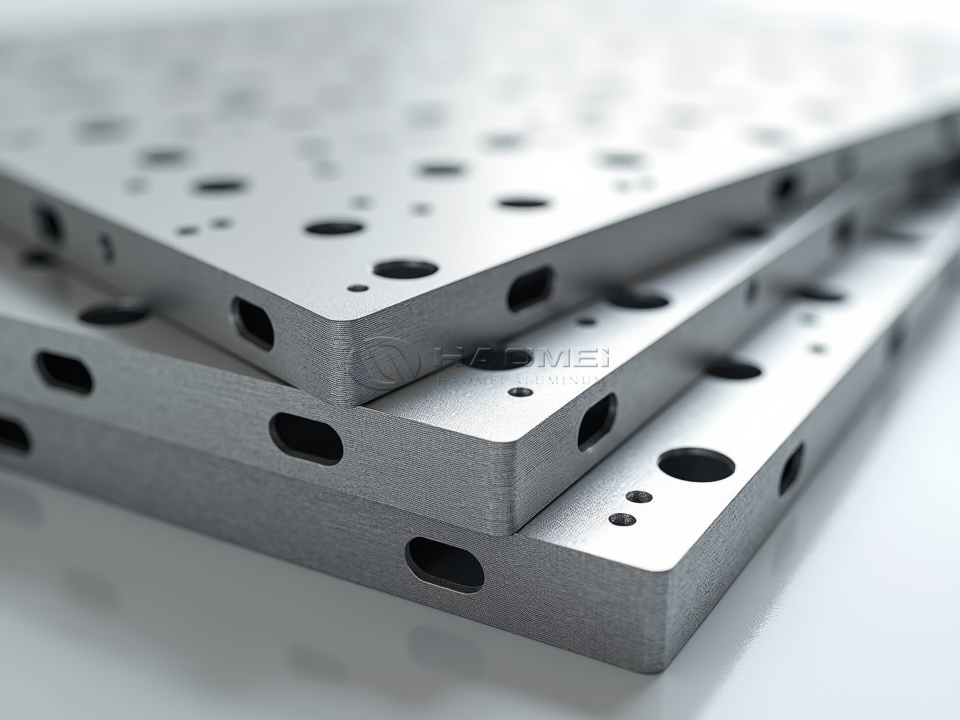
The remaining metal between holes is called the web. Web width affects forming safety, load capacity, and resistance to deformation. For punched products, a practical design should avoid a web that is too narrow for the sheet thickness and alloy temper. Thin material can accept tighter patterns, while thicker or harder sheets may require larger pitch and stronger tooling control.
Alloy and Temper Selection
Alloy selection should begin with the operating environment rather than appearance alone. Pure aluminum grades offer excellent formability and corrosion resistance. Aluminum-manganese alloys offer improved strength for general fabrication. Aluminum-magnesium alloys are preferred where moisture, marine exposure, or higher mechanical demand is present.
| Alloy | Common Tempers | Performance Characteristics | Typical Uses |
|---|---|---|---|
| 1050 | O, H14, H24 | High aluminum content, excellent forming and corrosion resistance | Interior panels, lamps, decorative screens |
| 1060 | O, H14, H24 | Good conductivity, easy punching and bending | Ventilation covers, signage, equipment panels |
| 3003 | H14, H24, H32 | Better strength than 1xxx series, good workability | Ceiling panels, acoustic systems, machine guards |
| 3105 | H14, H24 | Good coating response and moderate strength | Painted facade and soffit panels |
| 5052 | H32, H34 | Strong corrosion resistance and higher strength | Marine screens, transport parts, outdoor enclosures |
Temper influences both punching quality and later fabrication. O temper is soft and suitable for deep bending, but it can be more vulnerable to handling marks. H14 and H24 tempers provide a useful compromise between formability and stiffness. H32 or H34 in 5052 can improve panel durability, although harder material requires appropriate punching clearance to reduce burrs and edge stress.
Typical Chemical Composition
The chemical properties of the selected alloy determine corrosion behavior, strength response, weldability, and forming performance. Values are shown as mass percentage ranges or maximum values and should be confirmed against the applicable material specification.
| Alloy | Si | Fe | Cu | Mn | Mg | Cr | Zn | Al |
|---|---|---|---|---|---|---|---|---|
| 1050 | 0.25 max | 0.40 max | 0.05 max | 0.05 max | 0.05 max | - | 0.07 max | 99.50 min |
| 1060 | 0.25 max | 0.35 max | 0.05 max | 0.03 max | 0.03 max | - | 0.05 max | 99.60 min |
| 3003 | 0.60 max | 0.70 max | 0.05-0.20 | 1.0-1.5 | - | - | 0.10 max | Balance |
| 3105 | 0.60 max | 0.70 max | 0.30 max | 0.30-0.80 | 0.20-0.80 | 0.20 max | 0.40 max | Balance |
| 5052 | 0.25 max | 0.40 max | 0.10 max | 0.10 max | 2.2-2.8 | 0.15-0.35 | 0.10 max | Balance |
Standards, Inspection, and Fabrication Details
Base aluminum sheet can be supplied in accordance with ASTM B209, EN 485 for mechanical and dimensional requirements, EN 573 for chemical composition, and EN 515 for temper designation. Perforation pattern, hole tolerance, edge margin, flatness, burr direction, and surface condition should be identified in the purchase specification. DIN 24041 may also be referenced when perforated sheet pattern requirements apply.
Inspection normally includes sheet thickness, hole diameter, pitch, open area calculation, diagonal measurement, flatness, burr condition, coating adhesion, and visual surface quality. For visible facade work, confirm the viewing side, perforation direction, panel orientation, and allowable color variation before production.
A Perforated Aluminum Plate with staggered holes can also be folded, framed, riveted, welded, or mounted on a supporting structure. When bending is required, leave sufficient solid margin near the bend line. Perforations too close to a fold can distort the hole shape and reduce edge stability.
Staggered hole perforated aluminum sheet succeeds because it makes empty space productive. Its holes regulate flow, absorb sound, shape light, reduce weight, and create a surface that remains technically purposeful long after installation.