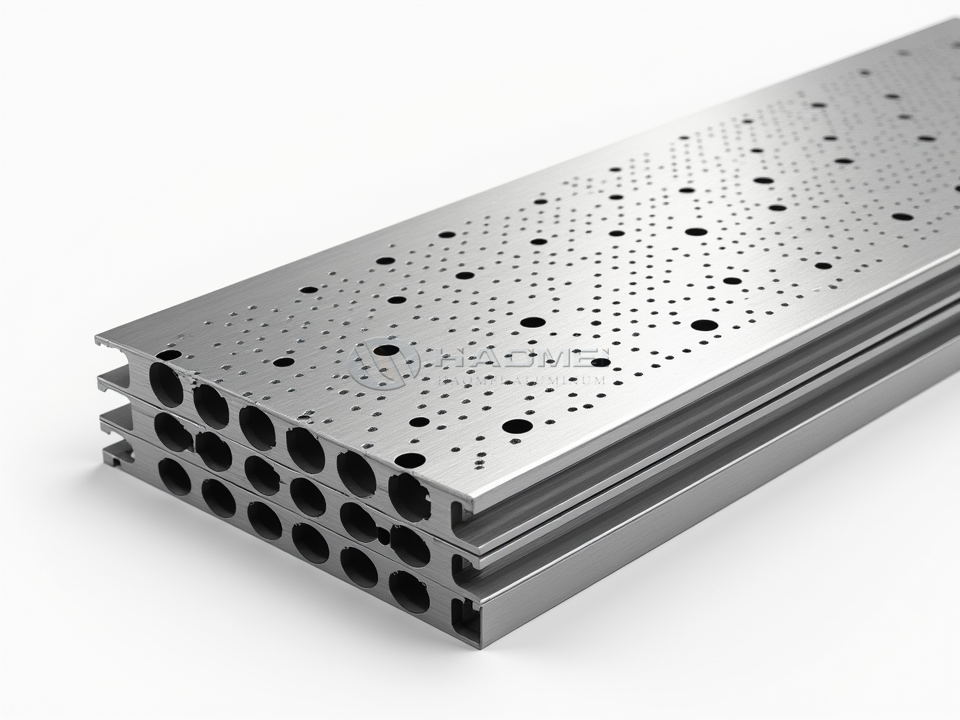
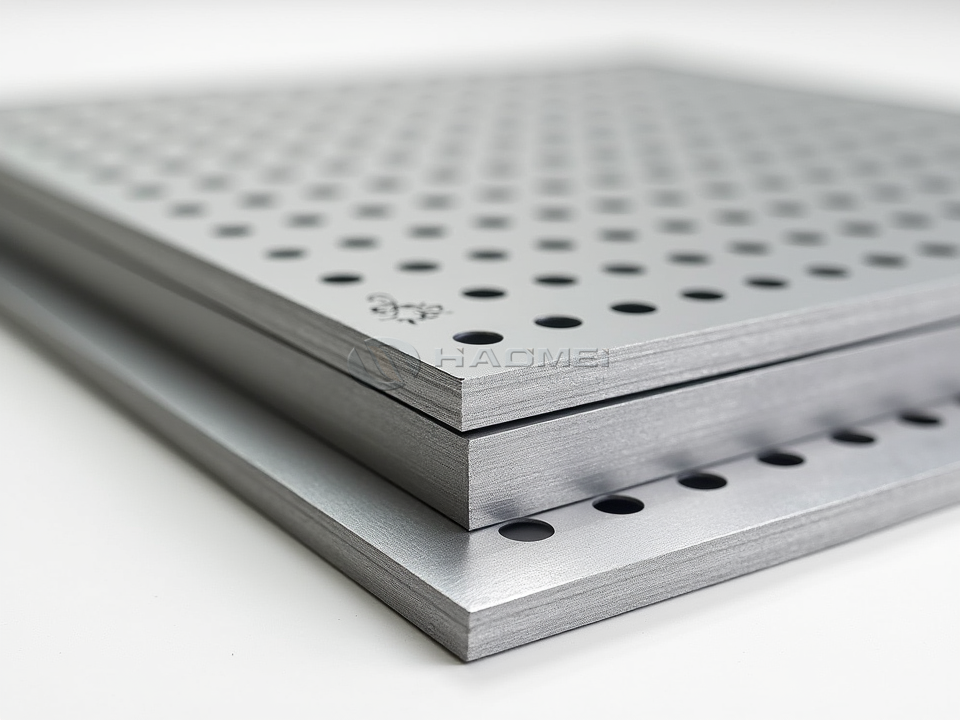
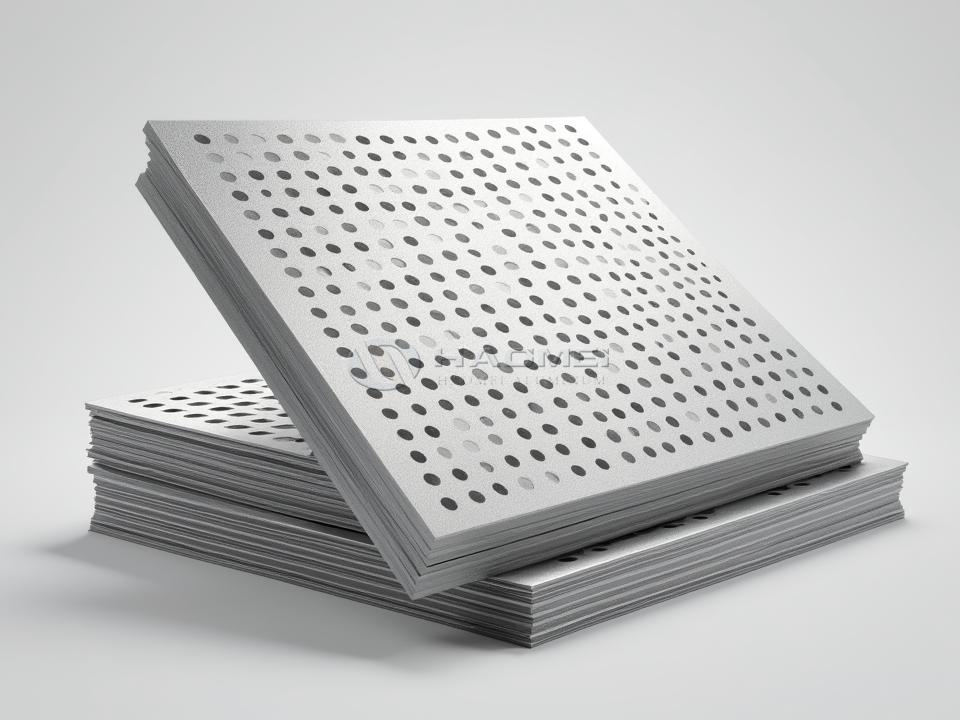
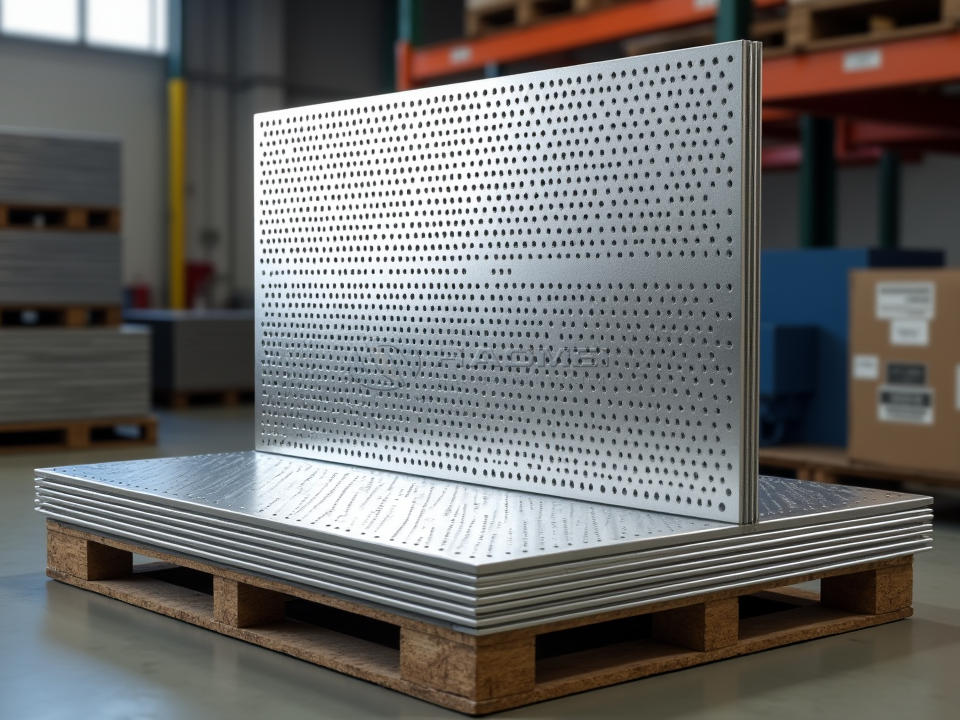
Acoustic Perforated Aluminum Ceiling Plate
An acoustic perforated aluminum ceiling plate combines the clean appearance of metal with practical reverberation control. It is engineered with precisely punched holes, an acoustic backing layer, and a suspended ceiling cavity that work together to absorb a portion of airborne sound energy. The result is a ceiling system suited to busy interiors where speech clarity, durability, hygiene, and visual consistency matter.
Unlike porous mineral ceiling products, perforated aluminum offers a non-combustible metal face, moisture resistance, easy cleaning, and long service life. It can be supplied in round, square, slotted, or decorative hole patterns, with powder-coated, PVDF-coated, anodized, brushed, or wood-grain surfaces.
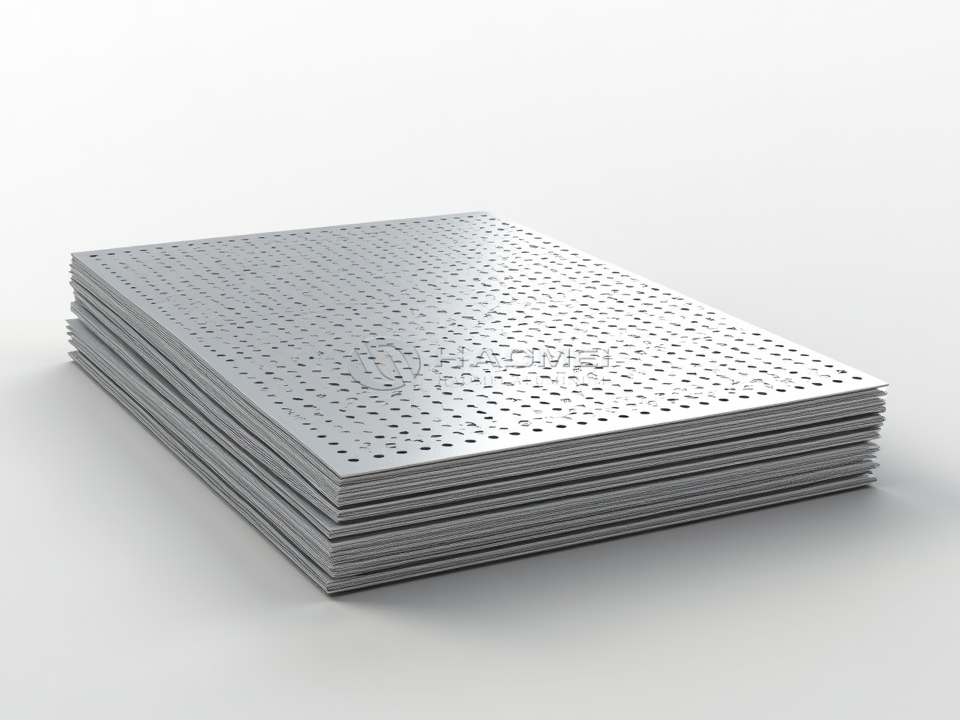
How an Acoustic Perforated Aluminum Ceiling Plate Works
The visible aluminum plate is perforated to create open area across the panel surface. Sound waves pass through these perforations and enter the acoustic layer behind the metal face. A black non-woven acoustic fabric prevents insulation fibers from falling through the holes, while mineral wool, glass wool, polyester fiber, or other sound-absorbing material dissipates sound energy.
The ceiling void also influences performance. When the backing insulation thickness, air cavity depth, perforation ratio, and hole geometry are selected as a system, the ceiling can reduce echo and improve acoustic comfort. Noise reduction coefficient values vary significantly by construction; therefore, project specifications should state the complete tested assembly rather than only the aluminum sheet.
| Acoustic element | Typical configuration | Contribution to performance |
|---|---|---|
| Perforated aluminum face | 0.6-1.2 mm sheet with punched holes | Allows sound transmission into the absorber |
| Open area | 10%-30% | Balances acoustic response, strength, and appearance |
| Acoustic fleece | Black non-woven fabric, 60-100 g/m² | Conceals backing and controls fiber release |
| Absorbing infill | 25-50 mm mineral wool, glass wool, or polyester | Converts sound energy into low-level heat |
| Air cavity | 50-200 mm, project dependent | Can improve low and mid-frequency absorption |
| Suspension system | Concealed clip-in, lay-in, hook-on, or linear carrier | Supports alignment and access to services |
Functional Benefits for Commercial Ceilings
Acoustic perforated aluminum ceiling plates help control reflected sound in spaces with hard floors, glazing, concrete walls, or crowded occupancy. They are particularly effective for reducing the harsh, echoing character common in large public rooms.
| Function | Practical value |
|---|---|
| Sound absorption | Supports lower reverberation and clearer speech when paired with acoustic infill |
| Fire-safe metal surface | Aluminum is non-combustible; the full system fire rating depends on insulation, coating, and assembly |
| Moisture resistance | Suitable for humid interiors when proper alloy, coating, and installation details are selected |
| Cleanability | Smooth coated surfaces can be wiped clean for healthcare, transport, and food-service areas |
| Dimensional stability | Resists cracking, sagging, and biological degradation associated with some porous ceiling materials |
| Service access | Demountable panel systems allow access to lighting, wiring, HVAC, and sprinklers |
| Decorative freedom | Hole pattern, color, panel size, edge profile, and finish can be tailored to the design scheme |
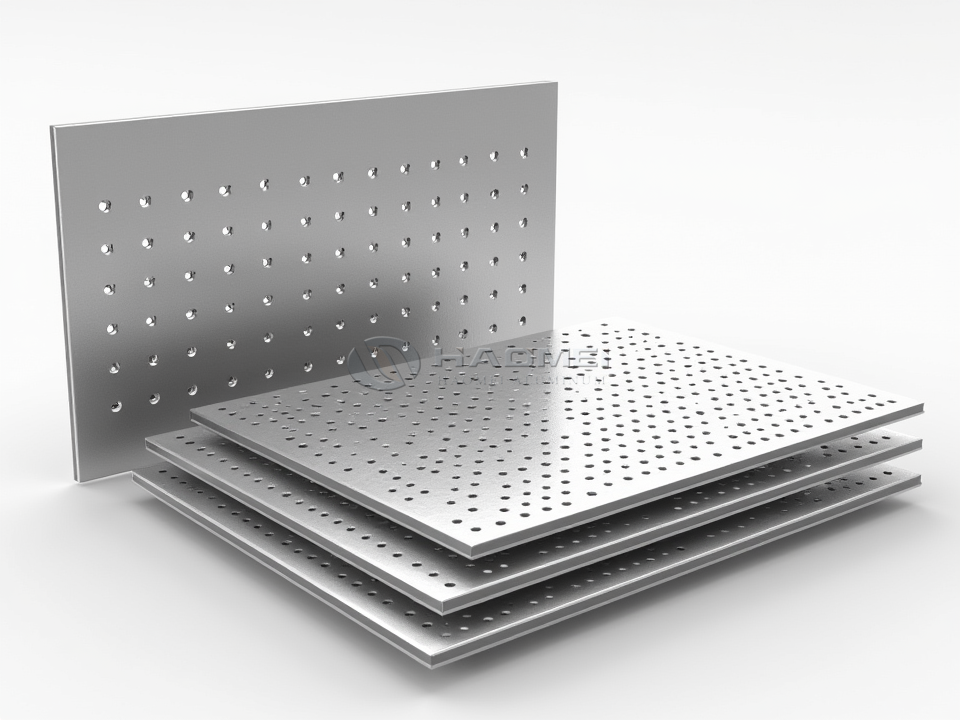
A Perforated Aluminum Plate can also be fabricated with folded edges or reinforced returns to increase rigidity and create a refined modular ceiling appearance.
Common Applications
These aluminum acoustic ceiling systems are used where appearance and operational endurance must work together. Airports, metro stations, hospital corridors, office lobbies, schools, retail interiors, conference rooms, sports venues, restaurants, exhibition halls, and cultural facilities are frequent installation environments.
In offices and meeting spaces, micro-perforated or small round-hole designs can maintain a calm, minimal visual plane while reducing speech reflection. In transit terminals and gymnasiums, stronger panels with larger perforations and robust suspension systems are often specified for high traffic and repeated maintenance access. For kitchens, washrooms, and coastal projects, corrosion-resistant alloy and coating choices become especially important.
Material Grades, Tempers, and Chemical Composition
AA 3003 and AA 5052 are widely used for perforated aluminum ceiling plate production. AA 3003 provides good formability and economy for general indoor ceilings. AA 5052 has higher strength and improved corrosion resistance, making it suitable for humid, demanding, or semi-exposed environments. AA 1100 may also be used where deep forming and high aluminum purity are preferred.
| Alloy | Typical temper | Main advantage | Recommended use |
|---|---|---|---|
| AA 1100 | H14, H24 | Excellent formability and corrosion resistance | Decorative indoor ceiling panels |
| AA 3003 | H14, H16, H24 | Good strength, formability, and cost balance | Offices, retail, schools, public interiors |
| AA 5052 | H32, H34 | Higher strength and strong corrosion resistance | Humid zones, transport hubs, coastal interiors |
| Chemical composition, % by weight | AA 1100 | AA 3003 | AA 5052 |
|---|---|---|---|
| Aluminum, minimum | 99.00 | Balance | Balance |
| Silicon + Iron, maximum | 0.95 | 0.70 | 0.45 |
| Copper | 0.05-0.20 | 0.05-0.20 | 0.10 max |
| Manganese | 0.05 max | 1.00-1.50 | 0.10 max |
| Magnesium | - | - | 2.20-2.80 |
| Chromium | - | - | 0.15-0.35 |
| Zinc, maximum | 0.10 | 0.10 | 0.10 |
| Other elements, each maximum | 0.05 | 0.05 | 0.05 |
Values shown are customary alloy limits aligned with common aluminum standards. Final mill certificates should govern contractual material verification.
Technical Specifications and Perforation Options
Panel dimensions, hole arrangements, and edge details can be made to suit a T-grid, concealed carrier, clip-in, or hook-on ceiling system. Larger panels normally require folded edges, stiffeners, or a heavier gauge to control deflection.
| Parameter | Typical range or option |
|---|---|
| Aluminum thickness | 0.6, 0.7, 0.8, 1.0, 1.2 mm |
| Standard panel widths | 300, 600, 800, 1200 mm |
| Standard panel lengths | 300-3000 mm, custom lengths available |
| Hole shape | Round, square, slot, hexagonal, decorative pattern |
| Round-hole diameter | 0.8-10 mm |
| Hole pitch | 2-20 mm, depending on pattern and open area |
| Open area | Approximately 10%-30% |
| Edge treatment | Plain edge, folded edge, return flange, hemmed edge |
| Surface coating | Polyester powder coating, PVDF, anodizing, transfer print |
| Common colors | White, black, silver, gray, custom RAL colors |
| Acoustic backing | Black fleece with 25-50 mm acoustic insulation |
| Panel installation | Lay-in, clip-in, hook-on, concealed suspension, linear carrier |
Round holes remain a popular choice because they produce a balanced visual rhythm and are efficient to manufacture. Slotted perforations can create a directional architectural effect and may complement long corridor or linear ceiling layouts. Smaller holes often deliver a more refined appearance, while larger openings expose more acoustic backing and create a stronger technical aesthetic.
Mechanical and Physical Data
| Property | AA 3003-H14, typical | AA 5052-H32, typical |
|---|---|---|
| Density | 2.73 g/cm³ | 2.68 g/cm³ |
| Tensile strength | 130-180 MPa | 210-260 MPa |
| Yield strength | 115 MPa minimum | 160 MPa minimum |
| Elongation | 4%-10% | 7%-12% |
| Melting range | Approximately 643-654°C | Approximately 607-649°C |
| Thermal conductivity | Approximately 160 W/m·K | Approximately 138 W/m·K |
Mechanical data depend on thickness, temper, production route, and testing direction. Perforation reduces the effective cross-sectional area of the panel, so structural design should account for panel span, open area, edge returns, wind or pressure conditions where relevant, and suspension spacing.
Standards and Quality Considerations
| Standard or reference | Relevance to acoustic perforated aluminum ceiling plate |
|---|---|
| ASTM B209 | Aluminum and aluminum-alloy sheet and plate material requirements |
| EN 485 | Tolerances, mechanical properties, and conditions for aluminum sheet products |
| EN 13964 | Suspended ceiling requirements and performance characteristics |
| ASTM E84 | Surface burning characteristics of building materials, when required for the tested system |
| ISO 354 | Laboratory measurement of sound absorption in a reverberation room |
| ASTM C423 | Sound absorption and sound absorption coefficients by reverberation room method |
| ISO 9001 | Quality management framework for controlled manufacturing processes |
For acoustic projects, ask for test reports that identify the exact panel perforation, fleece, insulation density and thickness, air cavity, mounting method, and test standard. A reported NRC value from a different assembly should not be assumed to apply to the specified ceiling.
Installation and Maintenance Guidance
Ceiling grids or carriers should be level, securely anchored, and coordinated with lights, diffusers, sprinkler heads, access panels, and seismic requirements where applicable. Installers should handle panels with clean gloves to avoid fingerprints and should avoid dragging finished surfaces across metal frames. Protective film, if applied, should be removed after installation without prolonged exposure to heat or sunlight.
Routine maintenance is simple: remove dust with a soft brush or vacuum, then wipe coated surfaces with a neutral cleaner and soft cloth. Abrasive pads, strong alkaline chemicals, and solvent cleaners can damage coatings or leave visible marks. Periodic inspection of suspension components and acoustic backing helps preserve both appearance and sound-control performance.
An acoustic perforated aluminum ceiling plate is more than a decorative metal sheet. With the right alloy, temper, perforation ratio, acoustic backing, finish, and suspension design, it becomes a durable ceiling solution that supports quieter, cleaner, and more comfortable interior environments.