Square Hole Aluminum Perforated Sheet
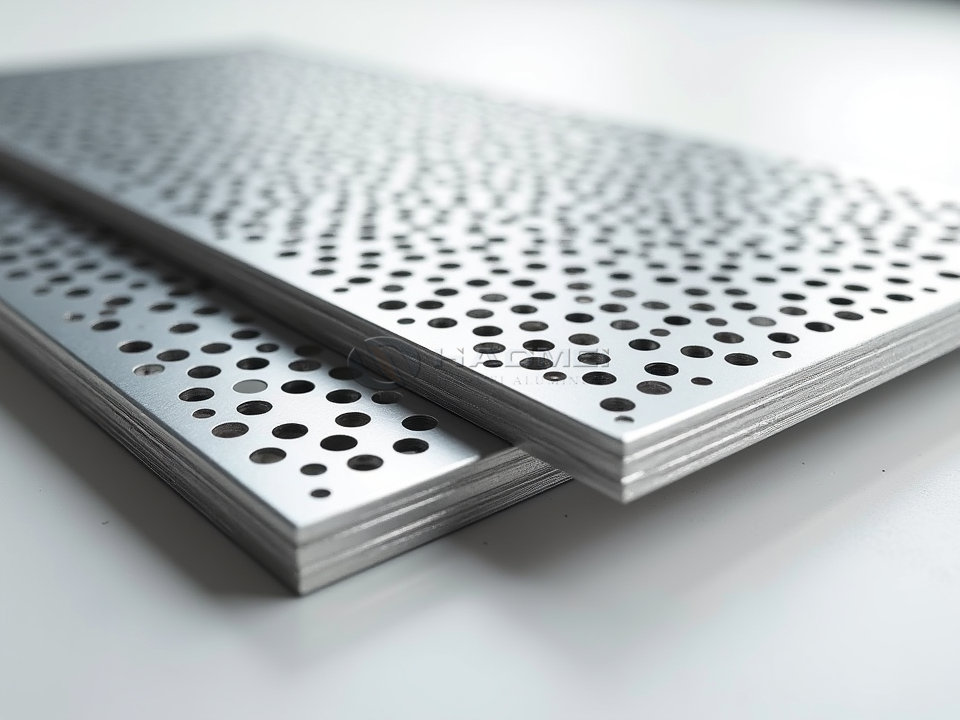
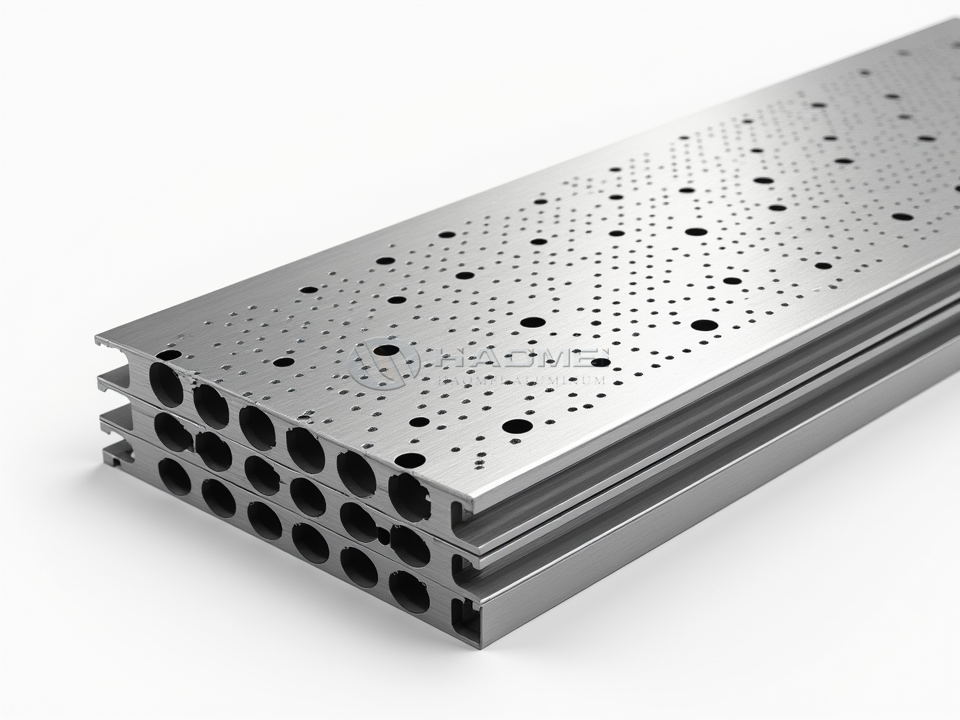
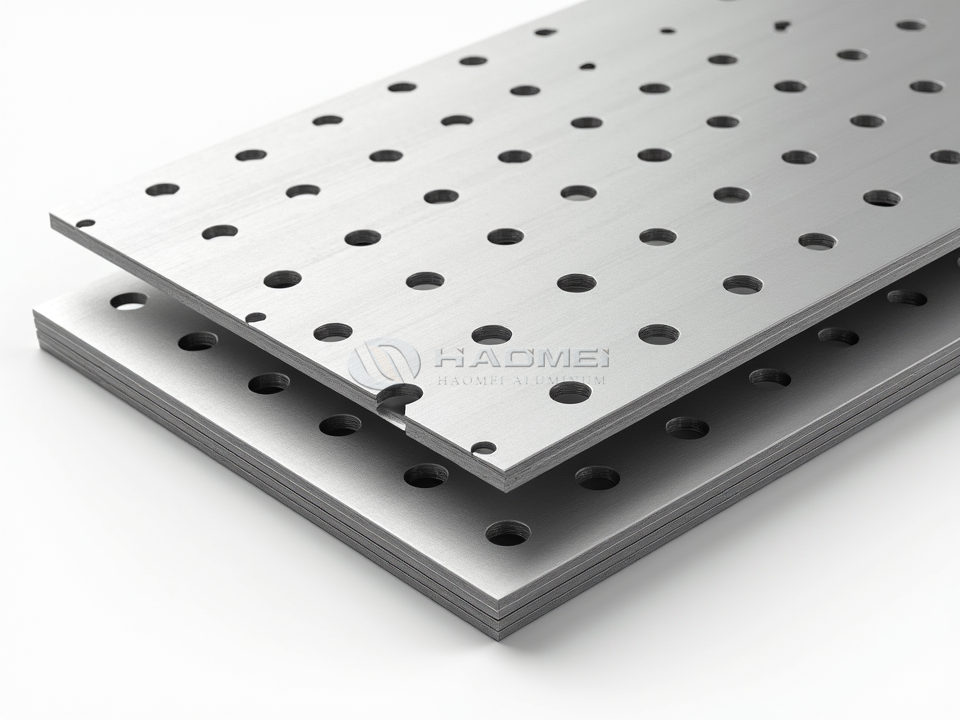
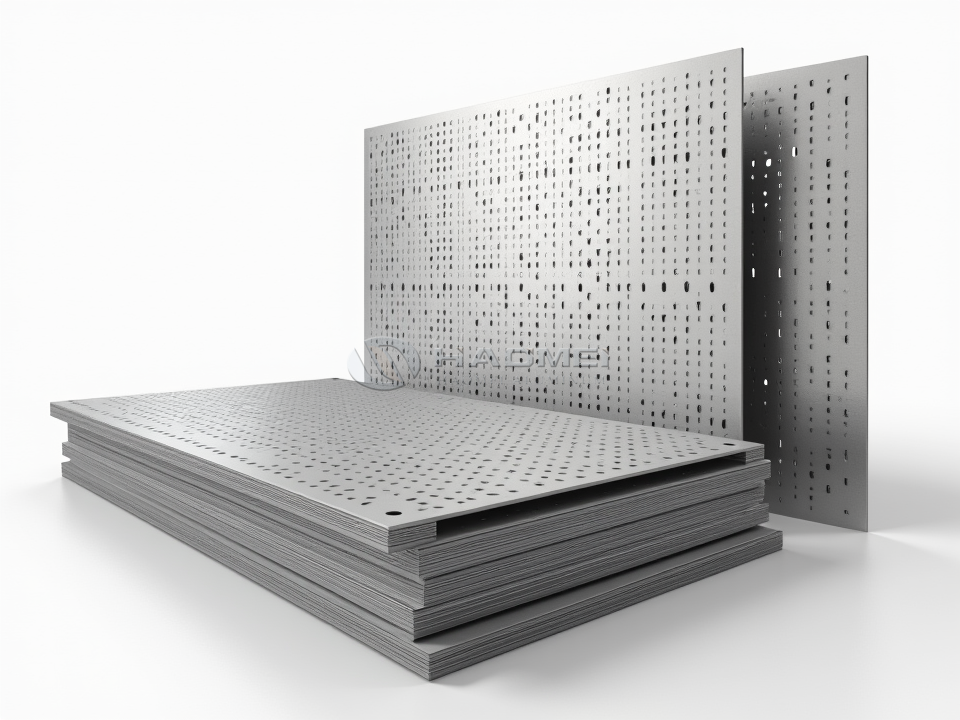
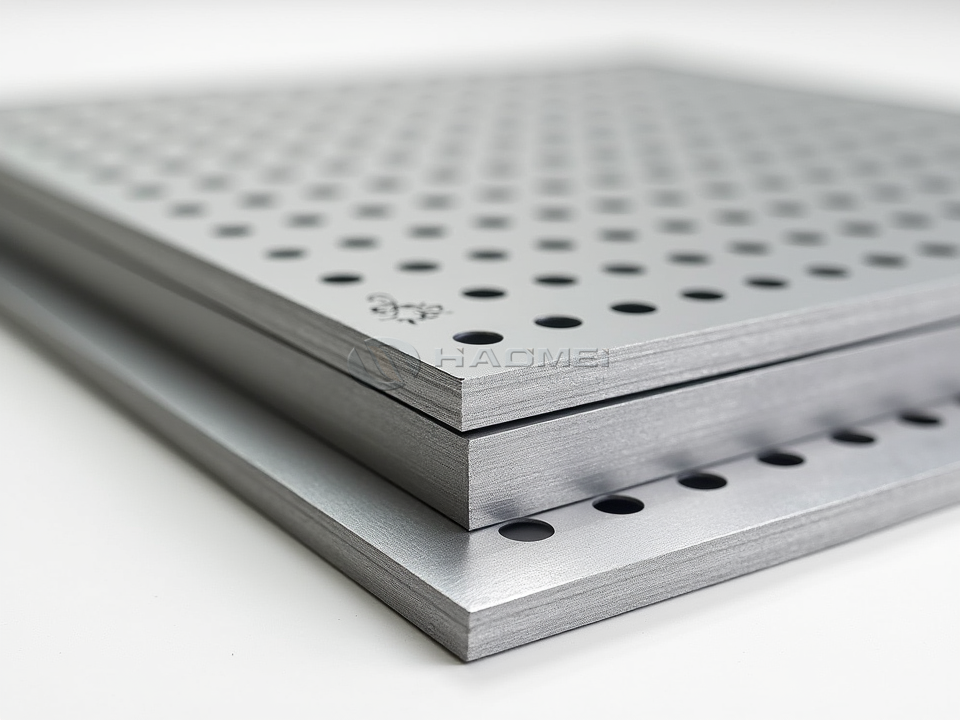
Square hole aluminum perforated sheet is a lightweight metal sheet punched with evenly arranged square openings. Compared with round perforations, square holes create a sharper geometric appearance and a higher open area within the same pitch. This makes the material especially useful where airflow, visibility, drainage, sound diffusion, and modern styling must work together.
The sheet is made from aluminum coil or plate, then processed by CNC punching, leveling, cutting, and surface finishing. It can be supplied in standard panels or customized sizes for architectural cladding, ceiling systems, machine guards, ventilation screens, filters, furniture, and industrial enclosures.
What Makes Square Holes Different
The square opening gives the sheet a clean grid effect. The edges form straight sight lines, so panels look orderly even from a distance. For designers, this means the surface can function as both a technical material and a decorative skin. For engineers, the shape offers efficient open area, stable airflow, and predictable pressure drop.
Square perforations also provide strong visual transparency. When used as a screen, the panel can hide equipment while still allowing air and light to pass through. In façade and ceiling projects, the regular pattern helps create a controlled rhythm across large surfaces.
Where a softer appearance is preferred, a Round Hole Perforated Aluminum Sheet may be selected instead. When the project requires a crisp grid, stronger architectural expression, or a larger visual opening, square hole aluminum perforated sheet is often the better choice.
Common Specifications
Actual dimensions can be adjusted according to drawing requirements. The following table shows typical production ranges used for commercial and industrial panels.
| Parameter | Common Range | Notes |
|---|---|---|
| Material thickness | 0.5 mm to 6.0 mm | Thicker sheets improve rigidity and impact resistance |
| Square hole size | 2 mm x 2 mm to 50 mm x 50 mm | Small holes suit screens and acoustic panels; large holes suit decoration and ventilation |
| Pitch | Hole size plus bridge width | Controls open area and panel strength |
| Open area | 20% to 70% | Higher open area improves airflow but reduces stiffness |
| Sheet width | Up to 1500 mm typical | Wider panels may be available by project |
| Sheet length | Up to 4000 mm typical | Cut-to-size service is common |
| Hole arrangement | Straight or staggered square grid | Straight layout gives a clean architectural look |
| Edge condition | Finished margin or perforated to edge | Finished margins help with fixing and framing |
For thicker architectural or structural panels, customers may also consider Square Hole Perforated Aluminum Plate, especially where wind load, panel flatness, or heavy-duty installation is important.
Aluminum Grades and Chemical Composition
Square hole perforated sheets are often produced from 1000, 3000, 5000, and 6000 series aluminum. The best alloy depends on corrosion exposure, forming demand, strength, and finishing method.
| Alloy | Main Character | Typical Applications |
|---|---|---|
| 1050 / 1060 | High purity, excellent formability, good corrosion resistance | Decorative panels, light screens, indoor ceilings |
| 3003 | Better strength than pure aluminum, good workability | Ventilation grilles, equipment covers, interior panels |
| 5052 | Strong corrosion resistance, good fatigue performance | Marine-adjacent areas, outdoor façades, industrial guards |
| 6061 | Higher strength, good machining performance | Structural screens, heavy-duty frames, mechanical protection |
| Element | 1050 Typical % | 3003 Typical % | 5052 Typical % | 6061 Typical % |
|---|---|---|---|---|
| Al | 99.50 min | Balance | Balance | Balance |
| Si | 0.25 max | 0.60 max | 0.25 max | 0.40 to 0.80 |
| Fe | 0.40 max | 0.70 max | 0.40 max | 0.70 max |
| Cu | 0.05 max | 0.05 to 0.20 | 0.10 max | 0.15 to 0.40 |
| Mn | 0.05 max | 1.00 to 1.50 | 0.10 max | 0.15 max |
| Mg | 0.05 max | 0.05 max | 2.20 to 2.80 | 0.80 to 1.20 |
| Cr | - | - | 0.15 to 0.35 | 0.04 to 0.35 |
| Zn | 0.05 max | 0.10 max | 0.10 max | 0.25 max |
Values may vary slightly according to standards such as ASTM, EN, or customer purchase specifications.
Surface Finishes
Aluminum naturally forms a protective oxide film, but additional finishing improves appearance and service life. Mill finish is suitable for hidden equipment guards or internal industrial use. Anodizing gives a metallic surface with better abrasion and corrosion resistance. Powder coating provides rich color choices, good weather performance, and smooth coverage across panel faces. PVDF coating is preferred for exterior architectural panels exposed to sunlight, rain, and urban pollution.
For decorative projects, color and gloss are as important as hole geometry. Matte black square perforations create a deep shadow effect. Champagne, silver, bronze, and white finishes produce a lighter, cleaner visual impression. Wood grain transfer can also be used when a warmer surface is desired.
Performance Features Customers Care About
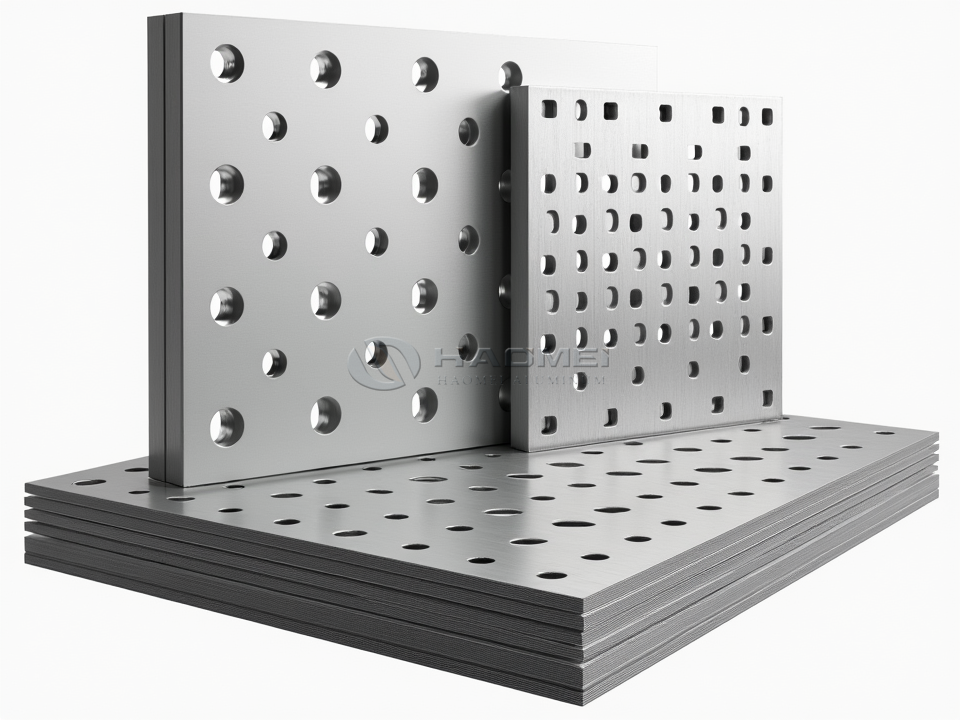
Square hole aluminum perforated sheet is light in weight, which reduces handling effort and supporting frame requirements. This is a major advantage in ceilings, wall linings, lift interiors, exhibition systems, and mobile equipment.
The material also resists corrosion well, especially when 3003, 5052, or coated 6061 is selected. In humid or outdoor settings, correct alloy and finish selection helps maintain long service life with low maintenance.
Ventilation performance is another strong benefit. The open area can be controlled by changing hole size, pitch, and sheet thickness. A high open area supports airflow for HVAC grilles, generator covers, machinery housings, and electronic cabinet panels.
Square perforations can also improve acoustic behavior. When combined with sound-absorbing fabric or mineral wool, the sheet becomes a protective face for acoustic wall and ceiling panels. The holes allow sound waves to enter the absorption layer while the aluminum surface remains durable and easy to clean.
Safety is improved because the sheet can act as a barrier without fully blocking sight or airflow. Operators can inspect moving parts behind a guard, while hands and larger objects remain separated from hazardous areas.
Main Applications
In architecture, square hole aluminum perforated sheet is used for façade cladding, sunshades, balcony screens, parking garage panels, curtain wall inserts, and decorative partitions. It helps reduce solar glare while keeping a light, open appearance. Large square perforations can create bold patterns on building skins, especially when combined with backlighting.
For ceilings, the sheet offers a neat grid appearance and allows air movement, sprinkler function, smoke control, and acoustic treatment. It is common in airports, stations, shopping centers, offices, schools, and public halls.
In industrial use, it is applied to machine guards, protective covers, conveyor screens, radiator grilles, dust extraction panels, and equipment ventilation plates. Aluminum keeps the structure lighter than steel and is easier to cut or form during fabrication.
In commercial interiors, it is used for shelving, retail displays, cabinet doors, lamp covers, stair infill panels, and furniture accents. The square pattern pairs well with glass, wood, stone, and painted steel.
For filtration and separation, small square holes provide consistent opening size and good drainage. They are used in food processing equipment, drying trays, agricultural sorting screens, and light-duty sieving systems, provided the chosen hole size and thickness match the load.
Selection Tips
Choose hole size according to the function first. Small holes offer better screening and a more refined surface. Large holes improve airflow and visual openness. Then check bridge width, because narrow bridges increase open area but reduce strength. For outdoor panels, allow enough edge margin for fixing, expansion, and wind load.
Thickness should be matched with panel size and support spacing. A thin sheet may work well inside a frame, while a large façade panel may need thicker material or folded edges. If the panel will be bent after punching, the direction of bend and distance from the perforated zone should be confirmed before production.
Finish selection should match the environment. Indoor decorative use may only need powder coating or anodizing. Coastal or industrial environments require more careful alloy and coating choices, with 5052 and high-quality exterior coatings often preferred.
Buying Notes
When requesting a quotation, prepare the alloy, temper, thickness, hole size, pitch, sheet size, finish, color, quantity, and drawing if available. If the sheet will be folded, framed, welded, or installed outdoors, sharing installation details helps avoid unnecessary redesign later.
Square hole aluminum perforated sheet combines clean geometry, low weight, corrosion resistance, ventilation, and decorative value in one material. With the right specification, it can serve as a functional screen, a protective guard, or a design surface that gives metal panels a precise and modern character.