Balcony Railing Perforated Aluminum
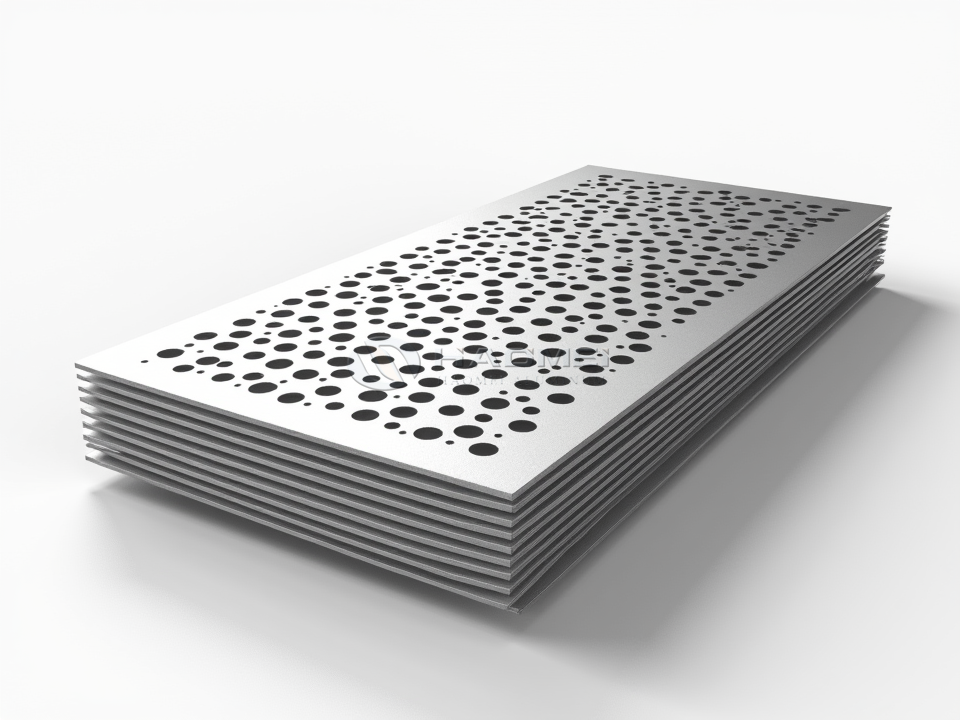
Balcony railing perforated aluminum combines dependable edge protection with an architectural screen effect. Manufactured from corrosion-resistant aluminum sheet, the panel is punched with round, square, slotted, or decorative openings, then formed, framed, and finished to suit the building facade. It provides airflow and daylight while creating a more private, visually refined balcony boundary than conventional open-bar railings.
This material is widely selected for apartment buildings, hotels, hospitals, offices, mixed-use developments, and residential terraces. Its low mass reduces demand on balcony slabs and support brackets, while the perforation pattern gives architects freedom to balance visibility, shading, ventilation, and appearance.
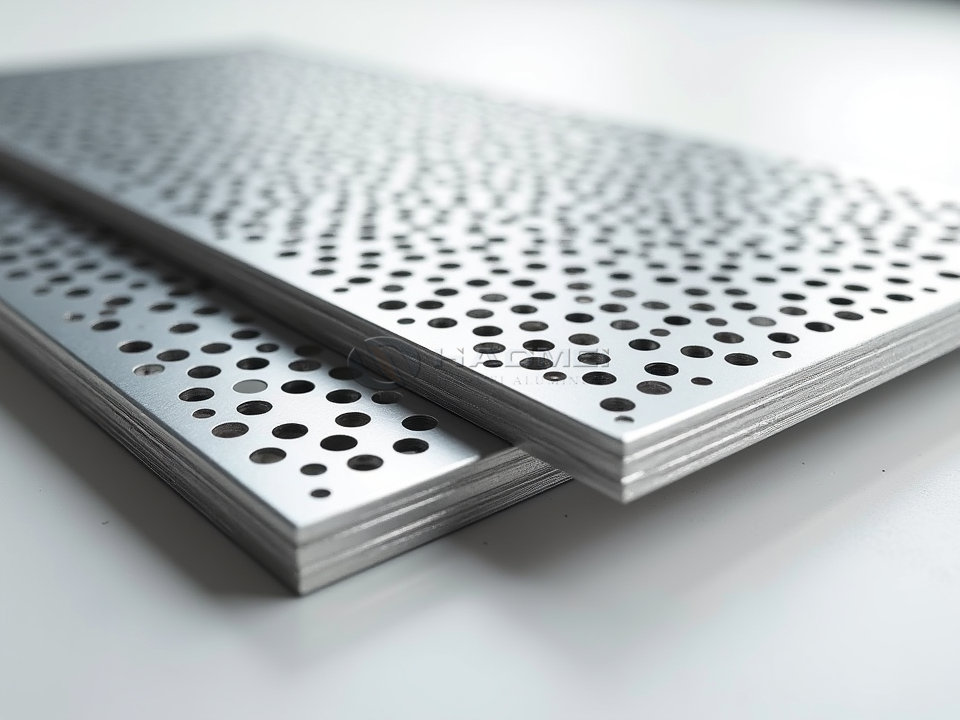
Performance Features for Balcony Railings
A perforated aluminum railing panel performs as both a safety infill and a facade element. The solid metal zones carry loads through the panel and supporting frame, while the open areas reduce wind pressure and create a lighter visual impression.
| Feature | Performance Value for Balcony Use |
|---|---|
| Low density | Aluminum weighs about 2.7 g/cm³, reducing handling effort and structural dead load |
| Atmospheric durability | Aluminum naturally forms a protective oxide film; marine-grade alloy and coating options improve service life in wet or coastal areas |
| Privacy control | Open-area ratio, hole size, and panel backing can be adjusted to limit direct views |
| Air and light passage | Perforations allow natural ventilation and soften direct sunlight without fully enclosing the balcony |
| Design flexibility | Hole geometry, panel dimensions, folded edges, colors, and frames can be tailored to facade requirements |
| Fire behavior | Aluminum is non-combustible, although complete railing assemblies should be evaluated against local building requirements |
| Easy maintenance | Painted or anodized surfaces generally need only periodic washing with clean water and mild neutral detergent |
Compared with steel infill, aluminum does not develop red rust. Compared with glass balustrades, perforated panels can provide better visual screening and can conceal balconies, drainage components, or outdoor equipment more effectively.
Suitable Aluminum Alloys and Chemical Composition
AA 5052 is a common choice for outdoor balcony railing perforated aluminum because its magnesium-bearing chemistry provides strong corrosion resistance, good formability, and reliable welding behavior. AA 3003 is also suitable for less demanding environments and decorative panel work. For high-exposure coastal buildings, alloy selection, pretreatment, coating system, drainage design, and dissimilar-metal isolation should all be considered together.
Typical Chemical Composition of AA 5052 Aluminum Sheet
| Element | Typical Specification, % by Weight |
|---|---|
| Magnesium, Mg | 2.2–2.8 |
| Chromium, Cr | 0.15–0.35 |
| Iron, Fe | 0.40 max |
| Silicon, Si | 0.25 max |
| Copper, Cu | 0.10 max |
| Manganese, Mn | 0.10 max |
| Zinc, Zn | 0.10 max |
| Other elements, each | 0.05 max |
| Other elements, total | 0.15 max |
| Aluminum, Al | Balance |
The magnesium content helps AA 5052 maintain corrosion resistance in humid urban settings and many marine-adjacent locations. However, salt accumulation should still be washed off regularly, particularly where balconies receive sea spray but little rainfall.
Mechanical Properties and Panel Strength
Mechanical performance depends on alloy, temper, thickness, hole arrangement, free span, edge folds, frame spacing, and fastener layout. Perforating removes metal, so railing design must evaluate the net section rather than relying only on base-sheet properties.
Typical Mechanical Properties of AA 5052-H32
| Property | Typical Value | Test Consideration |
|---|---|---|
| Tensile strength | 210–260 MPa | Varies with thickness and product standard |
| Yield strength | 130 MPa minimum | Direction and temper can affect result |
| Elongation | 12% minimum | Depends on gauge length and sheet thickness |
| Elastic modulus | Approximately 70 GPa | Used for deflection calculations |
| Density | Approximately 2.68 g/cm³ | Supports lightweight construction |
| Melting range | Approximately 605–650°C | Not a design temperature limit |
For guardrail systems, the finished assembly must be engineered and tested for applicable line load, point load, impact, deflection, climbability, and opening-size regulations. Panel thickness alone does not confirm railing suitability. A stiff perimeter frame, formed return edges, intermediate rails, or concealed vertical supports may be needed to control deflection under wind and occupant loading.
Perforation Patterns and Visual Control
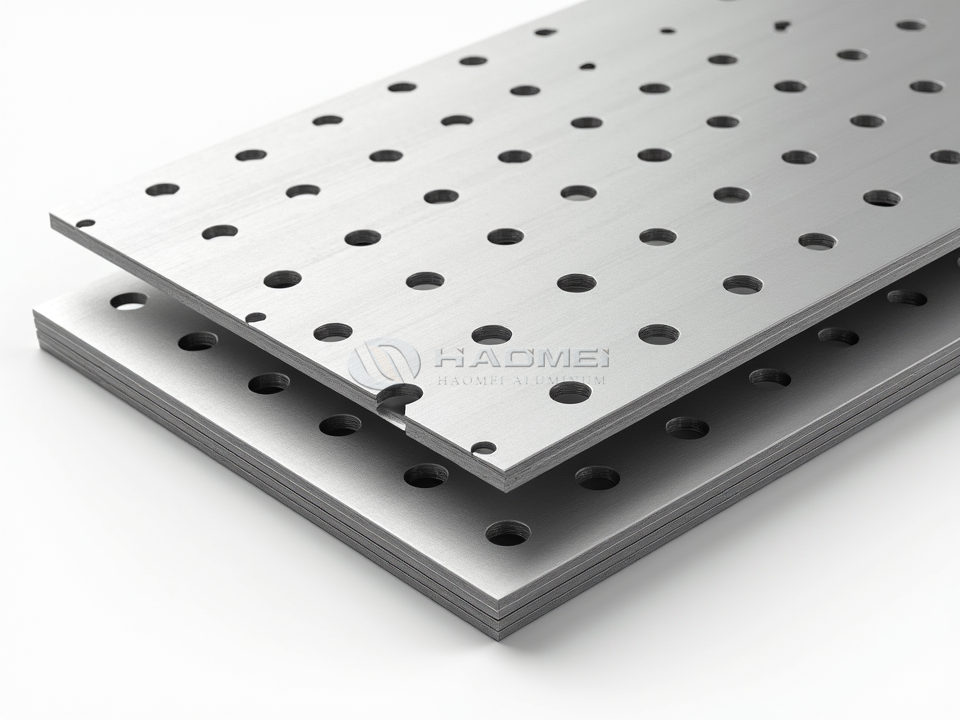
Hole geometry changes both appearance and performance. Round holes provide a calm, uniform architectural surface and distribute stress smoothly around each opening. Square holes create a crisp, contemporary grid, while slots can emphasize horizontal or vertical movement across a facade.
For many balcony installations, a Round Hole Perforated Aluminum Sheet offers an effective balance of fabrication efficiency, viewing control, and drainage. Smaller holes and lower open area improve privacy, but they increase wind loading and may require stronger supports. Larger openings improve air movement and outward visibility but can reduce screening.
| Perforation Option | Typical Hole Range | Typical Open Area | Balcony Effect |
|---|---|---|---|
| Round holes | 3–20 mm diameter | 20–50% | Smooth appearance, balanced openness |
| Square holes | 5–25 mm side length | 25–55% | Geometric visual character, stronger screen pattern |
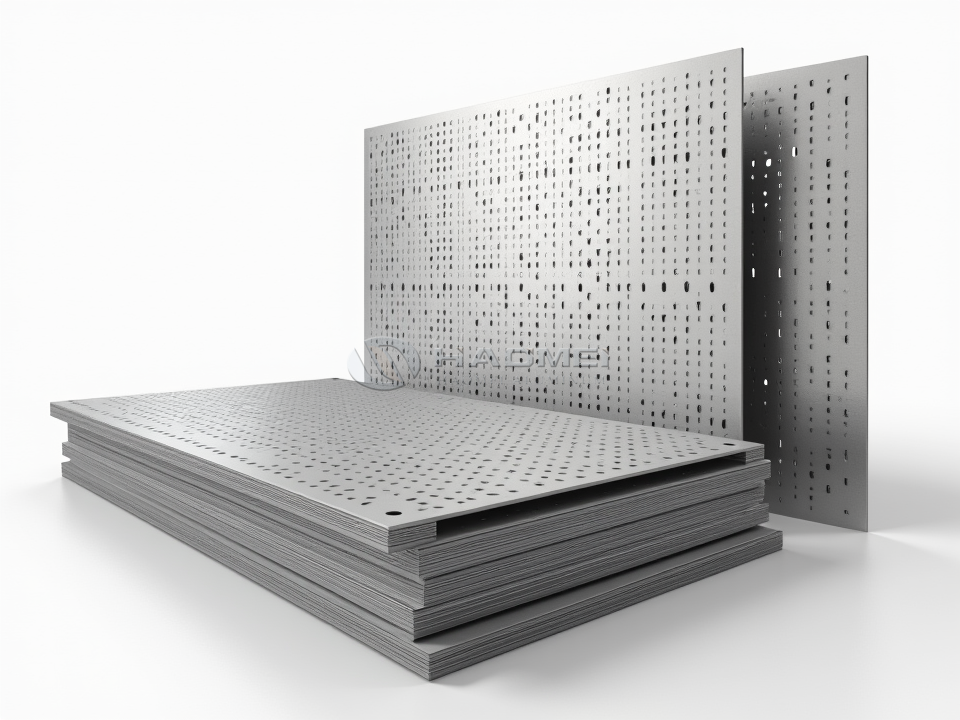
| Slotted holes | 3 × 15 mm to 10 × 40 mm | 20–45% | Directional appearance and tailored sightlines |
| Decorative patterns | Project-specific | 15–50% | Branding, artistic motifs, or facade coordination |
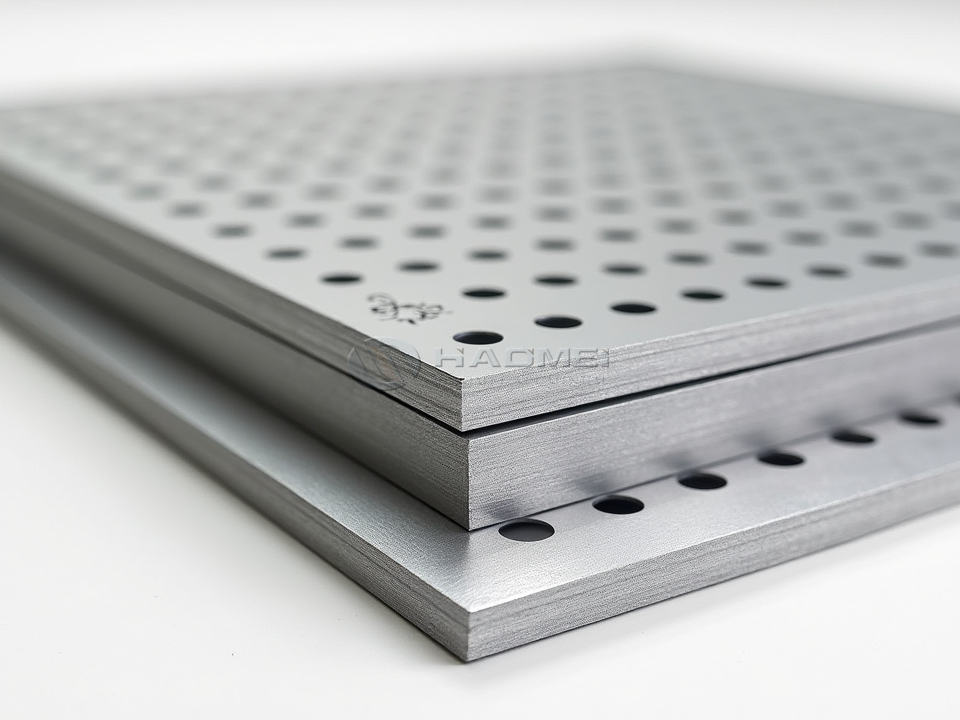
A Square Hole Perforated Aluminum Plate is particularly suitable for projects seeking a bold modular facade rhythm. For all patterns, the margin around the panel perimeter should remain adequate for framing, fastening, folding, and load transfer.
Technical Specifications
| Parameter | Common Range or Option |
|---|---|
| Base material | AA 5052, AA 3003, or project-approved aluminum alloy |
| Temper | H32, H34, H14, or as specified |
| Sheet thickness | 2.0–4.0 mm commonly used for railing infill |
| Panel width | Custom, often matched to post centers or facade modules |
| Panel height | Custom to guard height and code requirements |
| Hole pattern | Round, square, slotted, hexagonal, or decorative CNC pattern |
| Open-area ratio | Approximately 15–55% |
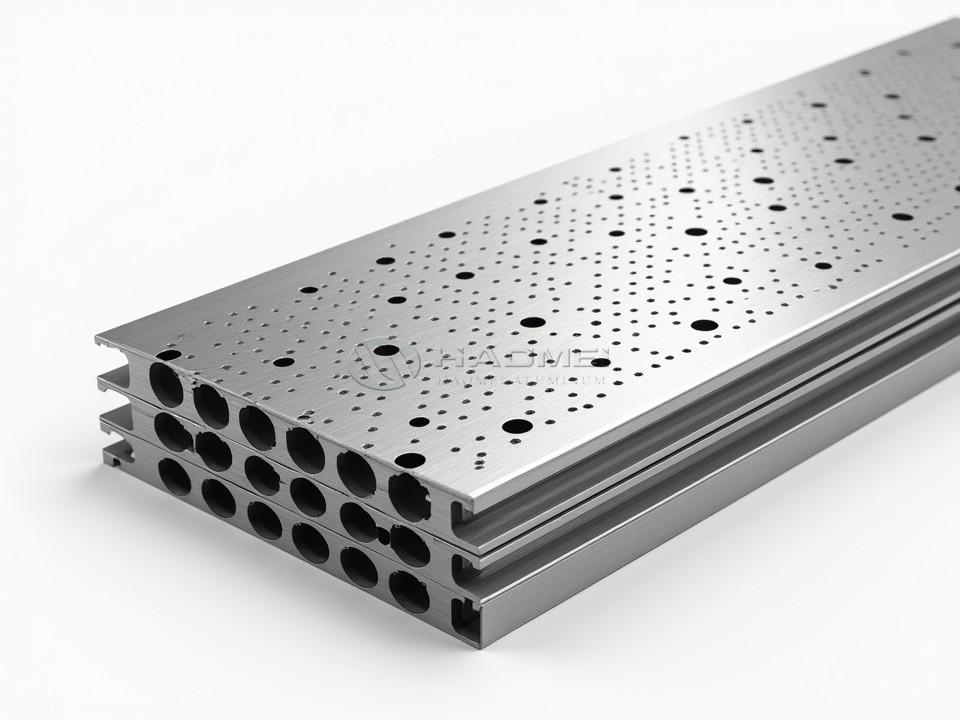
| Edge treatment | Deburred, hemmed, folded, welded frame, or extruded frame |
| Surface finish | Mill finish, PVDF coating, polyester powder coating, anodizing, wood-grain transfer |
| Color | RAL, custom color matching, metallic, matte, textured, or wood-effect |
| Fixing method | Bolted brackets, concealed clips, welded frames, or cassette mounting |
Surface Finishes for Outdoor Exposure
Powder coating is a popular finish because it supplies broad color selection and a durable decorative film. PVDF coating is often specified for demanding exterior facades, especially where long-term color retention is important. Anodizing creates a metallic appearance integrated with the aluminum surface and is valued for its clean, contemporary character.
Finish selection should consider solar exposure, salt exposure, pollution level, cleaning access, and desired gloss. Cut edges, drill holes, weld zones, and contact points with steel parts deserve special attention. Insulating washers or compatible separators help reduce galvanic corrosion when aluminum is installed against dissimilar metals.
Practical Applications and Customer Benefits
Balcony railing perforated aluminum is suitable for:
- Apartment and condominium balcony guards
- Hotel guest-room balcony screens
- Private residential terraces and rooftop decks
- Exterior escape balconies and access walkways
- Parking structure edge screens
- Podium decks, atriums, and communal outdoor areas
- Equipment-concealment screens integrated with railing systems
The material gives property owners a durable, low-maintenance balcony finish while helping architects establish facade depth and rhythm. Residents gain a sense of enclosure without losing fresh air or daylight. Contractors benefit from lightweight panels that can be prefabricated to modular sizes, improving installation consistency and reducing site cutting.
For dependable results, specify the complete system: alloy, thickness, perforation layout, frame design, finish, fastening method, drainage route, and project load requirements. Properly engineered perforated aluminum railing panels deliver a clean exterior appearance with lasting safety, privacy, and weather resistance.