Custom Pattern Perforated Aluminum Panel
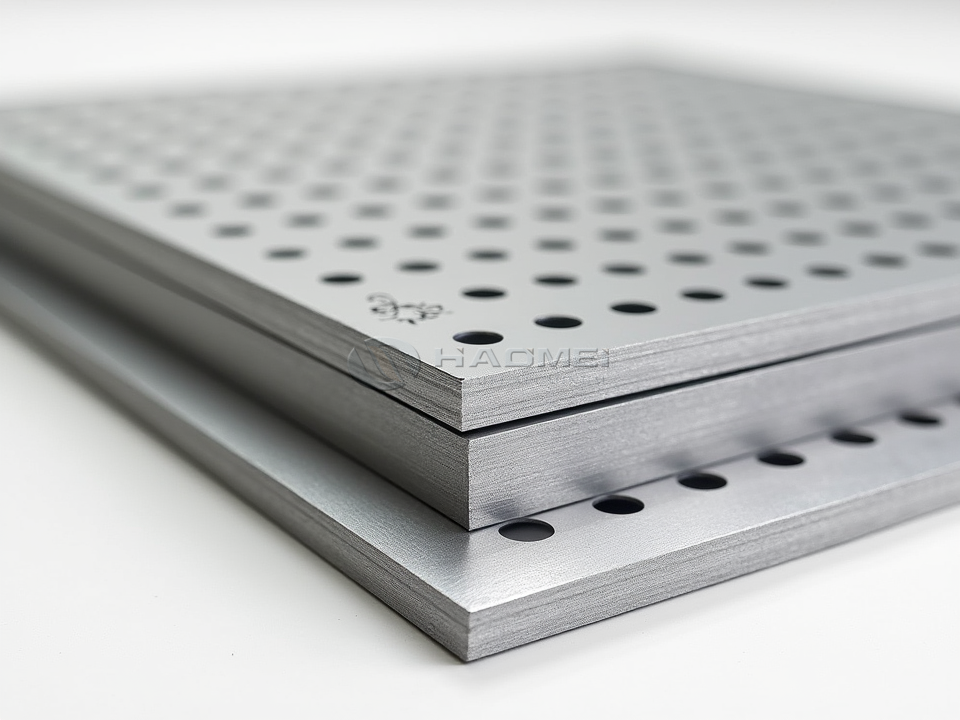
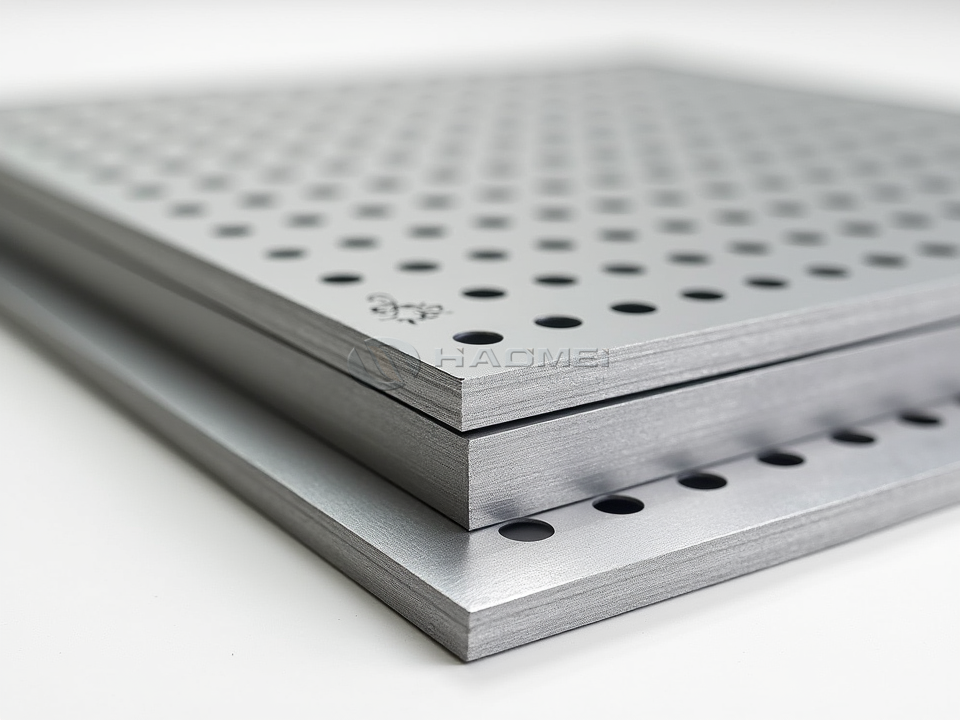
A custom pattern perforated aluminum panel turns a practical metal sheet into a functional design surface. Through precisely arranged holes, slots, geometric forms, logos, or artistic motifs, the panel can control light, air, visibility, sound, and visual rhythm at the same time. It is widely specified for facades, ceilings, partitions, screens, acoustic linings, equipment guards, and retail interiors.
Aluminum is especially suitable for perforation because it is lightweight, corrosion resistant, formable, and available in a broad range of finishes. A well-designed panel can appear open and airy from one angle, then solid and graphic from another. With custom tooling, CNC punching, laser cutting, or digital pattern processing, architects and fabricators can translate drawings into repeatable metal surfaces with dependable dimensional control.
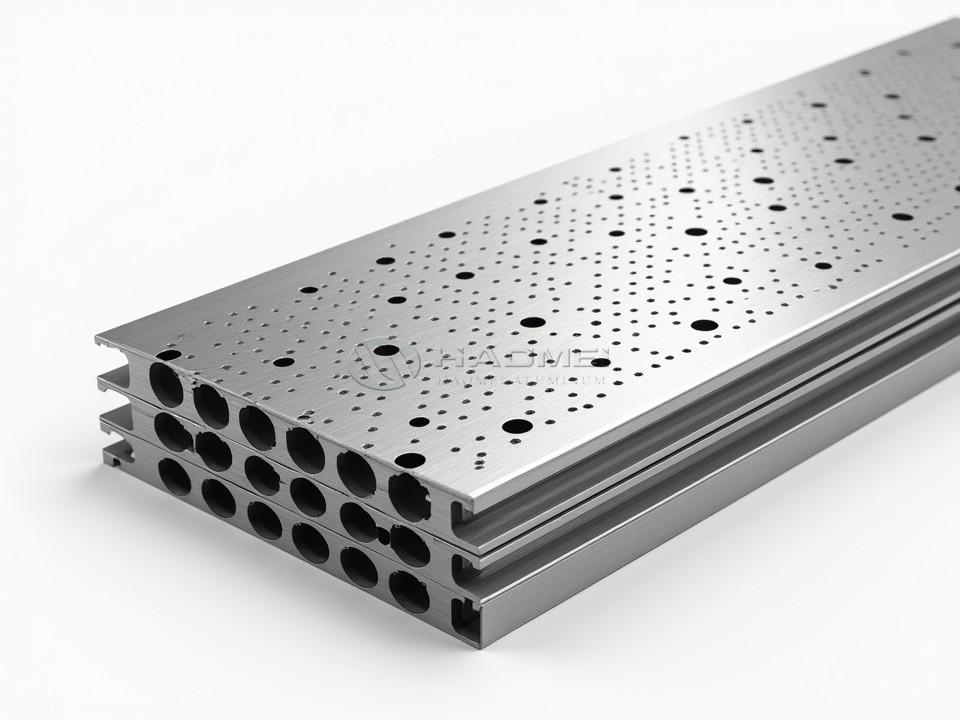
Design Freedom With Functional Performance
Custom perforation is not limited to standard round holes. Panels may use square, rectangular, slotted, hexagonal, triangular, floral, wave, or brand-inspired patterns. Hole dimensions, pitch, orientation, border margins, and open-area percentage can all be adjusted to suit the intended installation.
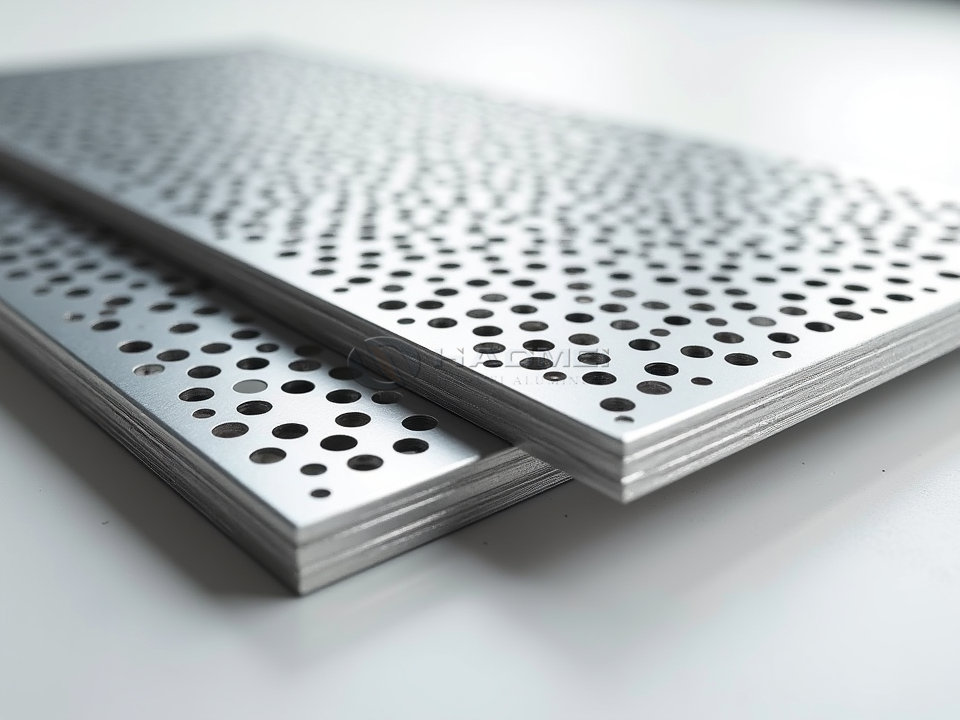
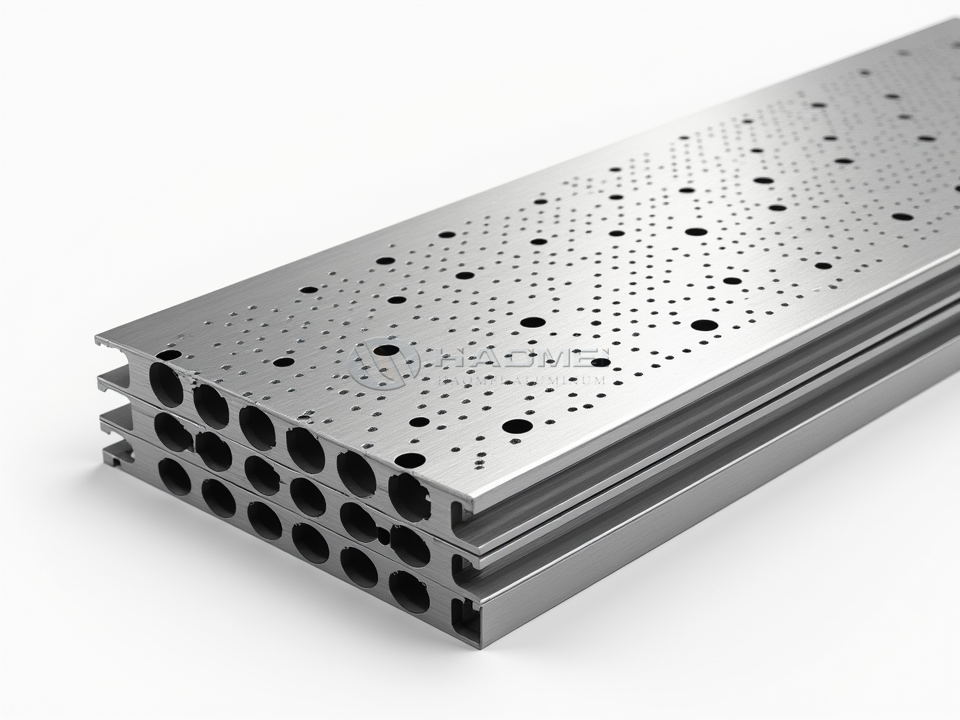
For a clean industrial appearance, a regular grid pattern offers consistency and easy alignment. For a more expressive facade or interior feature wall, staggered openings, variable hole sizes, or gradient patterns can create motion and depth. Laser-cut graphics are often selected for projects requiring letters, symbols, local cultural imagery, or intricate decorative screens.
The perforation pattern also determines the panel's technical behavior. Higher open area increases airflow and transparency, while a lower open area provides greater privacy, visual mass, and material continuity. When used with acoustic insulation behind the panel, hole size and open area influence how sound enters the absorption layer.
| Custom Parameter | Typical Options | Design Effect |
|---|---|---|
| Hole shape | Round, square, slot, hexagonal, decorative motif | Controls visual character and fabrication method |
| Hole size | 1.0 mm to 30 mm or custom | Affects openness, airflow, and screen visibility |
| Pitch | Straight, staggered, irregular, gradient | Sets pattern density and structural web width |
| Open area | Approximately 10% to 60% | Balances ventilation, privacy, weight, and shading |
| Border margin | Plain edge or perforated edge | Supports framing, fastening, and panel rigidity |
| Panel thickness | 0.8 mm to 5.0 mm | Selected according to span, forming, and loading |
| Panel form | Flat, folded, curved, cassette, corrugated | Matches facade, ceiling, or enclosure requirements |
For applications needing familiar geometric precision, a Square Hole Perforated Aluminum Plate provides a disciplined visual grid and strong directional character. Slotted designs, in contrast, are popular when the project requires elongated ventilation paths or a more linear appearance.
Aluminum Alloy and Material Options
Material selection should reflect the environment, panel size, forming requirement, and finish system. Commercially pure aluminum grades provide excellent corrosion resistance and formability. Magnesium-containing alloys offer higher strength for larger panels, exterior cladding, and installations exposed to wind loading.
| Alloy Grade | Main Characteristics | Common Panel Uses |
|---|---|---|
| 1050 | High aluminum purity, excellent formability and corrosion resistance | Interior ceilings, decorative sheets, light-duty screens |
| 1060 | Soft, easy to perforate and bend, good surface quality | Interior panels, signage, acoustic covers |
| 1100 | Good ductility and weather resistance | Decorative panels, lighting components, louvers |
| 3003 | Manganese-enhanced strength with good workability | Ceilings, wall panels, general architectural use |
| 3005 | Improved strength and corrosion resistance | Exterior panels, coated cladding, formed cassettes |
| 5052 | Magnesium alloy with higher strength and marine-grade corrosion resistance | Coastal facades, equipment covers, heavy-duty screens |
| Chemical Property, Typical Range | 1050 | 3003 | 5052 |
|---|---|---|---|
| Aluminum, Al | 99.5% min | Balance | Balance |
| Manganese, Mn | 0.05% max | 1.0% to 1.5% | 0.10% max |
| Magnesium, Mg | 0.05% max | 0.05% max | 2.2% to 2.8% |
| Iron, Fe | 0.40% max | 0.70% max | 0.40% max |
| Silicon, Si | 0.25% max | 0.60% max | 0.25% max |
Chemical values may vary according to the applicable material standard, temper, and production specification. For exterior architectural work, 3003, 3005, and 5052 are commonly considered because they pair effectively with durable coating systems.
Surface Finishes That Complete the Design
The finish is more than a color choice. It protects the metal, influences reflectivity, and defines how a perforated pattern is perceived in daylight and artificial light. Powder coating is widely selected for its color range, even coverage, and strong weathering performance. PVDF coating is often preferred for demanding exterior facade applications. Anodizing creates an integral oxide layer with a refined metallic appearance, while brushed, embossed, or wood-grain transfer finishes add further decorative options.
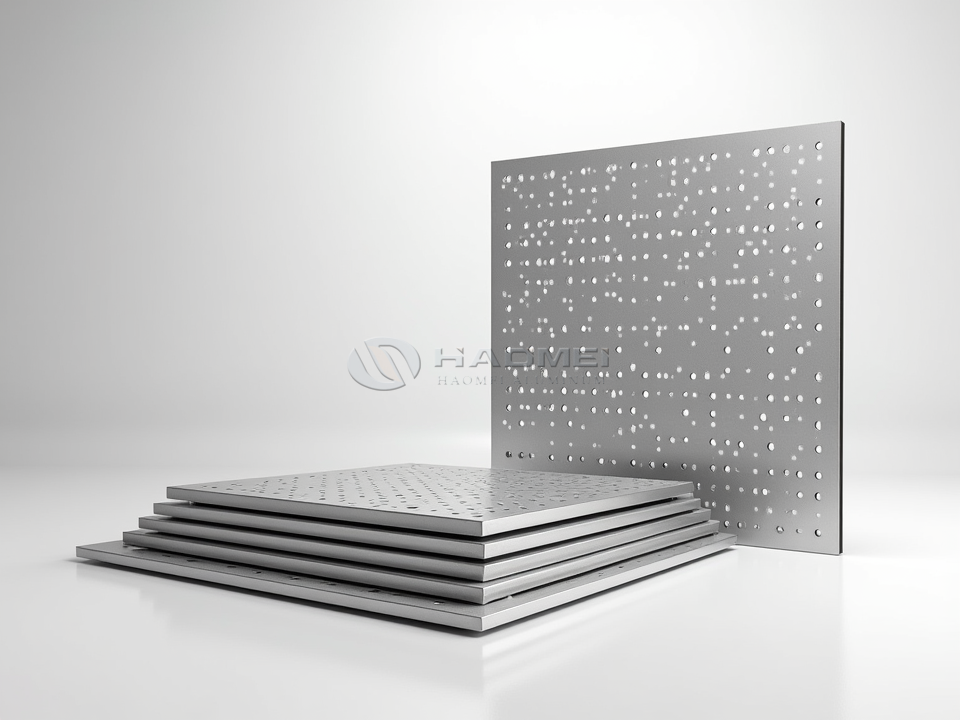
Dark finishes can make perforations appear deeper and more dramatic. Light-colored panels reflect more illumination and help brighten covered spaces. Metallic anodized surfaces emphasize the natural character of aluminum, particularly in close-view interior applications.
| Finish Type | Typical Appearance | Suitable Environments |
|---|---|---|
| Polyester powder coating | Smooth or textured solid color | Interiors, protected exterior installations |
| PVDF coating | High-weatherability architectural color | Facades, sun-exposed exterior cladding |
| Anodized finish | Satin, brushed, or metallic aluminum appearance | Interior features, premium exterior details |
| Wood-grain transfer | Decorative timber-like surface | Soffits, ceilings, screens, commercial interiors |
| Mill finish | Natural untreated aluminum surface | Industrial components and further processing |
Applications Across Buildings and Industry
In facade systems, custom pattern perforated aluminum panels act as a second skin. They soften direct sunlight, reduce glare, provide partial privacy, and add a changing shadow pattern throughout the day. When positioned in front of windows, the design can preserve outward views while helping lower solar exposure.
For ceilings, perforated aluminum brings ventilation and acoustic potential into public spaces such as airports, stations, offices, schools, theatres, and shopping areas. Panels can conceal ducts, wiring, and sprinklers while maintaining access for maintenance. Pairing the panel with acoustic fleece and mineral wool can improve sound control in busy rooms.
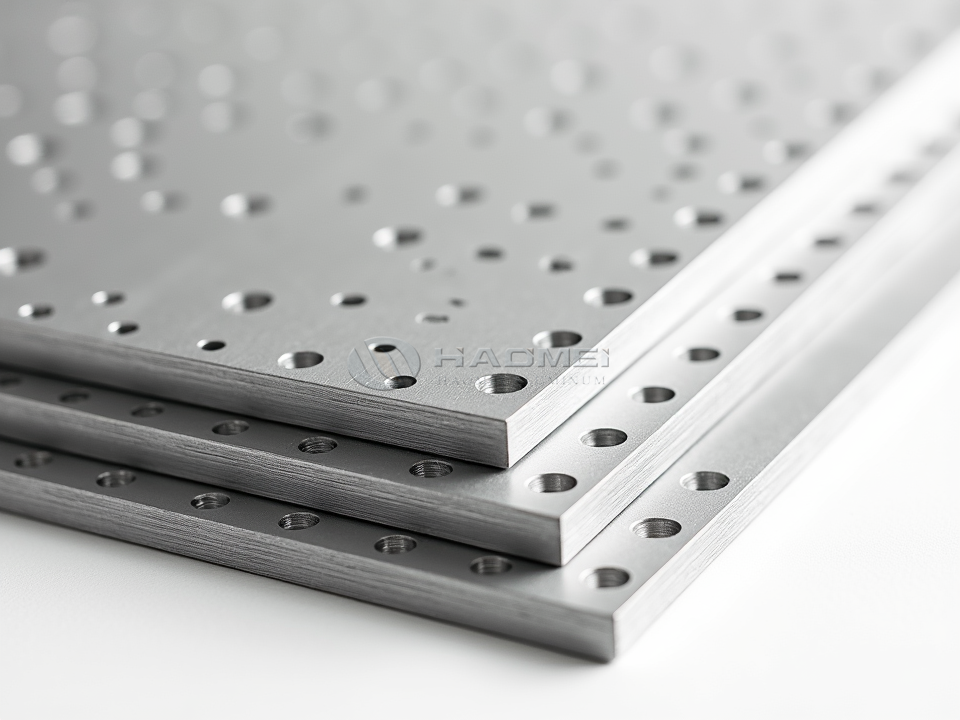
Interior designers use custom patterns for room dividers, reception backdrops, elevator surrounds, balustrade infill, display fixtures, and feature walls. The material is lighter than steel, easier to handle during installation, and compatible with folding or cassette fabrication. In industrial settings, the same panel concept serves as machine guarding, ventilation covers, filters, radiator grilles, and safety enclosures.
For longer openings and directional airflow, a Slotted Hole Perforated Aluminum Sheet can provide a practical solution with a distinct architectural line.
Fabrication and Installation Considerations
Panel performance depends on more than the hole pattern. Adequate unperforated margins are needed around edges for folding, fastening, welding, or framing. Very large holes or high open-area layouts reduce stiffness, so panel thickness, support spacing, and return folds should be evaluated together. For wide facade panels, cassette edges or reinforced backing frames can help maintain flatness.
Common fabrication methods include turret punching for repeat patterns, CNC punching for flexible layouts, laser cutting for detailed graphics, and press braking for folds and return edges. Installation options include concealed clips, screw-fixed frames, rivets, aluminum extrusions, and modular ceiling grids. Drainage, thermal movement, access requirements, and compatibility between aluminum and adjacent metals should be considered during detailing.
A custom pattern perforated aluminum panel delivers more than decoration. It is a responsive building material that can shade, ventilate, filter, protect, absorb sound, and create a memorable surface identity. By matching alloy, perforation geometry, open area, finish, and fixing method to the project conditions, customers can achieve a panel system that is both visually engaging and built for lasting service.