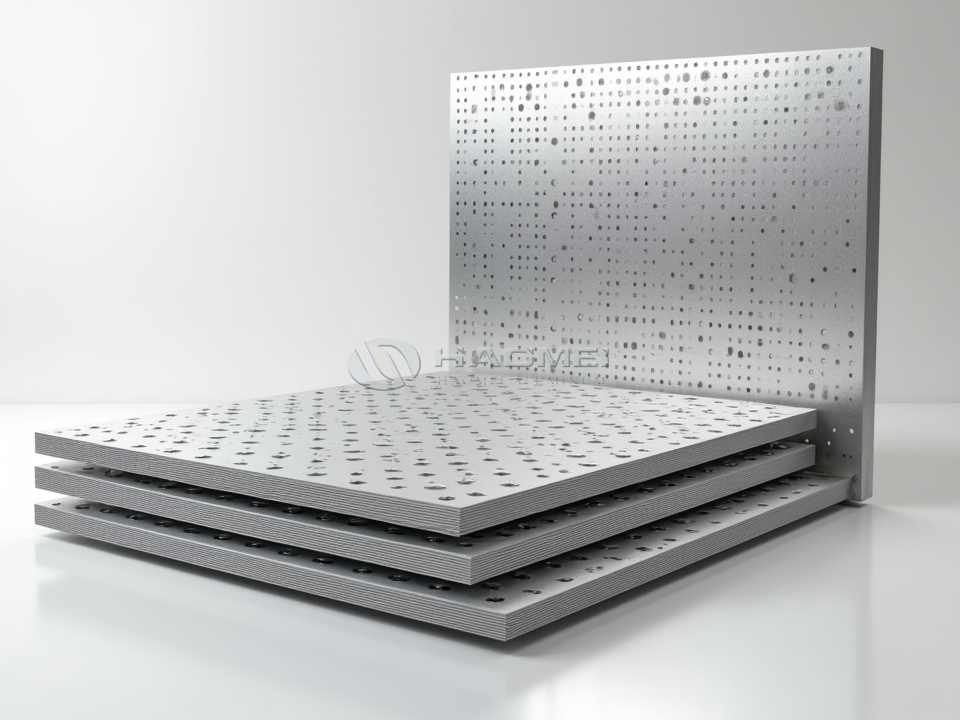
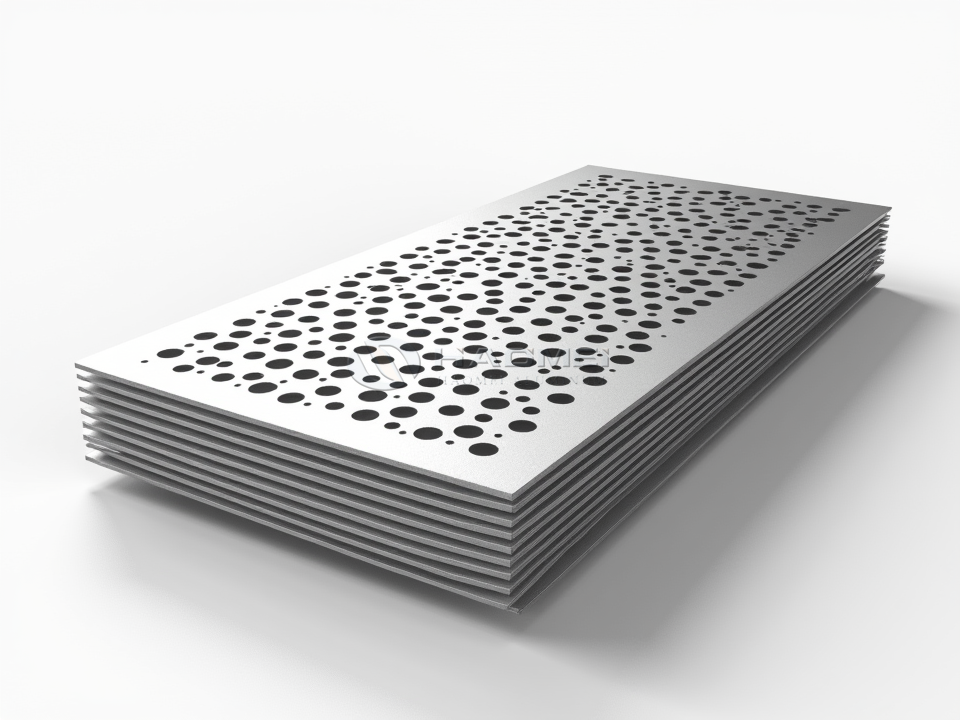
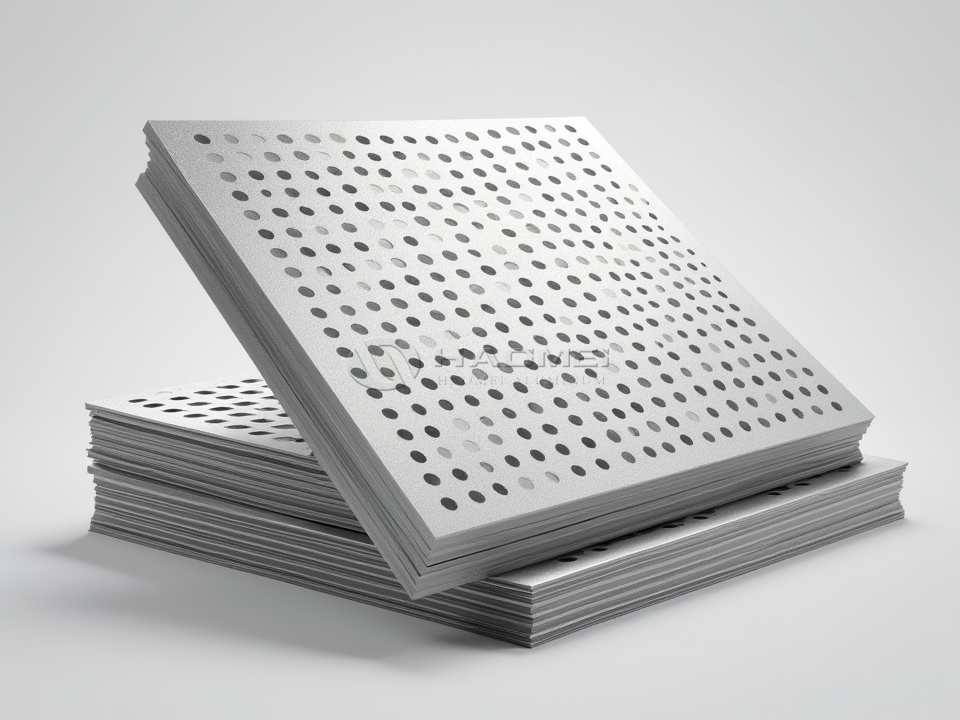
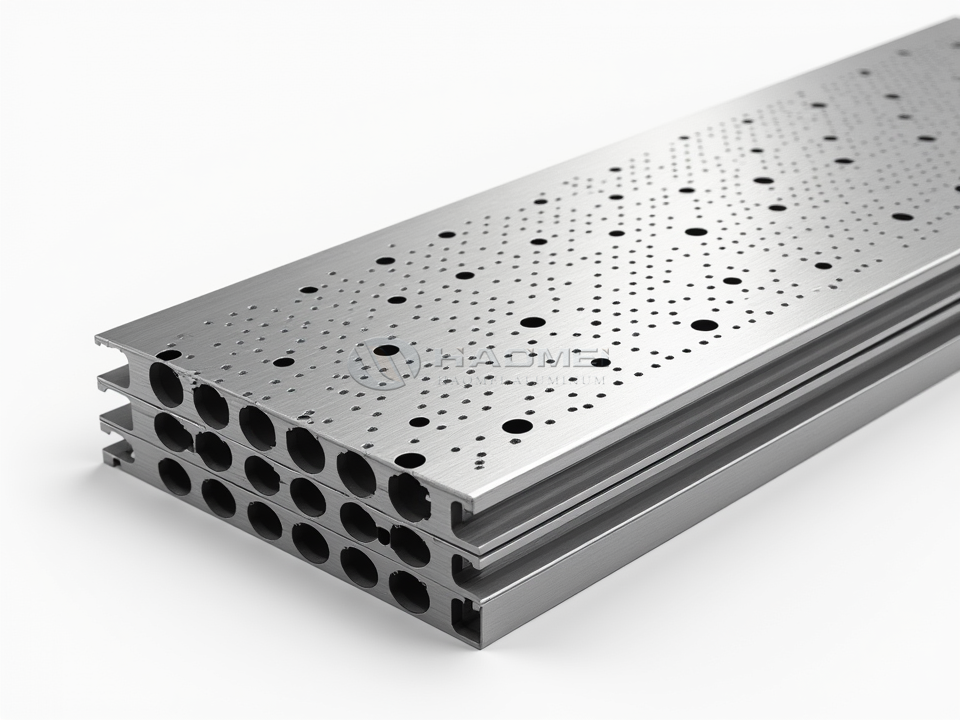
Decorative Perforated Metal Sheet Aluminum
Decorative perforated metal sheet aluminum is a lightweight, corrosion-resistant sheet product punched with round, square, slotted, hexagonal, or custom decorative holes. It is widely used in building facades, ceilings, partitions, balcony guards, sunshades, acoustic panels, machine guards, and retail display systems. By combining visual texture with functional airflow, light control, drainage, and sound absorption, it gives designers a practical material for both exterior and interior projects.
Compared with steel perforated sheet, aluminum offers easier handling, better natural corrosion resistance, and excellent surface finishing flexibility. It can be anodized, powder coated, PVDF coated, brushed, or mill finished depending on the design and service environment.
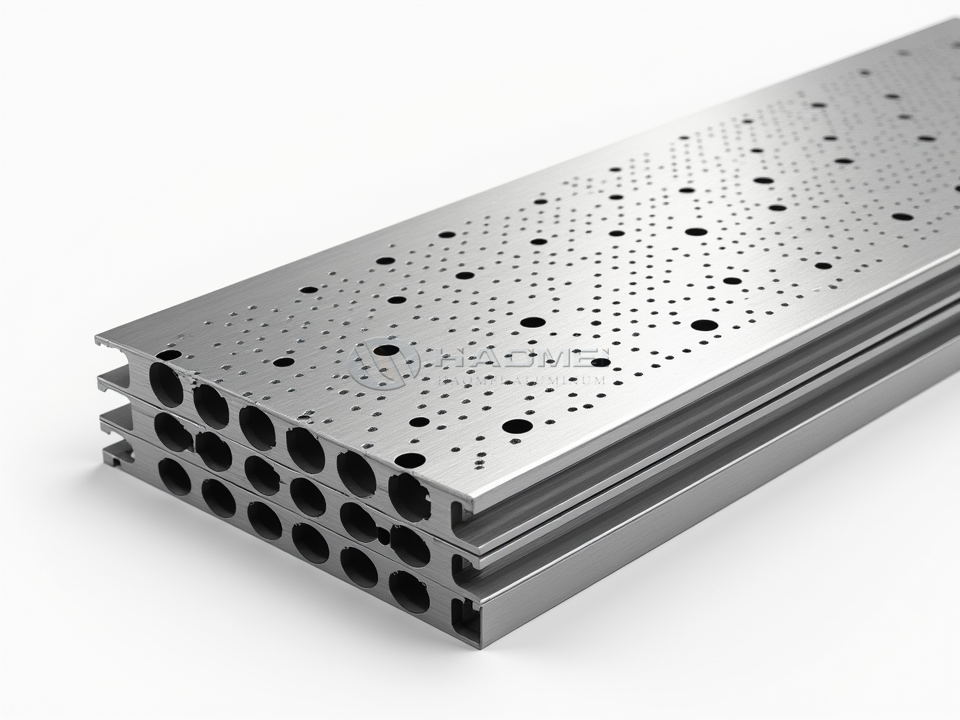
Product Highlights
| Feature | Customer Benefit |
|---|---|
| Low density aluminum base | Easier installation, reduced structural load, lower handling cost |
| Custom perforation patterns | Supports decorative, ventilation, shading, and privacy requirements |
| High corrosion resistance | Suitable for indoor, outdoor, humid, and coastal applications with proper coating |
| Good formability | Can be bent, rolled, framed, folded, or fabricated into cassette panels |
| Surface finish options | Matches architectural colors, textures, and branding concepts |
| Recyclable material | Supports sustainable building and circular material use |
Decorative perforated aluminum sheet can be manufactured from coil or flat sheet. The perforation is usually produced by CNC punching, turret punching, or mold punching. For architectural panels, hole arrangement, open area, edge margin, flatness, and coating quality are carefully controlled to ensure both appearance and performance.
Common Hole Patterns
| Hole Type | Typical Use | Visual Effect | Functional Advantage |
|---|---|---|---|
| Round hole | Facades, ceilings, guards, acoustic panels | Clean and balanced | Stable punching quality, good strength retention |
| Square hole | Screens, partitions, display panels | Modern and geometric | High open area with sharp design lines |
| Slotted hole | Ventilation panels, sunshades, equipment covers | Linear and directional | Strong airflow and drainage performance |
| Hexagonal hole | Decorative walls, feature panels | Honeycomb texture | High open ratio and eye-catching appearance |
| Custom pattern | Branding, art panels, landmark projects | Project-specific design | Can form logos, gradients, images, or irregular textures |
For customers comparing standard options, a Decorative Perforated Aluminum Facade Panel is often selected when exterior appearance, wind resistance, and coating durability must be considered together.
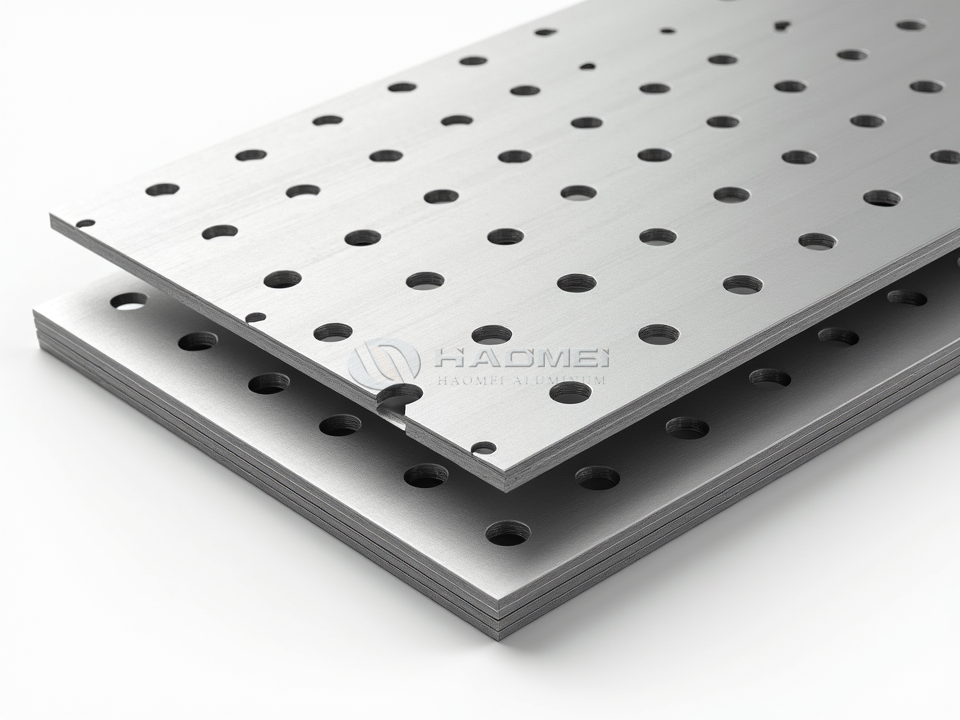
Technical Specifications
| Item | Standard Range | Custom Options |
|---|---|---|
| Alloy | 1050, 1060, 1100, 3003, 3004, 5052, 5754, 6061 | Other aluminum alloys on request |
| Temper | O, H12, H14, H16, H18, H24, H32, T6 | Selected according to forming and strength needs |
| Thickness | 0.5 mm to 6.0 mm | Heavier plate available for special structures |
| Width | 300 mm to 1500 mm | Wider formats by project evaluation |
| Length | 500 mm to 4000 mm | Cut-to-size panels available |
| Hole diameter | 1.0 mm to 100 mm | Micro holes or large decorative openings possible |
| Pitch | 2.0 mm to 150 mm | Staggered, straight, diagonal, or random layout |
| Open area | 10% to 65% | Adjusted for airflow, shading, weight, and privacy |
| Surface | Mill finish, anodized, powder coated, PVDF coated | Wood grain, stone texture, brushed, mirror finish |
| Tolerance | Based on thickness, size, and pattern | Project-specific tolerance control available |
Recommended Alloys and Tempers
| Alloy | Temper | Strength Level | Main Characteristics | Common Applications |
|---|---|---|---|---|
| 1050 / 1060 | O, H14, H24 | Low to medium | Excellent formability, high aluminum purity, good reflectivity | Interior ceilings, lamp covers, decorative screens |
| 1100 | H14, H24 | Low to medium | Good corrosion resistance and workability | General decorative panels and light-duty covers |
| 3003 | H14, H24 | Medium | Stronger than pure aluminum, easy to punch and bend | Facades, ceilings, partitions, signage backing |
| 3004 | H24, H34 | Medium | Good coating performance and durability | Exterior wall panels and architectural cladding |
| 5052 | H32, H34 | Medium to high | Excellent marine and atmospheric corrosion resistance | Coastal facades, balcony panels, transportation panels |
| 5754 | H111, H22 | Medium to high | Good weldability and weather resistance | Outdoor screens, structural decorative panels |
| 6061 | T6 | High | Strong, machinable, suitable for rigid assemblies | Frames, platforms, guards, engineered components |
For most architectural decorative perforated metal sheet aluminum, 3003-H24 and 5052-H32 are popular choices. 3003 offers good punching behavior and cost efficiency, while 5052 is preferred for demanding outdoor or marine environments.
Chemical Composition Reference
| Alloy | Si | Fe | Cu | Mn | Mg | Cr | Zn | Al |
|---|---|---|---|---|---|---|---|---|
| 1050 | 0.25 max | 0.40 max | 0.05 max | 0.05 max | 0.05 max | - | 0.05 max | 99.50 min |
| 1060 | 0.25 max | 0.35 max | 0.05 max | 0.03 max | 0.03 max | - | 0.05 max | 99.60 min |
| 1100 | Si+Fe 0.95 max | - | 0.05-0.20 | 0.05 max | - | - | 0.10 max | 99.00 min |
| 3003 | 0.60 max | 0.70 max | 0.05-0.20 | 1.00-1.50 | - | - | 0.10 max | Balance |
| 5052 | 0.25 max | 0.40 max | 0.10 max | 0.10 max | 2.20-2.80 | 0.15-0.35 | 0.10 max | Balance |
| 6061 | 0.40-0.80 | 0.70 max | 0.15-0.40 | 0.15 max | 0.80-1.20 | 0.04-0.35 | 0.25 max | Balance |
Values are typical reference limits based on common aluminum standards. Final composition should follow the ordered standard, mill certificate, and project specification.
Surface Finish Selection
| Finish | Appearance | Durability | Suitable Environment |
|---|---|---|---|
| Mill finish | Natural silver aluminum | Basic | Interior use or further processing |
| Anodized | Metallic matte or satin | Good | Interior and moderate outdoor exposure |
| Powder coated | Wide color range | Very good | Ceilings, screens, wall cladding, partitions |
| PVDF coated | Smooth architectural color | Excellent | High-end exterior facades and harsh weather areas |
| Brushed finish | Linear metallic texture | Depends on coating | Interior decoration, elevator panels, retail displays |
| Wood grain coating | Warm natural style | Good to excellent | Commercial ceilings, balconies, garden screens |
The surface finish should be selected after confirming exposure conditions, cleaning method, color stability demand, and expected service life. For coastal buildings, 5052 alloy with high-performance PVDF coating is often recommended.
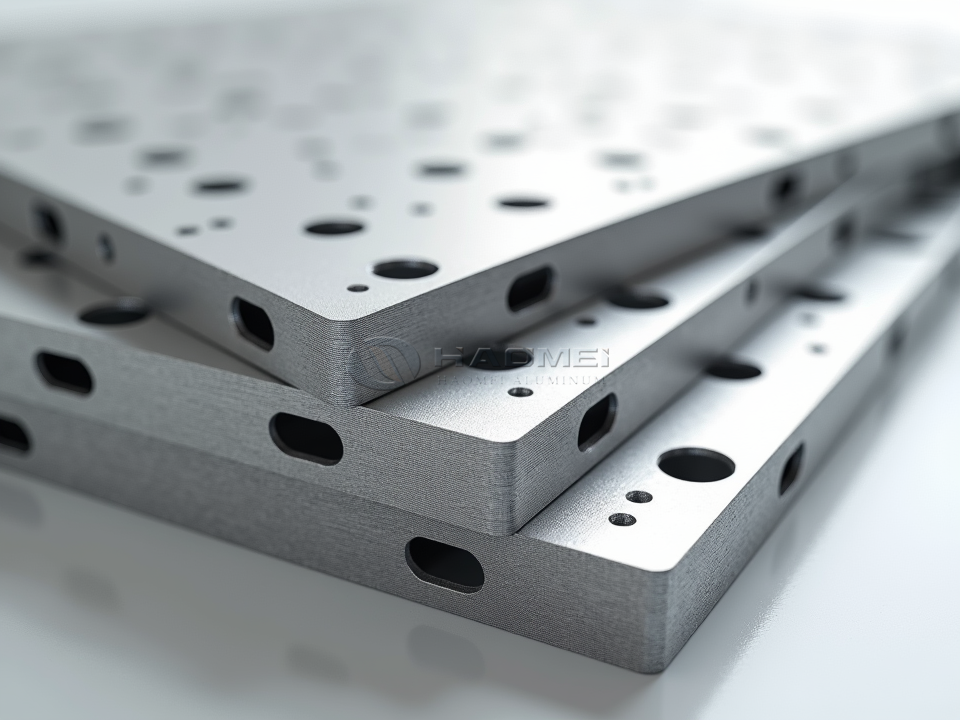
Applications
| Application | Typical Thickness | Suggested Pattern | Performance Purpose |
|---|---|---|---|
| Building facade | 2.0 mm to 4.0 mm | Round, slotted, custom image pattern | Sun shading, appearance, ventilation |
| Ceiling panel | 0.8 mm to 2.0 mm | Round or square hole | Lightweight decoration and acoustic control |
| Interior partition | 1.0 mm to 3.0 mm | Decorative round, hexagonal, irregular | Privacy with light transmission |
| Balcony guard | 2.0 mm to 4.0 mm | Round or slotted | Safety, airflow, modern appearance |
| Acoustic panel | 0.8 mm to 1.5 mm | Small round holes | Sound absorption with backing material |
| Equipment cover | 1.0 mm to 3.0 mm | Round or slotted | Ventilation and protection |
| Retail display | 0.8 mm to 2.0 mm | Square, round, custom | Decorative branding and product visibility |
Open Area and Design Control
Open area is one of the most important performance values for perforated aluminum sheet. It affects transparency, airflow, weight, strength, acoustic behavior, and shading rate.
| Open Area | Visual Transparency | Airflow | Panel Rigidity | Common Use |
|---|---|---|---|---|
| 10% to 20% | Low | Limited | High | Privacy screens, safety guards |
| 20% to 35% | Medium | Good | Good | Facades, partitions, ceilings |
| 35% to 50% | High | Very good | Medium | Ventilation panels, sunshades |
| 50% to 65% | Very high | Excellent | Lower | Lightweight decorative and airflow panels |
A higher open area improves ventilation and reduces weight, but it can reduce stiffness. For large facade panels, engineers usually balance hole size, pitch, edge distance, alloy temper, panel fold depth, and support spacing.
Fabrication and Ordering Information
To receive accurate quotation and production advice, customers should provide the following details in a drawing or specification sheet:
- Alloy and temper requirement
- Sheet thickness, width, and length
- Hole shape, hole size, pitch, and arrangement
- Open area target or ventilation requirement
- Surface finish, color code, gloss level, and coating thickness
- Edge margin, blank area, bending direction, and installation holes
- Flat sheet supply or fabricated cassette panel requirement
- Packing method and project delivery schedule
Decorative perforated metal sheet aluminum can be supplied as flat panels, coils, strips, folded panels, framed panels, or ready-to-install cladding modules. Protective film, wooden pallet packing, and moisture-resistant packaging help protect coated surfaces during transport and site handling.
Why Choose Aluminum for Decorative Perforated Sheets
Aluminum gives designers a rare mix of light weight, corrosion resistance, workability, and visual freedom. It can look minimal, industrial, warm, metallic, matte, or highly colorful depending on the selected coating. With the right alloy, perforation pattern, and finish, decorative perforated aluminum sheet becomes more than a surface material; it becomes a functional skin that controls light, air, sound, privacy, and architectural identity.