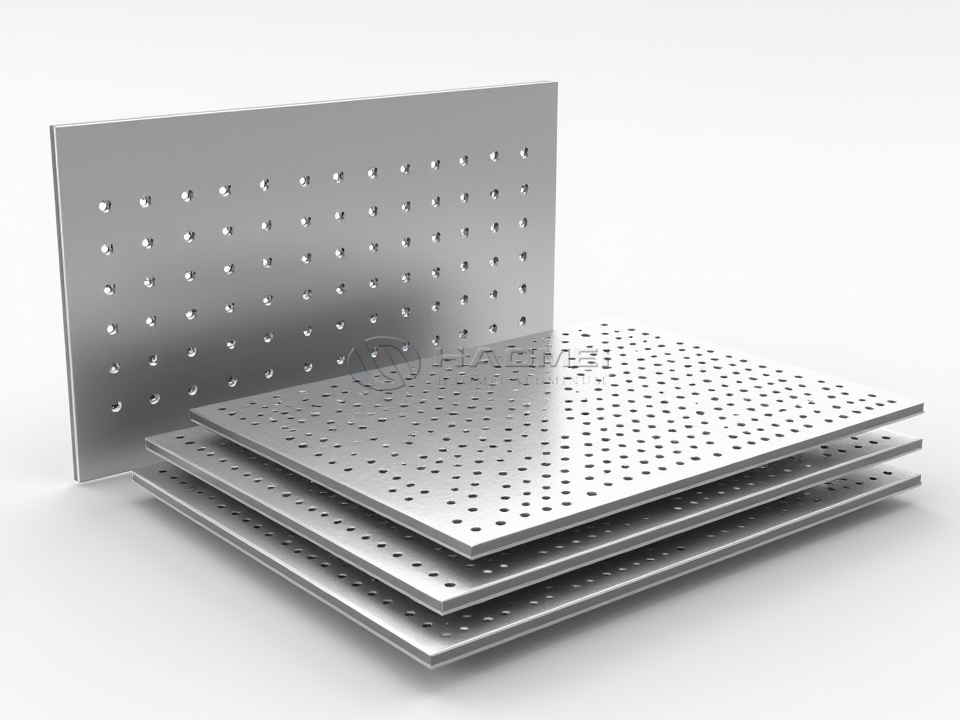
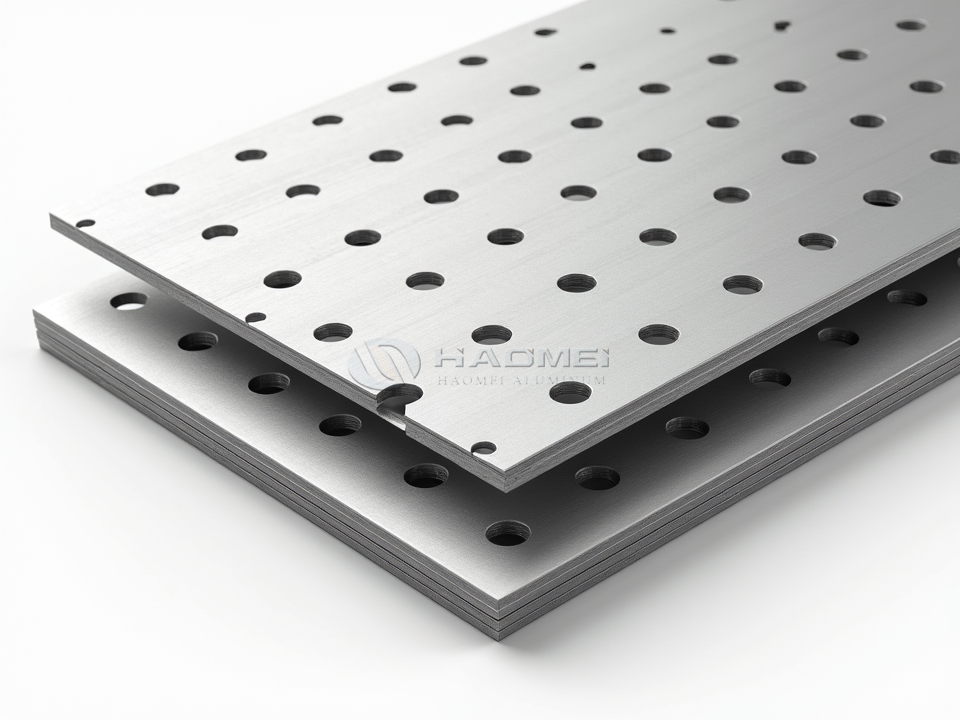
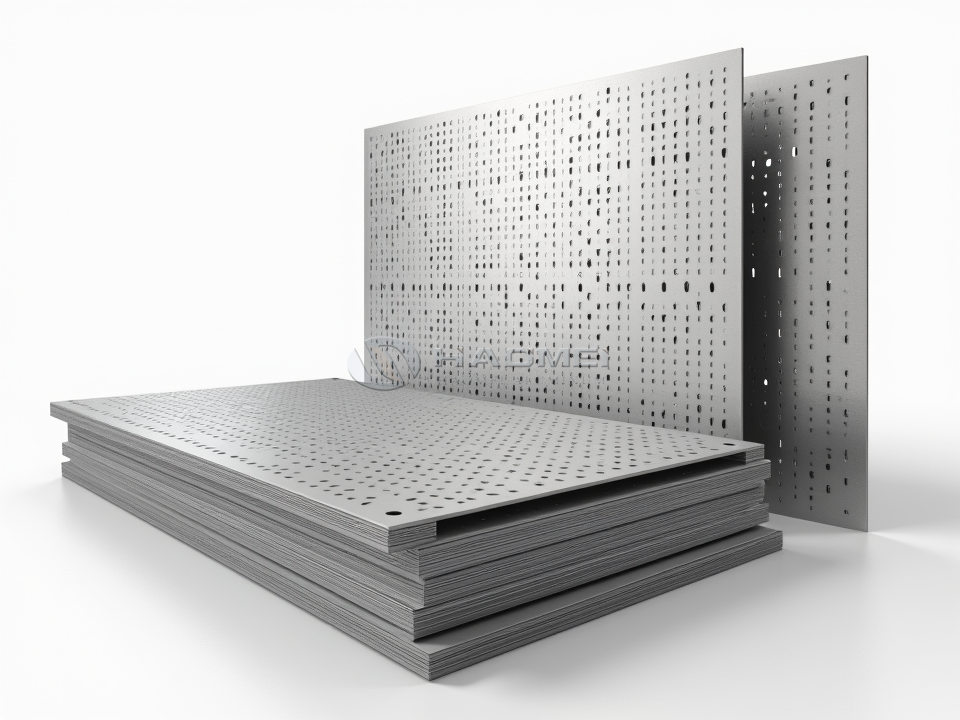
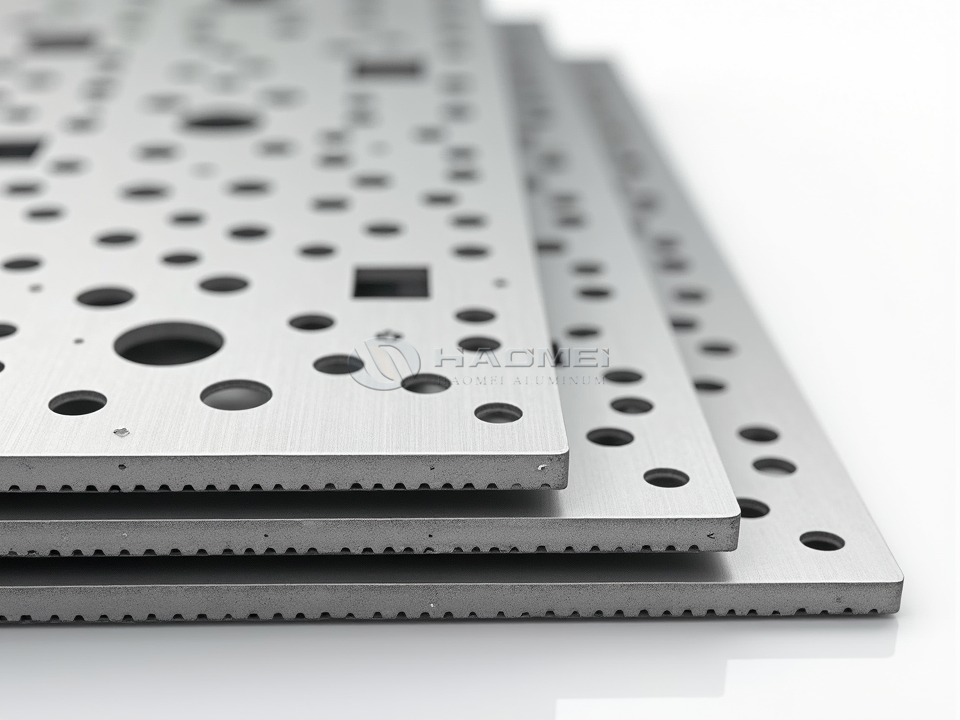
Rustproof Perforated Aluminum Mesh Plate
Rustproof Protection Starts at the Hole Edge
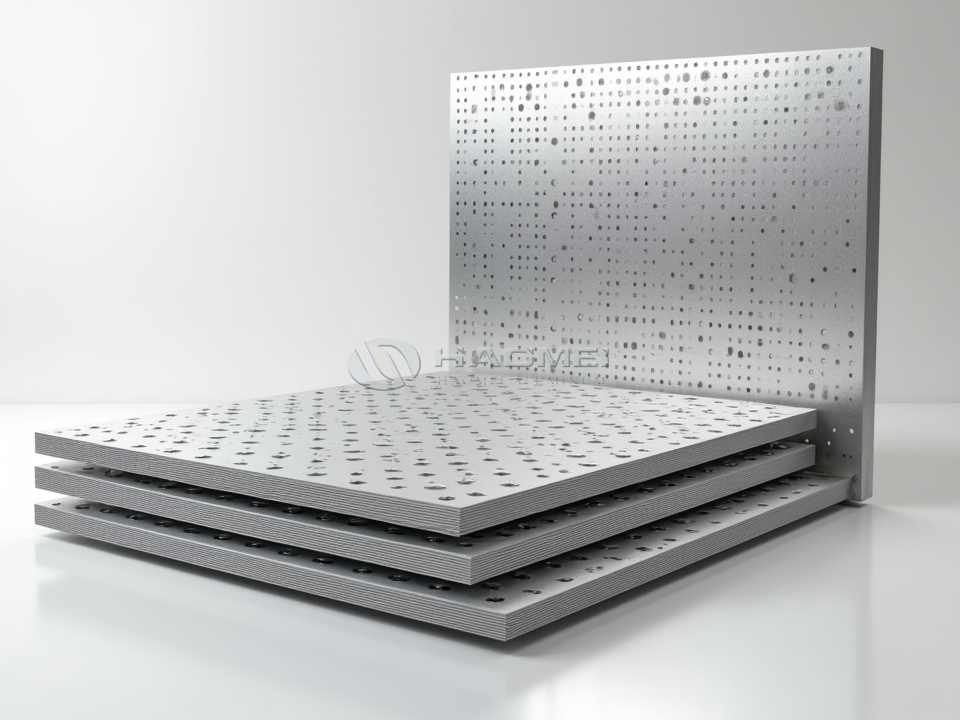
A rustproof perforated aluminum mesh plate is more than a metal sheet with holes. It is a carefully balanced material system where alloy selection, temper, perforation geometry, edge quality, and surface treatment all influence service life. Unlike steel products that rely heavily on coatings to resist red rust, aluminum develops a thin, tightly bonded oxide film naturally. This film reforms when the surface is lightly scratched, helping the plate remain clean and stable in many outdoor, humid, and industrial environments.
The most important detail is often overlooked: perforation creates a large amount of fresh edge area. Each hole becomes a small boundary where moisture, airborne salts, dirt, and cleaning chemicals may collect. A properly specified rustproof perforated aluminum mesh plate protects these edges through suitable alloy chemistry, clean punching practices, deburring, and an appropriate finish such as anodizing or powder coating.
Why Aluminum Does Not Rust Like Steel
In strict technical language, aluminum does not form iron oxide rust because it contains no iron as its base metal. Instead, it forms aluminum oxide. This transparent oxide layer is extremely thin but highly adherent, acting as a natural barrier between the metal and the atmosphere.
That protection is strong in normal urban and indoor conditions. In coastal areas, chemical plants, swimming pools, and locations exposed to standing water, aluminum still needs a more deliberate specification. Chlorides can attack the surface if salts are allowed to remain trapped in perforations. Good drainage, regular rinsing, sealed cut edges where needed, and a corrosion-resistant alloy are practical ways to improve long-term performance.
For projects where airflow, light transmission, and visual screening are required at the same time, a Perforated Aluminum Plate provides a lighter alternative to many steel screens while retaining excellent fabrication flexibility.
Recommended Alloys and Temper Conditions
The best alloy depends on the working environment and how much forming is needed after perforation. Aluminum grades from the 1xxx, 3xxx, and 5xxx families are commonly selected for perforated mesh plate.
| Alloy | Typical Temper | Main Advantage | Suitable Environment |
|---|---|---|---|
| 1050 | H14, H24 | High aluminum purity, easy forming, good corrosion resistance | Interior panels, light decorative screens |
| 1060 | H14, H24 | Excellent ductility and conductivity | Ventilation covers, acoustic panels, filters |
| 3003 | H14, H22, H24 | Improved strength with manganese, strong general corrosion resistance | Facades, ceilings, equipment guards |
| 3004 | H34 | Higher strength than 3003, good forming ability | Architectural panels and transportation parts |
| 5052 | H32, H34 | Excellent marine and salt-air resistance | Coastal screens, marine enclosures, wet areas |
| 5083 | H111, H321 | Very high corrosion resistance and structural strength | Demanding marine and industrial applications |
Temper describes the material condition after strain hardening or stabilization. H14 is half-hard, offering a useful balance between rigidity and punching performance. H24 is strain-hardened and partially annealed, which can support forming after perforation. H32 and H34 are popular for 5052 because they provide practical strength without making the plate excessively difficult to bend.
For standard architectural work, 3003-H14 is often a sensible choice. For salt spray, frequent condensation, or coastal exposure, 5052-H32 is generally more suitable. A plate should not be selected by thickness alone; alloy and temper determine whether the web between holes remains stable during fabrication and installation.
Typical Chemical Composition
The chemical composition controls corrosion behavior, strength, weldability, and forming response. Values shown are typical maximum ranges or nominal ranges based on common aluminum specifications. Exact values should be confirmed through the mill test certificate for each order.
| Alloy | Si % | Fe % | Cu % | Mn % | Mg % | Cr % | Zn % | Al % |
|---|---|---|---|---|---|---|---|---|
| 1050 | 0.25 | 0.40 | 0.05 | 0.05 | 0.05 | - | 0.05 | 99.50 min |
| 1060 | 0.25 | 0.35 | 0.05 | 0.03 | 0.03 | - | 0.05 | 99.60 min |
| 3003 | 0.60 | 0.70 | 0.05-0.20 | 1.0-1.5 | - | - | 0.10 | Balance |
| 3004 | 0.30 | 0.70 | 0.25 | 1.0-1.5 | 0.8-1.3 | - | 0.25 | Balance |
| 5052 | 0.25 | 0.40 | 0.10 | 0.10 | 2.2-2.8 | 0.15-0.35 | 0.10 | Balance |
| 5083 | 0.40 | 0.40 | 0.10 | 0.40-1.0 | 4.0-4.9 | 0.05-0.25 | 0.25 | Balance |
Manganese in 3003 improves strength while maintaining dependable corrosion resistance. Magnesium in 5052 and 5083 greatly enhances performance in marine atmospheres. This is why a 5052 perforated plate is often specified for seaside railing infill, exterior equipment screens, and washdown areas.
Perforation Pattern Changes Performance
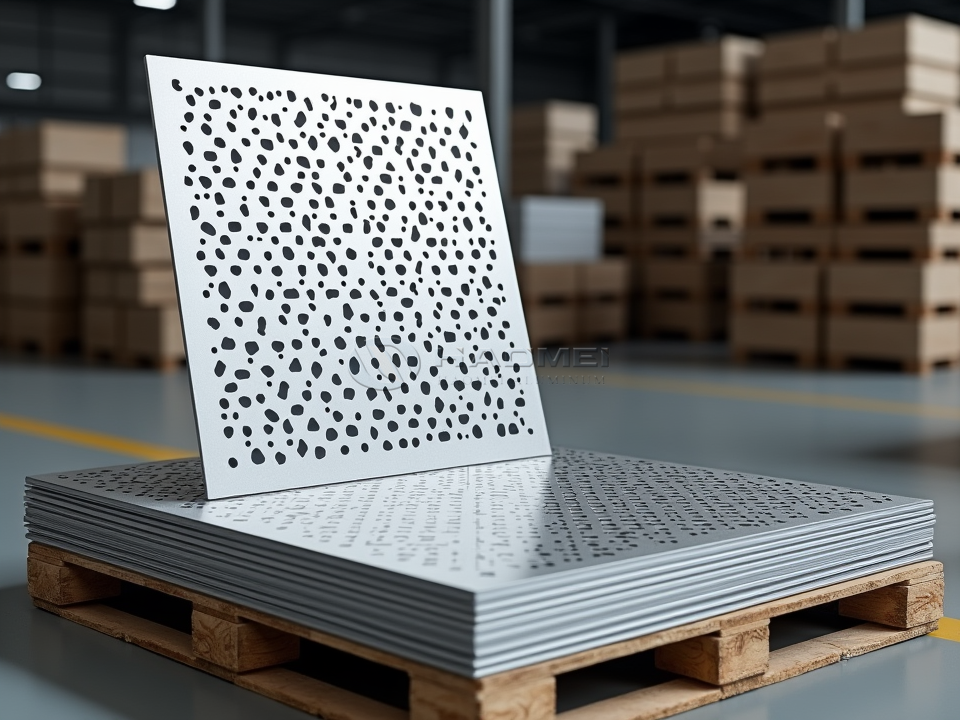
The word mesh can describe the visual effect of a perforated plate, but it is different from woven wire mesh or expanded metal. Perforated aluminum begins as a solid sheet, then holes are punched using a press and tooling. This process creates predictable opening dimensions, stronger borders, and a cleaner surface for coating.
Round holes are widely used for ventilation, filtration, and acoustic treatments because they distribute stress evenly. A Round Hole Perforated Aluminum Sheet can be made in straight or staggered pitch arrangements, allowing designers to tune open area, airflow, and visibility.
Square, slotted, and hexagonal openings create a more graphic appearance. Slotted holes can increase open area and directional airflow, while hexagonal patterns offer a compact layout with a strong industrial character. Hole diameter or width, pitch, margin, sheet thickness, and open-area percentage must be considered together. If holes are too large or too closely spaced, the remaining metal bridges may distort during punching or become insufficient for structural loading.
Common Parameters for Ordering
A clear specification prevents unwanted variations in appearance and function. Typical order parameters include:
- Material alloy: 1050, 1060, 3003, 3004, 5052, or 5083
- Temper: H14, H24, H32, H34, H111, or another agreed condition
- Thickness: commonly 0.5 mm to 6.0 mm, with heavier gauges available for special projects
- Sheet width: commonly 1,000 mm, 1,220 mm, 1,250 mm, 1,500 mm, or custom width
- Sheet length: commonly 2,000 mm, 2,440 mm, 2,500 mm, 3,000 mm, or custom cut length
- Hole form: round, square, slot, hexagon, decorative pattern, or custom tooling
- Hole size and pitch: specified in millimeters with straight or staggered arrangement
- Border: unperforated margin, full perforation, or custom edge layout
- Surface: mill finish, brushed, anodized, powder coated, PVDF coated, or painted
- Flatness and deburring requirements: especially important for panels, filters, and safety guards
Standards and Surface Finishes
Raw aluminum sheet may be supplied in accordance with ASTM B209, EN 485, EN 573, ISO 6361, or GB/T 3880, depending on project location and contract requirements. Perforation dimensional tolerances are commonly agreed between buyer and processor because they vary with thickness, pattern, open area, and panel size.
Anodizing is a strong choice for architectural rustproof performance. It thickens the oxide layer and creates a metallic finish that does not peel like paint. Powder coating adds color and a protective polymer layer, making it suitable for decorative partitions, ceiling panels, and equipment covers. For exterior facade use, high-quality polyester or fluorocarbon coating systems can offer improved weathering resistance.
The finish should be selected after considering the final environment. Anodized surfaces need careful handling to avoid visible scratches. Powder-coated plates require clean, smooth punched edges for even coverage. In highly corrosive areas, coating alone should not replace a corrosion-resistant base alloy such as 5052.
Practical Selection for Long Service Life
A rustproof perforated aluminum mesh plate performs best when its details match the real environment. Choose 3003 for economical indoor and general outdoor screens. Choose 5052 where salt, moisture, or cleaning agents are more severe. Use a thickness and open-area ratio that preserve stiffness, particularly for large panels. Specify anodizing or a durable coating when appearance retention matters.
Equally important, avoid direct contact with untreated carbon steel, copper, or incompatible fasteners in wet conditions. Galvanic corrosion can occur when dissimilar metals are connected in the presence of an electrolyte. Aluminum or stainless steel fasteners, isolating washers, drainage gaps, and periodic cleaning help preserve the plate's protective surface.
With the right alloy, temper, perforation pattern, and finish, perforated aluminum becomes a durable working skin for buildings and equipment: it filters, ventilates, shades, protects, and remains visually refined long after installation.