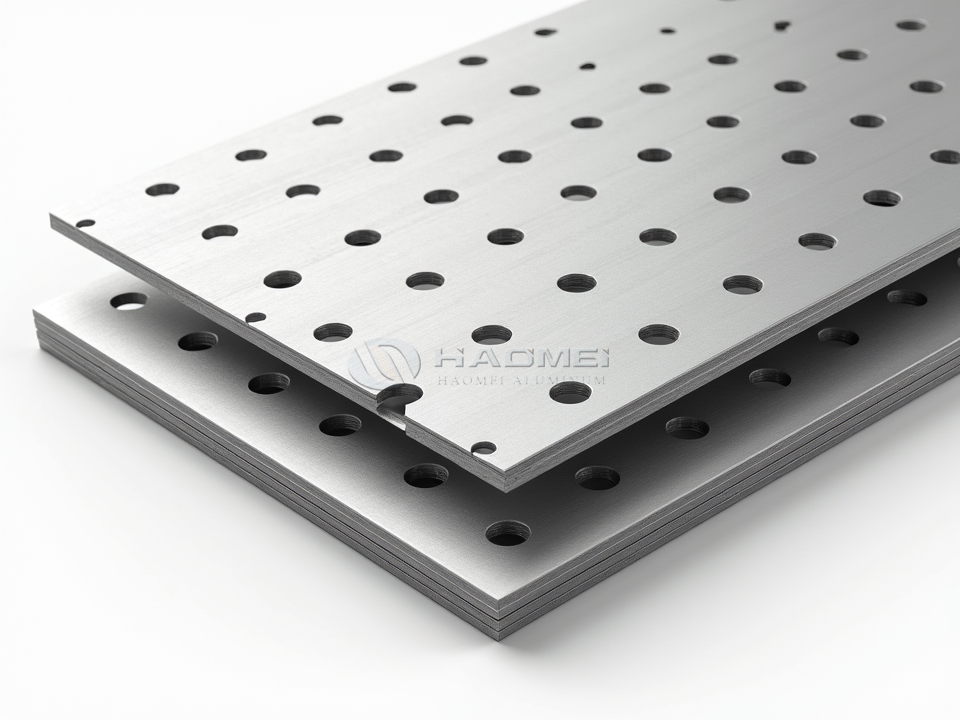
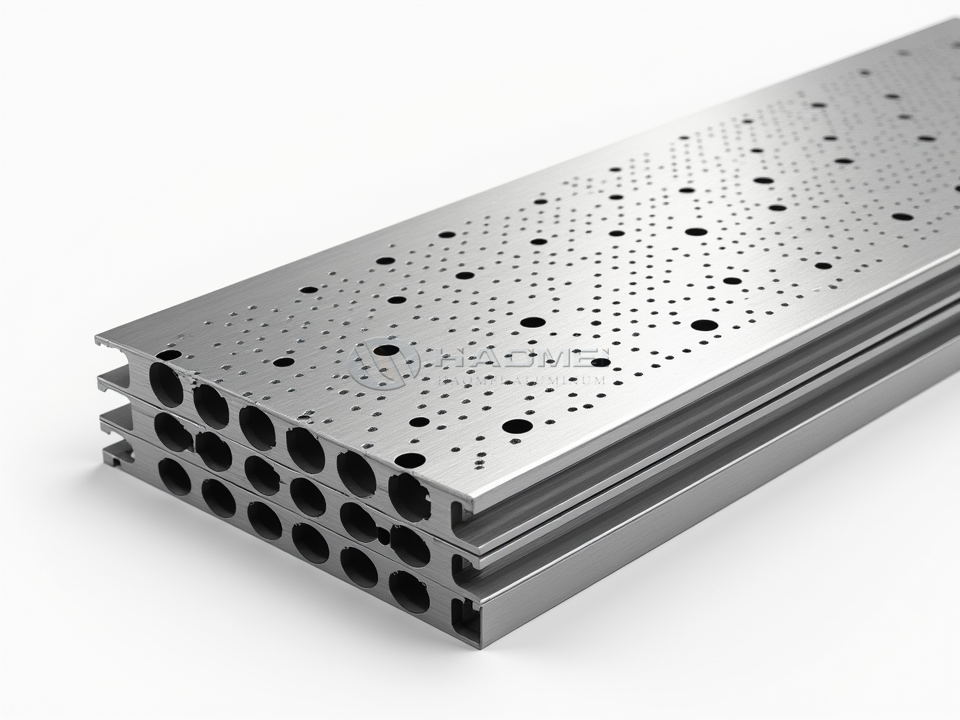
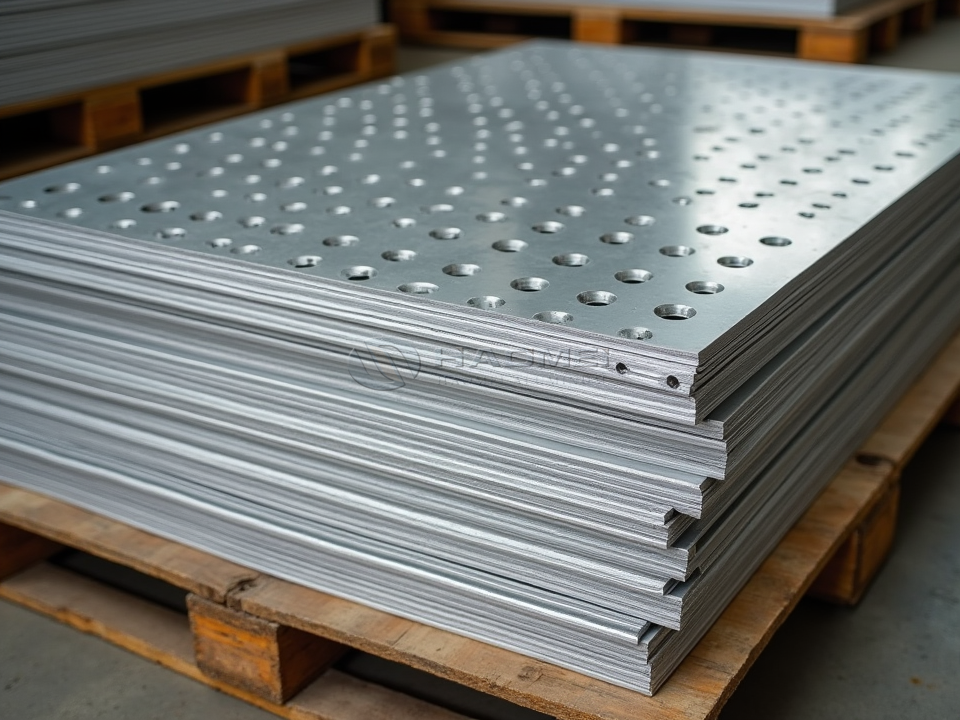
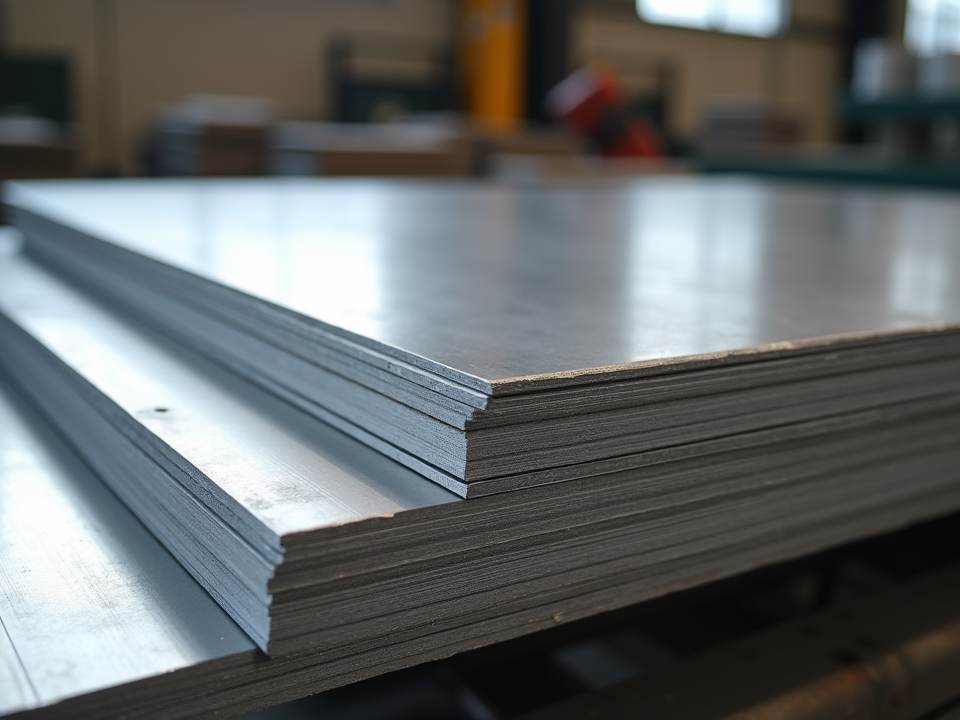
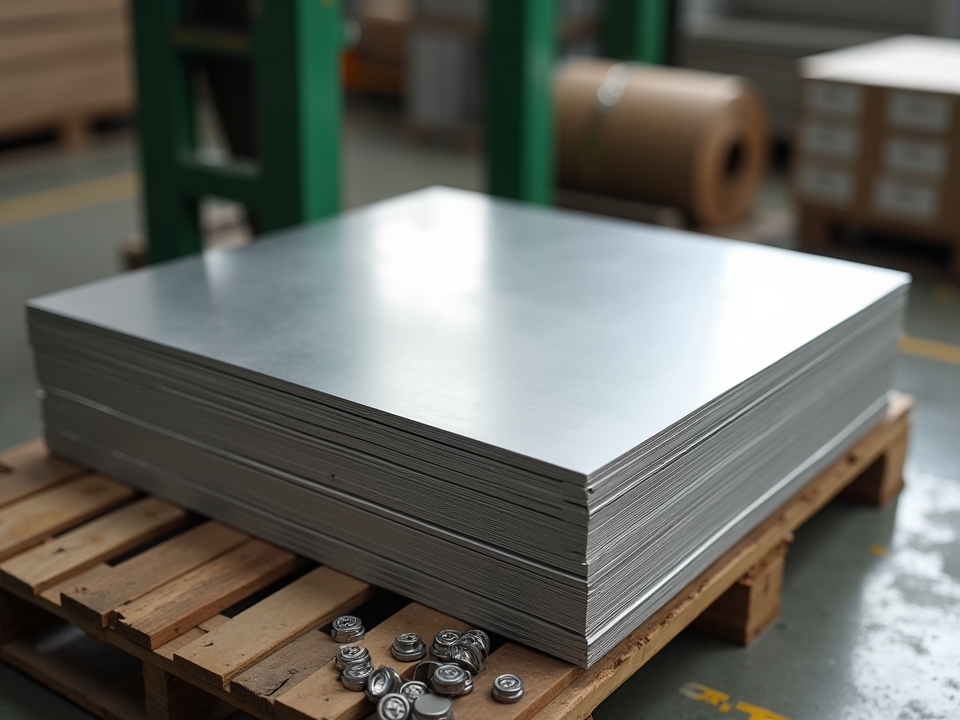
5052 Perforated Aluminum Metal Sheet
5052 perforated aluminum metal sheet combines the corrosion resistance of a magnesium-bearing aluminum alloy with the ventilation, acoustic, filtering, and decorative benefits created by precision punching. It is widely selected for architectural panels, equipment guards, ceilings, marine installations, ventilation covers, screens, and lightweight industrial components.
Compared with plain sheet, a perforated panel provides controlled open area while retaining a practical balance of stiffness, low weight, and formability. The 5052 alloy is especially suitable for humid, coastal, and mildly corrosive service conditions because it has stronger resistance to saltwater exposure than many general-purpose aluminum grades.
Material Features and Functions
5052 aluminum is a non-heat-treatable alloy strengthened primarily by cold working. Magnesium is the principal alloying element, giving the sheet good medium-strength performance, excellent weldability, and dependable corrosion resistance. After perforation, the metal can be cut, bent, rolled, framed, powder coated, anodized, or fabricated into application-specific assemblies.
| Function | How 5052 Perforated Aluminum Sheet Performs |
|---|---|
| Airflow and ventilation | Open holes permit air circulation in louvers, grilles, machinery covers, and HVAC components. |
| Acoustic treatment | Perforations allow sound waves to reach insulation or acoustic backing material, helping reduce reverberation. |
| Filtration and separation | Hole diameter and open-area ratio can be specified for coarse screening, fluid distribution, and protective filtration. |
| Light diffusion | Perforated surfaces soften daylight and artificial light while maintaining partial visual screening. |
| Safety guarding | Panels protect moving machinery while allowing inspection, cooling, and airflow. |
| Decorative design | Repeating round, square, slotted, or hexagonal patterns add texture to facades, ceilings, partitions, and displays. |
| Weight reduction | Removing controlled areas of metal reduces panel mass, supporting easier handling and lower structural loads. |
Chemical Composition of 5052 Aluminum Alloy
Chemical composition is generally controlled according to ASTM B209, EN AW-5052, or equivalent regional requirements. Values represent typical specified maximum limits unless a range is shown.
| Element | Content, % by Weight |
|---|---|
| Magnesium, Mg | 2.2-2.8 |
| Chromium, Cr | 0.15-0.35 |
| Iron, Fe | 0.40 max |
| Silicon, Si | 0.25 max |
| Copper, Cu | 0.10 max |
| Manganese, Mn | 0.10 max |
| Zinc, Zn | 0.10 max |
| Other elements, each | 0.05 max |
| Other elements, total | 0.15 max |
| Aluminum, Al | Balance |
The magnesium and chromium combination supports resistance to atmospheric corrosion, freshwater, and marine environments. For highly acidic, alkaline, or chemically aggressive exposure, material selection should be confirmed against the operating medium and temperature.
Common Temper Conditions
Temper selection affects forming behavior, panel flatness, and resistance to denting. Softer tempers are preferable for deep forming or complex bending. H32 and H34 are frequently specified where greater rigidity is desired.
| Temper | Condition | Typical Use |
|---|---|---|
| O | Annealed, soft | Deep drawing, complex forming, curved screens |
| H22 | Strain hardened and partially annealed | General fabricated panels requiring moderate formability |
| H24 | Strain hardened and partially annealed | Architectural sheet and medium-duty perforated parts |
| H32 | Strain hardened and stabilized, quarter hard | Ceiling panels, guards, screens, facade components |
| H34 | Strain hardened and stabilized, half hard | Flatter panels, protective covers, demanding decorative work |
| H36 | Strain hardened and stabilized, three-quarter hard | Higher rigidity applications with limited forming |
Typical Mechanical and Physical Data
Mechanical values vary with sheet thickness, test direction, temper, perforation pattern, and applicable standard. Perforated sheet has less effective load-bearing area than solid sheet, so structural designs should use the net section and required safety factors.
| Property | 5052-O | 5052-H32 | 5052-H34 |
|---|---|---|---|
| Tensile strength, MPa | 170-215 | 193-241 | 215-262 |
| Yield strength, MPa | 65 min | 130 min | 160 min |
| Elongation, % | 18 min | 10 min | 8 min |
| Density, g/cm³ | 2.68 | 2.68 | 2.68 |
| Elastic modulus, GPa | 70.3 | 70.3 | 70.3 |
| Melting range, °C | 605-650 | 605-650 | 605-650 |
| Thermal conductivity, W/m·K | Approx. 138 | Approx. 138 | Approx. 138 |
| Electrical conductivity, % IACS | Approx. 35 | Approx. 35 | Approx. 35 |
Perforation Patterns and Dimensions
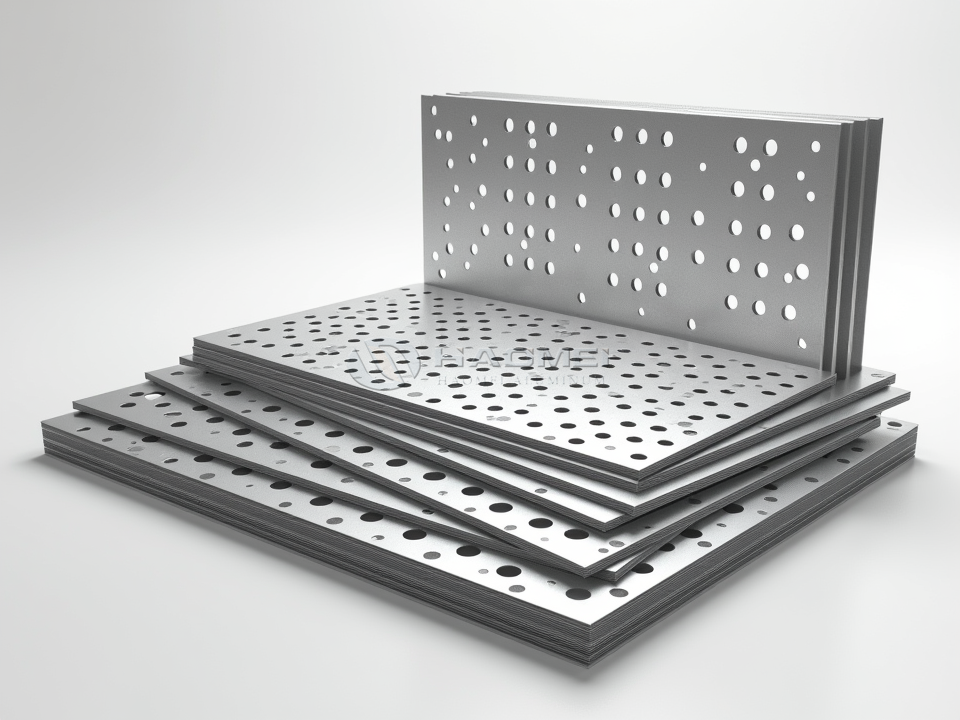
Round holes in staggered pitch are a popular choice because they offer efficient open area and an even visual appearance. Square holes create a more geometric style, while slots improve directional airflow and can support drainage. Hexagonal holes provide a high open-area design with a honeycomb-like visual effect.
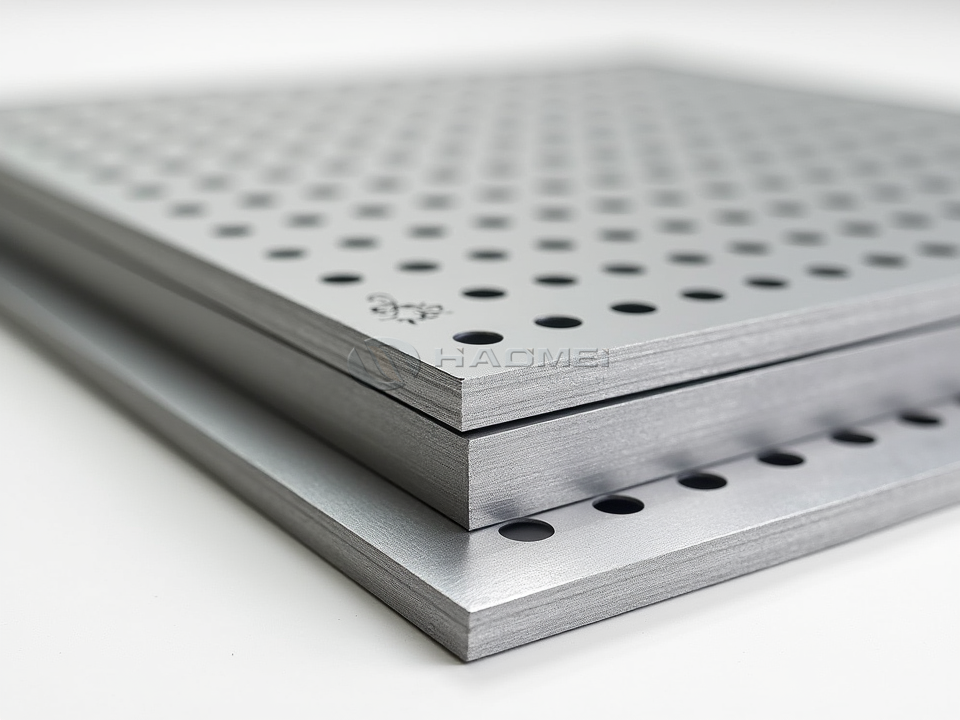
| Perforation Option | Typical Hole Size | Typical Pitch | Typical Open Area | Suitable Uses |
|---|---|---|---|---|
| Round hole, 60° staggered | 1.0-30 mm | 2.0-45 mm | 23-60% | Acoustic panels, filters, screens, ceilings |
| Round hole, straight line | 1.0-25 mm | 2.0-40 mm | 20-50% | Guards, vents, industrial panels |
| Square hole | 2.0-30 mm | 4.0-45 mm | 25-55% | Architectural screens, baskets, enclosures |
| Slotted hole | 2 × 10 mm to 10 × 50 mm | Custom | 20-55% | Drainage covers, airflow panels, walkways |
| Hexagonal hole | 3-25 mm | Custom | 35-65% | High-airflow grilles and decorative panels |
| Standard Sheet Parameter | Common Range | Custom Capability |
|---|---|---|
| Base metal thickness | 0.5-6.0 mm | Heavier gauges available by project |
| Sheet width | 1,000-1,500 mm | Up to equipment capacity |
| Sheet length | 2,000-6,000 mm | Cut-to-length available |
| Border margin | 10-50 mm | Defined by drawing |
| Open area | 20-65% | Calculated from hole pattern and pitch |
| Surface | Mill finish, brushed, stucco, anodized, powder coated | Color and coating system configurable |
For layouts requiring efficient ventilation and an orderly visual appearance, Round Hole Perforated Aluminum Sheet is often specified in staggered-hole arrangements.
Standards and Quality Control
Production and inspection requirements should be matched to the destination market and end-use function. Material certificates can document alloy chemistry, temper, dimensions, and mechanical test results.
| Standard | Relevance to Product |
|---|---|
| ASTM B209/B209M | Aluminum and aluminum-alloy sheet and plate requirements |
| ASTM E8/E8M | Tensile testing method for metallic materials |
| EN 485-1 | Technical inspection and delivery conditions for aluminum sheet, strip, and plate |
| EN 485-2 | Mechanical property requirements for wrought aluminum products |
| EN 573-3 | Chemical composition and alloy designation requirements |
| ISO 9001 | Quality-management framework for controlled manufacturing processes |
| RoHS | Restriction requirements for hazardous substances when applicable |
Dimensional control commonly includes thickness measurement, sheet length and width checks, hole diameter, pitch, border accuracy, burr level, panel flatness, and coating adhesion where a finished surface is specified.
Applications Across Industries
5052 perforated aluminum metal sheet performs particularly well where corrosion resistance and appearance must coexist. In building projects, it is made into suspended ceilings, facade sunscreens, balcony infill panels, ventilation grilles, partitions, and decorative cladding. Its low density reduces dead load compared with steel alternatives.
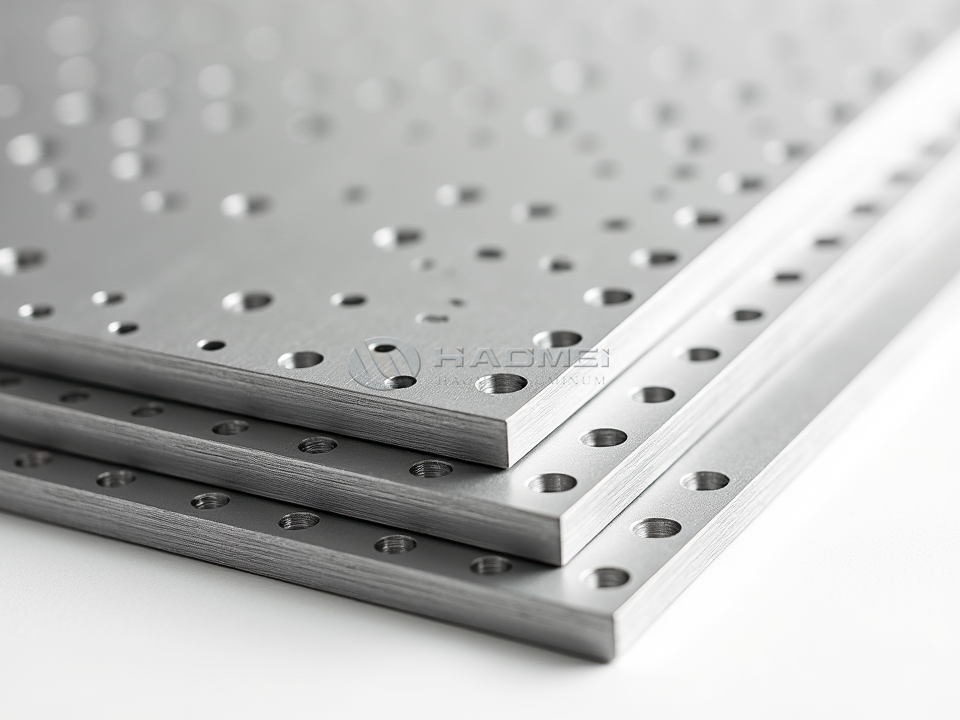
In acoustic systems, perforated 5052 face sheets are paired with mineral wool, fiberglass, or sound-absorbing fabric to create wall panels and ceiling absorbers. In transport and marine settings, the alloy supports interior trim, ventilation covers, walkways, equipment panels, and non-structural protective barriers. Industrial users employ it for machine guards, drying trays, filter supports, battery enclosures, and heat-dissipation covers.
Fabrication and Finish Considerations
Punching is commonly performed by CNC turret press, high-speed perforation press, laser cutting for specialized patterns, or custom tooling for volume production. Hole edges may show a small burr after punching; deburring is recommended for touchable surfaces, precision assemblies, and coating preparation.
Powder coating offers broad color selection and a durable exterior finish. Anodizing forms an integrated oxide layer that improves surface hardness and provides a refined metallic appearance. For marine or outdoor projects, proper edge treatment, compatible fasteners, drainage design, and isolation from dissimilar metals help maintain long-term service performance.
When specifying 5052 perforated aluminum metal sheet, provide the alloy and temper, thickness, sheet dimensions, hole pattern, hole size, pitch, open-area target, border arrangement, finish, flatness requirement, and intended service environment. This information supports a panel design that delivers the desired airflow, strength, visual effect, and fabrication efficiency.