Round Hole Perforated Aluminum Sheet
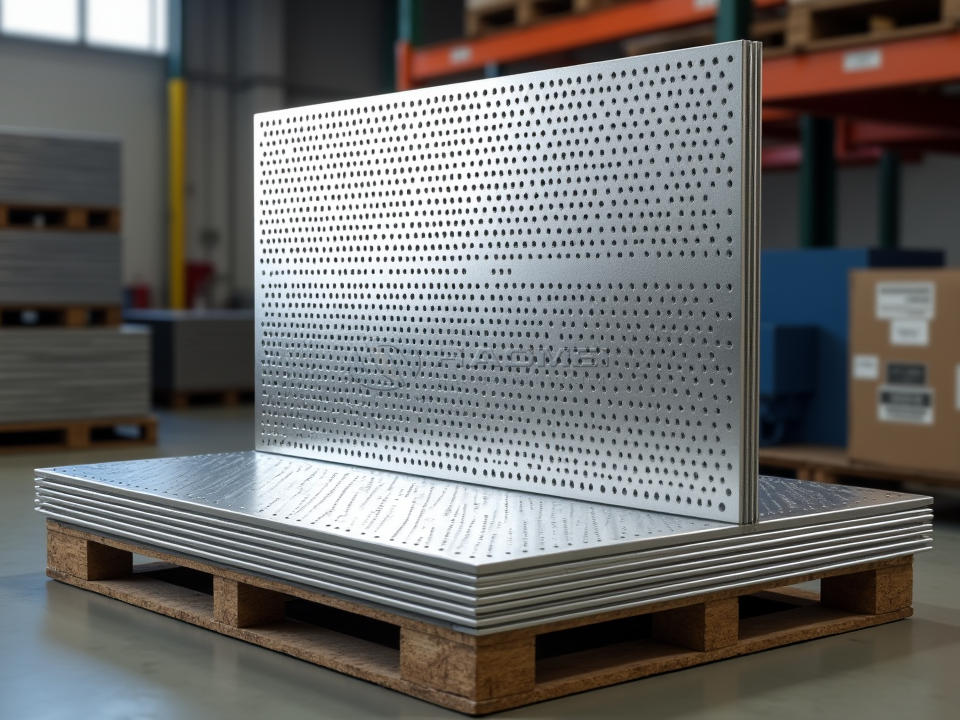
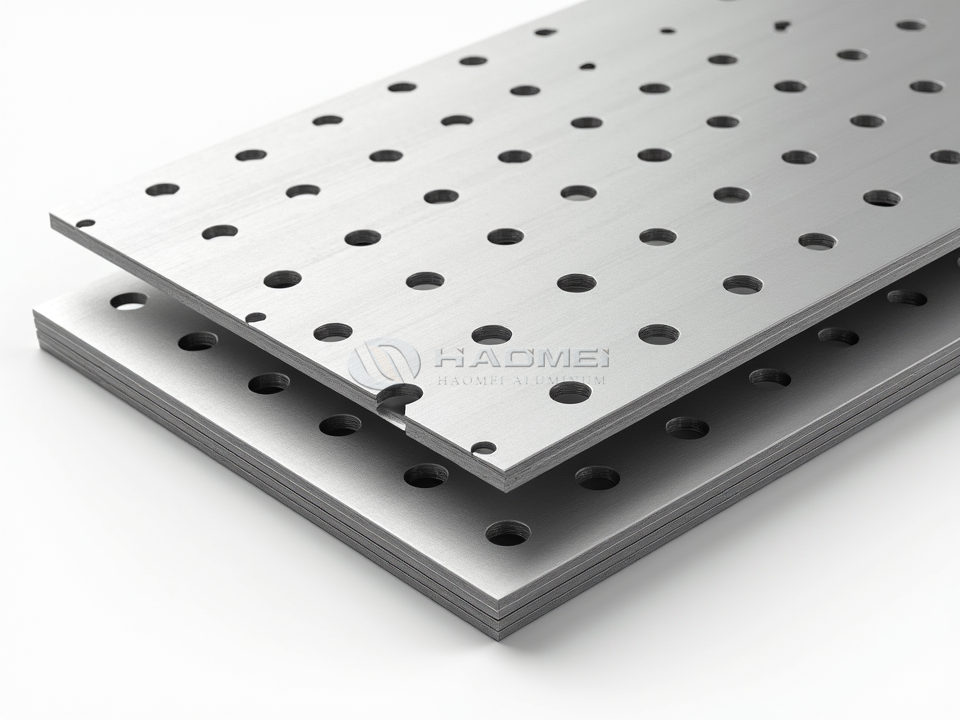
Round hole perforated aluminum sheet is a lightweight metal panel made by punching circular holes into aluminum sheet or coil. It combines airflow, light transmission, visual screening, corrosion resistance, and easy fabrication in one practical material. The round hole pattern is the most widely used perforation style because it offers balanced strength, neat appearance, smooth edges, and stable performance in both industrial and architectural environments.
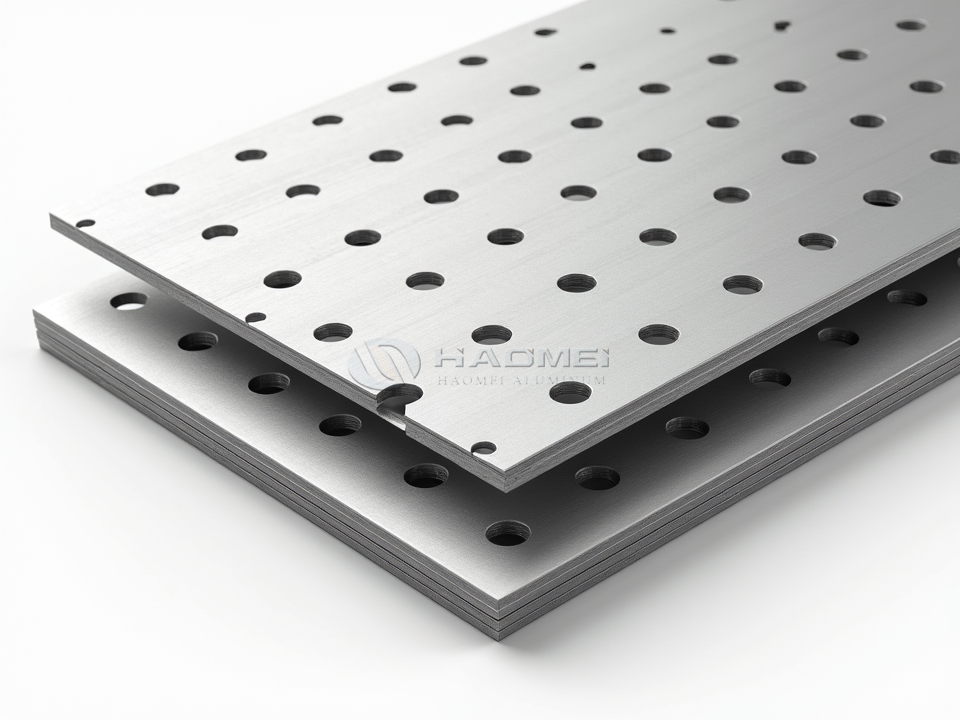
For customers comparing metal panel options, Round Hole Perforated Aluminum Sheet is often selected when the project needs a clean geometric look, predictable open area, and lower panel weight than solid plate. It can be supplied in plain mill finish, anodized finish, powder coating, PVDF coating, or custom colors for indoor and outdoor use.
Product Character
The circular hole shape distributes stress more evenly than sharp-corner patterns. This helps reduce crack initiation around perforations during bending, forming, and installation. Aluminum also provides a high strength-to-weight ratio, so large panels are easier to lift, fix, and maintain.
Common alloys include 3003 for general forming, 5052 for higher corrosion resistance, and 6061 for stronger structural parts. Hole diameter, pitch, sheet thickness, and open area can be adjusted to control ventilation, shading, privacy, acoustic absorption, and mechanical stiffness.
Main Advantages
| Advantage | Customer Value |
|---|---|
| Low density | Easier handling, lighter structures, lower transport load |
| Round hole geometry | Smooth appearance, uniform airflow, reduced stress concentration |
| Adjustable open area | Flexible control of ventilation, visibility, drainage, and sound passage |
| Corrosion resistance | Suitable for humid, coastal, commercial, and industrial locations |
| Good workability | Can be cut, bent, rolled, framed, welded, or riveted |
| Recyclable material | Supports sustainable building and manufacturing programs |
| Finish compatibility | Works well with anodizing, powder coating, brushing, and PVDF coating |
Typical Technical Specifications
| Parameter | Common Range | Notes |
|---|---|---|
| Material | 1050, 1060, 3003, 5052, 5754, 6061 | Alloy selected by strength, formability, and corrosion needs |
| Thickness | 0.5-6.0 mm | Heavy-duty panels can be produced on request |
| Hole diameter | 0.8-50 mm | Small holes suit filtration and acoustics; larger holes suit facades and guards |
| Pitch | 1.5-100 mm | Center-to-center distance between holes |
| Pattern | Straight, staggered 45 degrees, staggered 60 degrees | 60-degree staggered pattern usually gives higher open area |
| Open area | 10%-65% | Depends on hole diameter and pitch |
| Width | 500-1500 mm | Wider sizes available depending on alloy and thickness |
| Length | 1000-4000 mm | Cut-to-size panels available |
| Surface finish | Mill, anodized, powder coated, PVDF, brushed | Finish selected by appearance and exposure level |
| Tolerance | Project-based | Controlled by thickness, perforation design, and panel size |
Chemical Composition Reference
Actual chemical composition follows the selected alloy standard. The table gives typical ranges for frequently used aluminum grades.
| Alloy | Al | Mn | Mg | Si | Fe | Cu | Cr | Zn | Typical Use |
|---|---|---|---|---|---|---|---|---|---|
| 1050 | >=99.50 | <=0.05 | <=0.05 | <=0.25 | <=0.40 | <=0.05 | - | <=0.05 | Decorative panels, light-duty ventilation |
| 3003 | Balance | 1.0-1.5 | - | <=0.60 | <=0.70 | 0.05-0.20 | - | <=0.10 | General-purpose panels, ceilings, screens |
| 5052 | Balance | <=0.10 | 2.2-2.8 | <=0.25 | <=0.40 | <=0.10 | 0.15-0.35 | <=0.10 | Marine, outdoor, high corrosion areas |
| 6061 | Balance | <=0.15 | 0.8-1.2 | 0.40-0.80 | <=0.70 | 0.15-0.40 | 0.04-0.35 | <=0.25 | Structural panels, machine guards, frames |
Mechanical Performance
Mechanical properties depend on alloy, temper, perforation rate, and post-processing. Perforation reduces the net section area, so design strength should be calculated with hole pattern and loading direction in mind.
| Alloy and Temper | Tensile Strength MPa | Yield Strength MPa | Elongation % | Fabrication Behavior |
|---|---|---|---|---|
| 3003-H14 | 140-180 | 115-150 | 3-8 | Excellent bending and punching behavior |
| 5052-H32 | 210-260 | 160-215 | 8-12 | Strong corrosion resistance and good forming |
| 5754-H22 | 190-240 | 110-160 | 10-16 | Good for transport and exterior panels |
| 6061-T6 | 260-310 | 240-275 | 8-12 | Higher strength, bending radius must be controlled |
Hole Pattern and Open Area
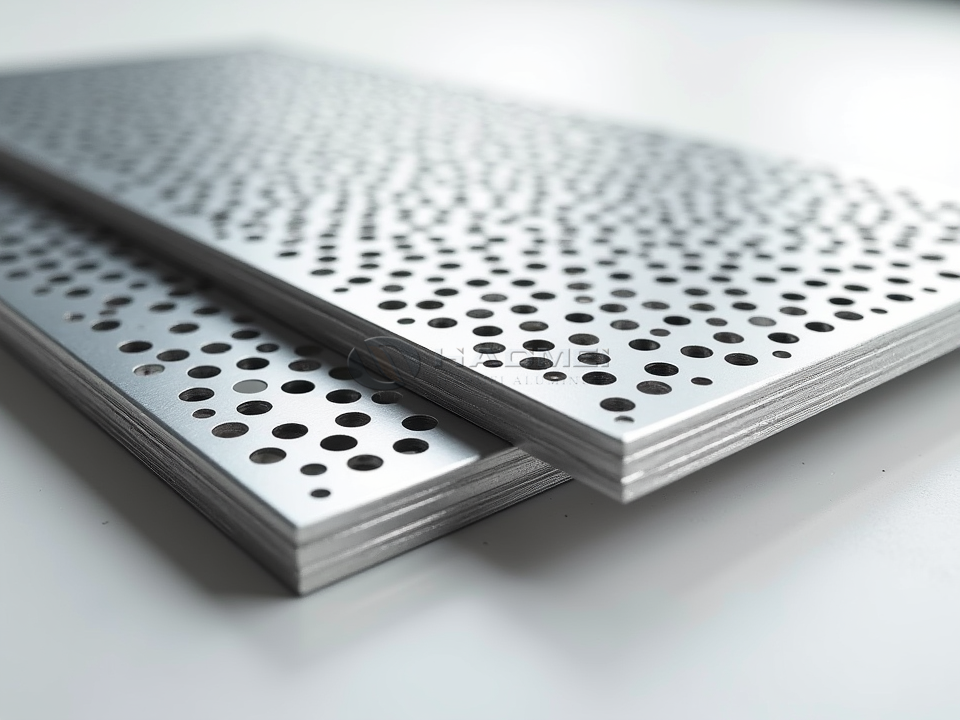
Open area is one of the most important performance values. It affects airflow, light transmission, weight reduction, visual transparency, and acoustic response. A higher open area improves ventilation but reduces stiffness. A lower open area improves rigidity and screening.
| Hole Diameter | Pitch | Pattern | Approx. Open Area | Typical Application |
|---|---|---|---|---|
| 2 mm | 4 mm | 60-degree staggered | 23% | Speaker mesh, fine screens, cabinet ventilation |
| 3 mm | 5 mm | 60-degree staggered | 33% | Ceiling panels, air return grilles |
| 5 mm | 8 mm | 60-degree staggered | 35% | Equipment guards, sunshade panels |
| 8 mm | 12 mm | 60-degree staggered | 40% | Facades, balcony screens, decorative walls |
| 10 mm | 15 mm | 60-degree staggered | 40% | Parking screens, industrial ventilation |
| 20 mm | 30 mm | 60-degree staggered | 40% | Large architectural panels and shading systems |
For demanding construction projects, a heavier Perforated Aluminum Plate may be specified when greater impact resistance, longer spans, or higher panel stiffness is required.
Surface Finishes
Surface treatment improves appearance and extends service life. Mill finish is economical for internal parts, while anodizing gives a metallic surface with improved oxidation resistance. Powder coating provides color flexibility and good durability for ceilings, partitions, and furniture. PVDF coating is preferred for exterior facades because it offers excellent UV resistance and color retention.
| Finish | Appearance | Main Benefit | Recommended Environment |
|---|---|---|---|
| Mill finish | Natural silver aluminum | Cost-effective, easy to process | Indoor equipment, hidden components |
| Anodized | Satin metallic | Harder oxide layer, stable color | Interior and light exterior panels |
| Powder coated | Smooth or textured color | Wide color selection, good protection | Ceilings, screens, cladding |
| PVDF coated | Premium architectural color | Strong UV and weather resistance | Facades, curtain walls, outdoor sunscreens |
| Brushed | Linear metallic texture | Decorative appearance | Retail, elevator, interior design |
Application Fields
Round hole perforated aluminum sheet works across many industries because it solves airflow, weight, safety, and appearance challenges at the same time.
| Field | Use Case | Product Function |
|---|---|---|
| Architecture | Facades, sunshades, balcony screens | Shading, ventilation, privacy, visual design |
| Interior design | Ceilings, partitions, wall panels | Light diffusion, clean surface, acoustic support |
| Industrial equipment | Machine guards, ventilation covers | Operator safety, heat release, inspection visibility |
| Transportation | Vehicle panels, grilles, platforms | Weight reduction, airflow, corrosion resistance |
| Acoustics | Sound absorber face sheets | Allows sound waves to enter acoustic backing material |
| Filtration and sorting | Protective screens, separator plates | Particle control and airflow passage |
| Agriculture | Drying trays, ventilation floors | Moisture release and stable support |
| Retail fixtures | Display panels, shelving inserts | Modern appearance and reduced weight |
Performance in Building Facades
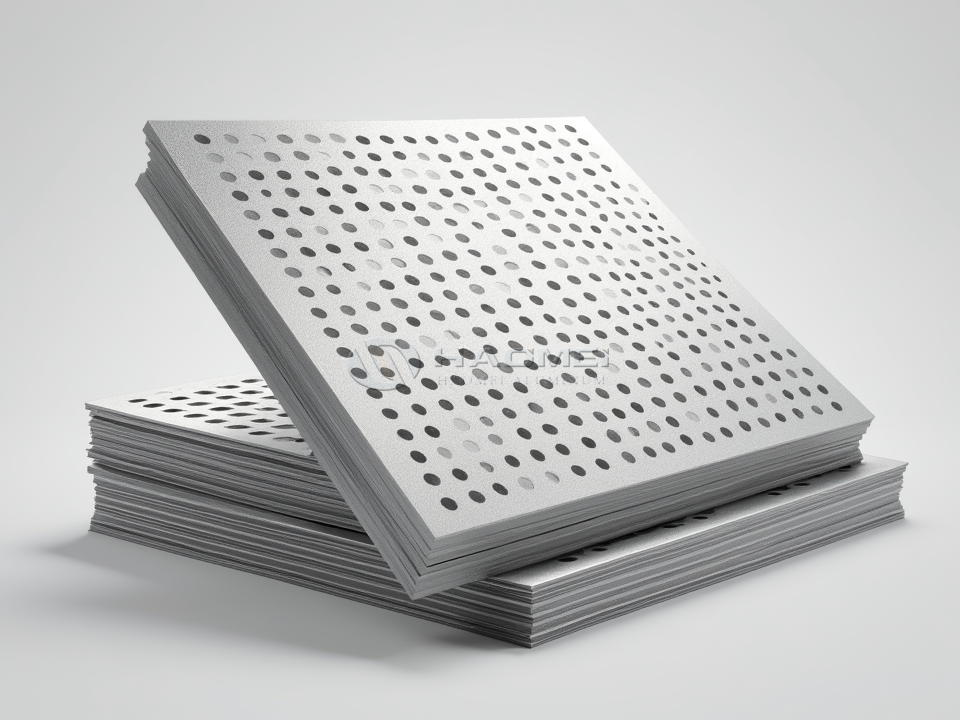
In facade systems, round perforations help reduce solar heat gain while maintaining airflow behind the cladding. The hole pattern can be aligned across adjacent panels for a continuous visual rhythm. With powder coating or PVDF coating, panels can match brand colors, building envelopes, or surrounding materials.
For exterior use, panel flatness, edge treatment, fastener spacing, and wind load must be reviewed before production. Larger panels may require folded edges, rear stiffeners, or support frames to prevent vibration and oil-canning.
Performance in Ceilings and Acoustic Panels
Round hole perforated aluminum sheet is widely used in ceiling systems because it is light, clean, non-combustible, and easy to maintain. When combined with acoustic fleece or mineral wool, the perforated surface allows sound energy to pass into the absorbent layer, reducing echo in offices, airports, schools, hospitals, and public buildings.
Smaller holes and moderate open area are often preferred for acoustic ceilings because they create a refined appearance while still allowing effective sound absorption.
Selection Guidance
| Requirement | Recommended Choice |
|---|---|
| Maximum corrosion resistance | 5052 or 5754 with anodized, powder coated, or PVDF finish |
| Economical indoor panel | 3003-H14 with mill finish or powder coating |
| Stronger structural component | 6061-T6 with controlled bending radius |
| High ventilation | Larger hole diameter with higher open area |
| Better privacy | Smaller hole diameter with lower open area |
| Acoustic ceiling | 1.5-3 mm holes with acoustic backing |
| Decorative facade | 6-20 mm holes with powder or PVDF coating |
Fabrication and Installation Notes
Round hole perforated aluminum sheet can be sheared, laser cut, bent, rolled, welded, riveted, or fixed with screws and clips. During bending, the bend line should avoid passing too close to dense perforation zones when possible. Protective film can be applied to coated surfaces to reduce scratching during handling and installation.
For outdoor panels, drainage, thermal expansion, and contact with dissimilar metals should be considered. Stainless steel fasteners, isolation washers, and proper ventilation behind panels help improve long-term performance.
Why Customers Choose It
Round hole perforated aluminum sheet provides a practical balance of form and function. It reduces weight while keeping useful rigidity, improves ventilation without sacrificing appearance, and can be tailored to suit industrial machinery, public buildings, retail interiors, and exterior envelope systems. With the right alloy, hole pattern, thickness, and finish, it delivers dependable performance in projects that require durability, clean design, and efficient material use.