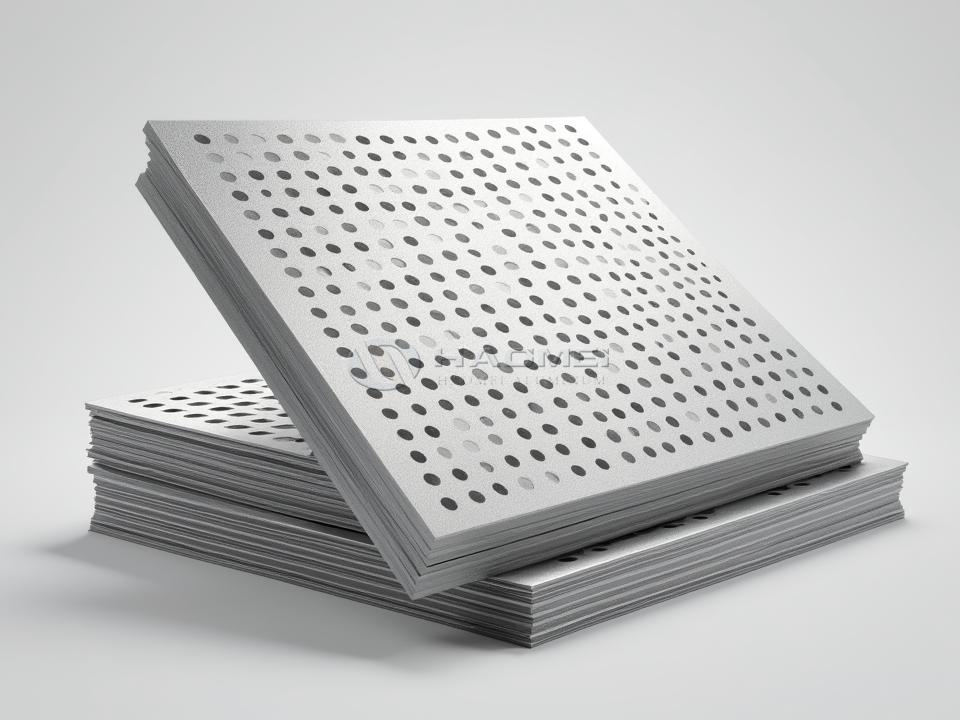
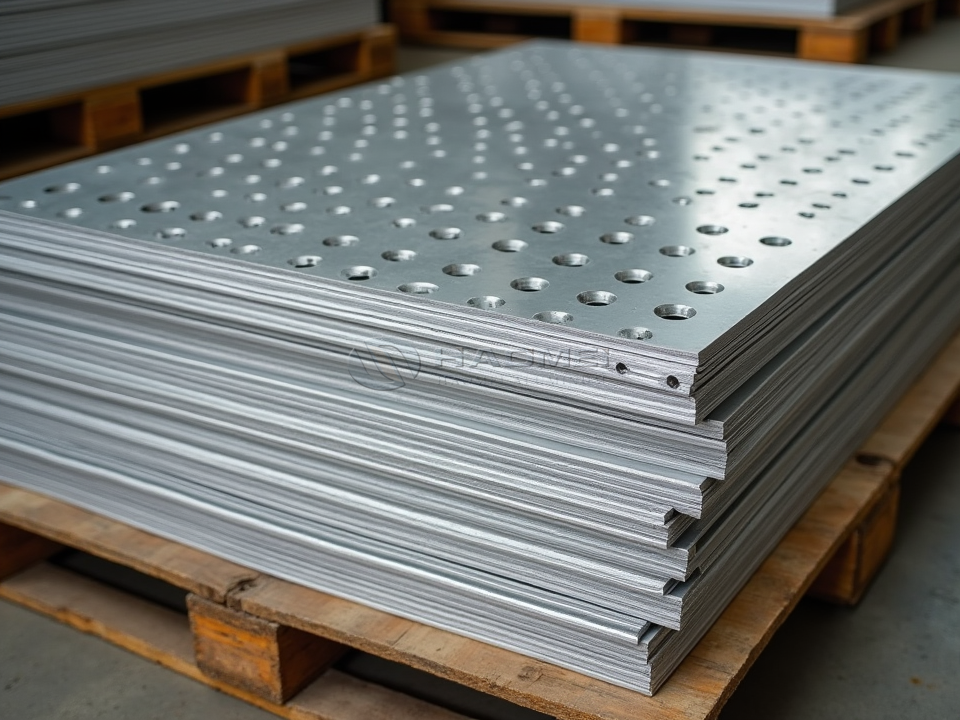
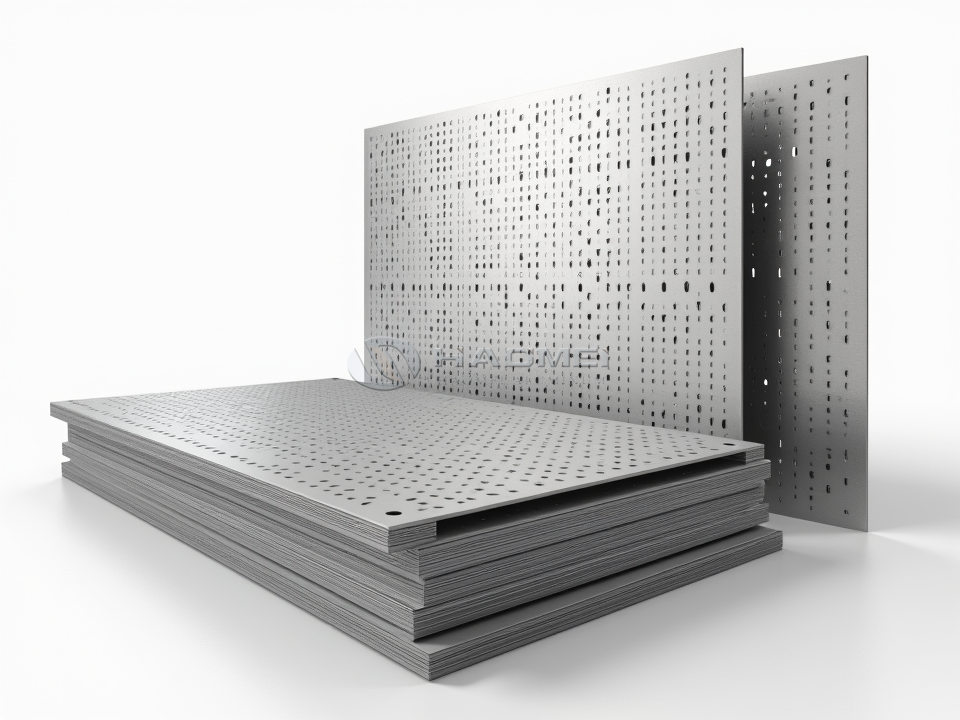
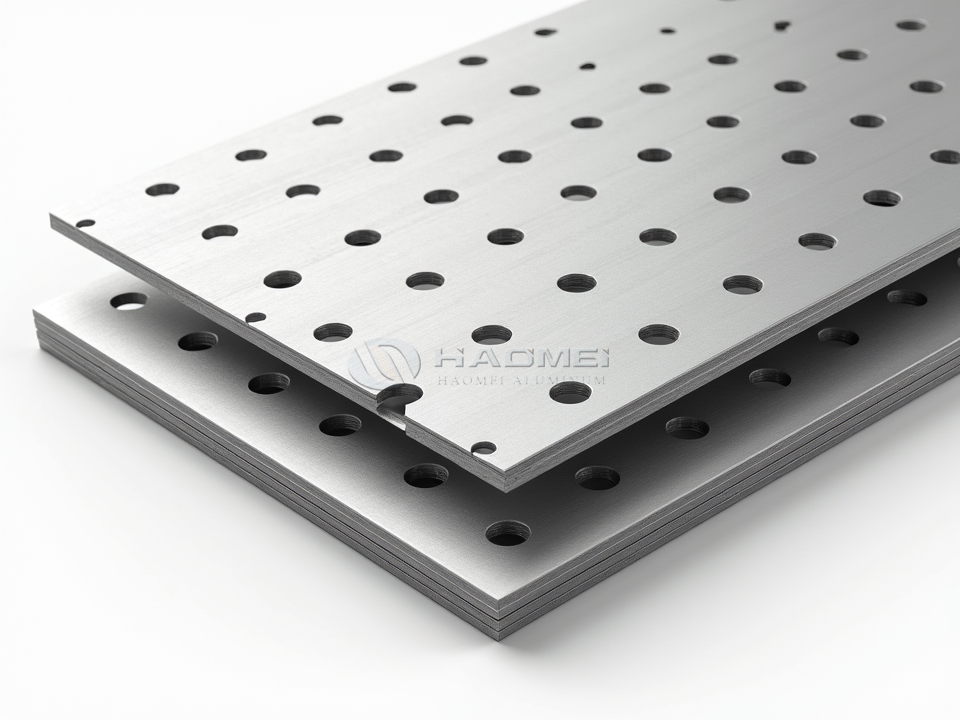
Custom CNC Punched Aluminum Panel
Custom CNC Punched Aluminum Panel: Designing With Precision, Air, and Aluminum
A custom CNC punched aluminum panel is not only a metal sheet with holes. It is a controlled balance between solid surface and open space. The punched pattern decides how much light enters, how air moves, how sound behaves, how the panel bends, and how the building or product feels from a distance. In many projects, the empty part of the panel works just as hard as the aluminum itself.
CNC punching is especially valuable when a project needs repeatable geometry, clean production efficiency, and flexible pattern control. Round, square, slotted, hexagonal, staggered, linear, decorative, and irregular patterns can be produced according to CAD drawings. Compared with manual punching, CNC equipment reads the digital file directly, keeps hole spacing consistent, and reduces dimensional variation between batches.
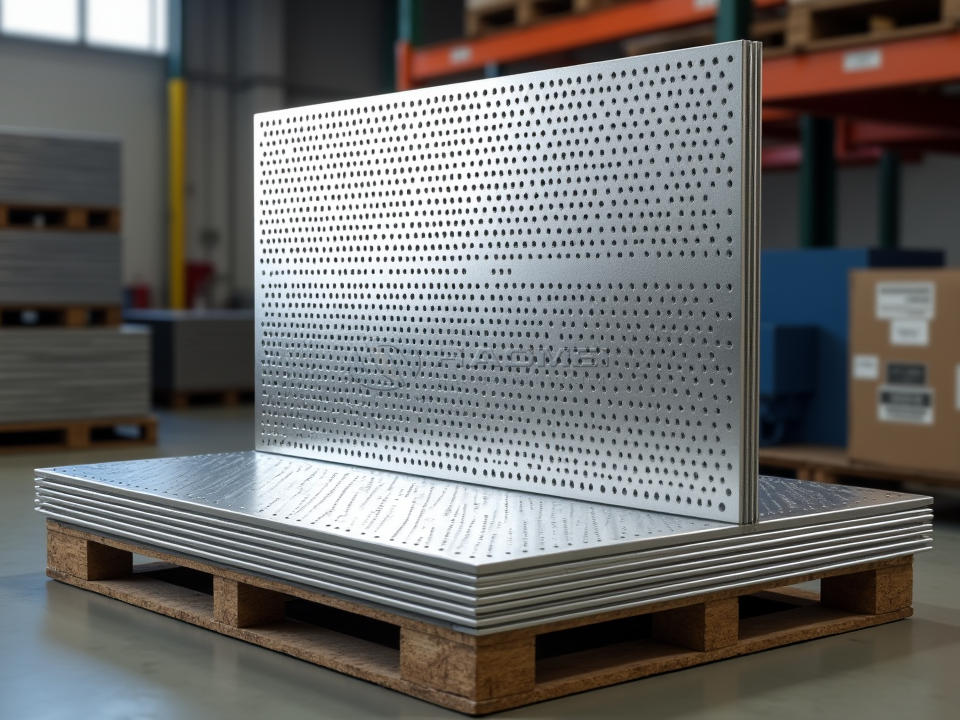
For architects, fabricators, and equipment builders, the panel becomes a design language. A facade may need privacy without blocking daylight. A ceiling may need acoustic absorption while hiding mechanical systems. A machine guard may need ventilation while protecting operators. In each case, the same material behaves differently because the alloy, temper, thickness, hole pitch, open area, and surface treatment are selected for that working environment.
What Makes CNC Punching Different
CNC punching uses programmed tooling to press shapes through aluminum sheet or plate. The process is fast and stable for repeated hole patterns, louvers, countersunk holes, mounting slots, corner notches, and shaped edges. It is often chosen when the design contains many repeated openings or when production speed matters.
The punched edge normally has a slight rollover on the entry side and a small burr on the exit side. This is normal in mechanical punching and can be improved through tool clearance control, deburring, brushing, vibration finishing, or protective coating. For visible facade and ceiling panels, the punching direction, surface side, and final finish should be confirmed before production.
A custom panel may begin as a flat sheet, but it rarely remains simple. After punching, panels can be cut to size, bent, welded, riveted, framed, anodized, powder coated, PVDF coated, or assembled with insulation and acoustic fabric. When customers compare options, a standard Perforated Aluminum Plate is useful for reference, while a custom CNC punched aluminum panel offers more freedom for project-specific details.
Common Parameters Customers Should Confirm
The most practical way to specify a panel is to describe how it must perform, not only how it should look. A facade panel facing coastal weather has different requirements from an indoor speaker grille or a suspended ceiling tile.
| Parameter | Common Range or Option | Notes for Selection |
|---|---|---|
| Thickness | 0.5 mm to 6.0 mm, heavier on request | Thicker panels improve rigidity but require larger punch force |
| Width | Up to 1500 mm common | Depends on raw coil or sheet availability |
| Length | Up to 4000 mm common | Longer panels may need leveling and careful packing |
| Hole shape | Round, square, slotted, hexagonal, decorative | Round holes reduce stress concentration and are widely used |
| Hole diameter | 1.0 mm to 100 mm | Very small holes need stricter tooling and flatness control |
| Pitch | Customized | Pitch affects strength, transparency, ventilation, and cost |
| Open area | About 10% to 60% common | High open area lowers weight but reduces stiffness |
| Tolerance | Typically +/-0.10 mm to +/-0.50 mm | Depends on thickness, hole size, panel size, and process route |
| Surface finish | Mill finish, brushed, anodized, powder coated, PVDF | Outdoor projects often require weather-resistant coatings |
| Edge work | Sheared, CNC cut, bent flange, welded frame | Edge design affects installation and visual alignment |
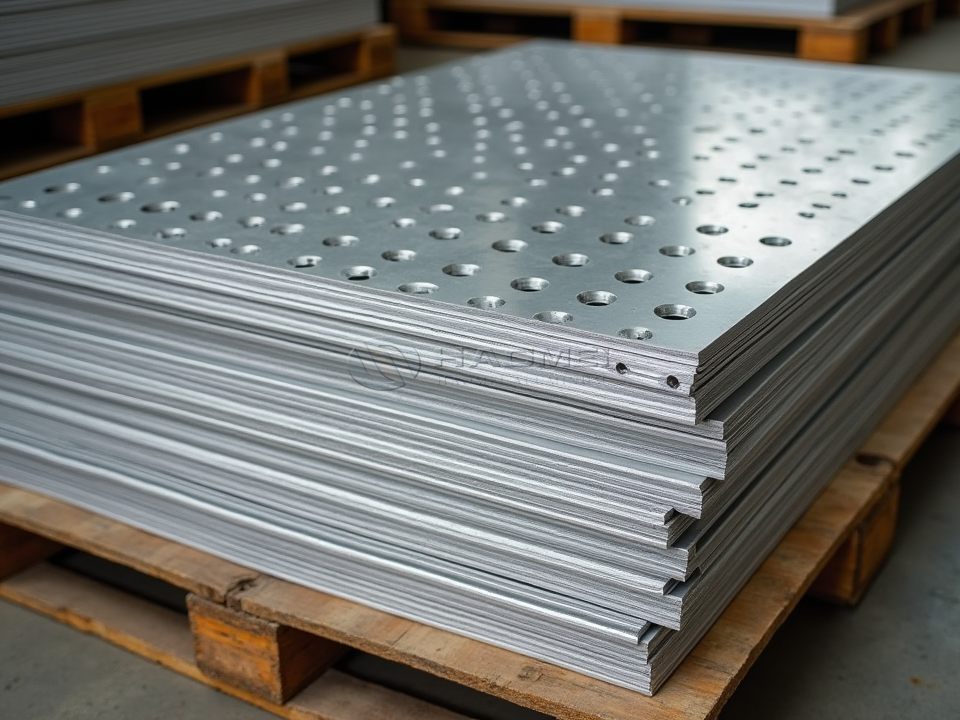
A round hole pattern is still the safest choice for many engineering projects because it punches cleanly and distributes stress well. For this reason, a Round Hole Perforated Aluminum Sheet is often used in ventilation grilles, acoustic panels, machine guards, and architectural screens.
Alloy and Temper: The Hidden Structure Behind the Pattern
Aluminum alloy selection decides strength, corrosion resistance, formability, weldability, and finish quality. Temper describes how the alloy has been hardened or heat treated. A beautiful pattern can fail in service if the alloy and temper are not suitable.
Pure aluminum grades such as 1050 and 1060 are soft, easy to punch, and excellent for anodizing. They are often used for decorative panels, lamp covers, filters, and lightweight indoor products. 3003 aluminum adds manganese, giving better strength than pure aluminum while keeping good formability. It is popular for ceiling panels, interior cladding, and general perforated sheet work.
5052 aluminum contains magnesium and offers better corrosion resistance, especially in marine, transportation, and outdoor environments. It is harder than 3003, so tool selection and punching clearance should be adjusted. 6061 aluminum provides higher strength and is often used when the panel must carry load or connect to structural parts, but T6 temper is less formable than softer tempers and needs careful bending design.
| Alloy | Typical Temper | Main Advantages | Common Applications |
|---|---|---|---|
| 1050 | O, H14, H24 | High purity, excellent anodizing, soft forming | Decorative screens, lighting panels, filters |
| 1060 | O, H14, H24 | Good conductivity, high corrosion resistance | Electrical covers, signage, interior panels |
| 3003 | H14, H24 | Balanced strength and formability | Ceiling panels, building cladding, ventilation plates |
| 5052 | H32, H34 | Strong corrosion resistance, good fatigue behavior | Marine panels, outdoor screens, transport parts |
| 6061 | T4, T6 | Higher strength, good machining | Structural covers, equipment panels, frames |
Temper should also match the next process. If the panel will be bent after punching, O, H14, H24, or T4 may be safer than very hard tempers. If the design requires large open area and narrow bridges between holes, softer temper can reduce cracking during forming, while thicker material may be needed to maintain stiffness.
Chemical Composition Reference
The chemical composition of aluminum alloys is controlled by recognized standards. Actual values vary by mill certificate, but the following table gives typical maximum or range values by weight percent.
| Alloy | Al | Si | Fe | Cu | Mn | Mg | Cr | Zn | Ti |
|---|---|---|---|---|---|---|---|---|---|
| 1050 | >=99.50 | 0.25 | 0.40 | 0.05 | 0.05 | 0.05 | - | 0.05 | 0.03 |
| 1060 | >=99.60 | 0.25 | 0.35 | 0.05 | 0.03 | 0.03 | - | 0.05 | 0.03 |
| 3003 | Balance | 0.60 | 0.70 | 0.05-0.20 | 1.00-1.50 | - | - | 0.10 | - |
| 5052 | Balance | 0.25 | 0.40 | 0.10 | 0.10 | 2.20-2.80 | 0.15-0.35 | 0.10 | - |
| 6061 | Balance | 0.40-0.80 | 0.70 | 0.15-0.40 | 0.15 | 0.80-1.20 | 0.04-0.35 | 0.25 | 0.15 |
These elements are not just numbers on a certificate. Magnesium improves corrosion resistance and strength in 5052. Manganese gives 3003 better mechanical performance than pure aluminum. Silicon and magnesium allow 6061 to respond to heat treatment. For a custom CNC punched aluminum panel, chemical composition influences punching pressure, edge quality, coating adhesion, and long-term durability.
Standards That Support Reliable Implementation
A professional order should be tied to measurable standards. Raw aluminum sheet and plate are commonly supplied according to ASTM B209, EN 485, GB/T 3880, or equivalent aluminum association specifications. General dimensional tolerances may follow ISO 2768 when agreed. Coated aluminum may refer to AAMA 2603, AAMA 2604, or AAMA 2605 for architectural organic coatings, depending on exposure level and warranty expectations.
For anodized panels, ISO 7599 or similar anodizing standards can define oxide film thickness, appearance, and sealing quality. Salt spray resistance may be tested according to ASTM B117 when corrosion performance must be verified. For facade use, project drawings should also consider wind load, panel deflection, fire requirements, fastening method, drainage, and thermal expansion.
Design Details That Save Cost and Trouble
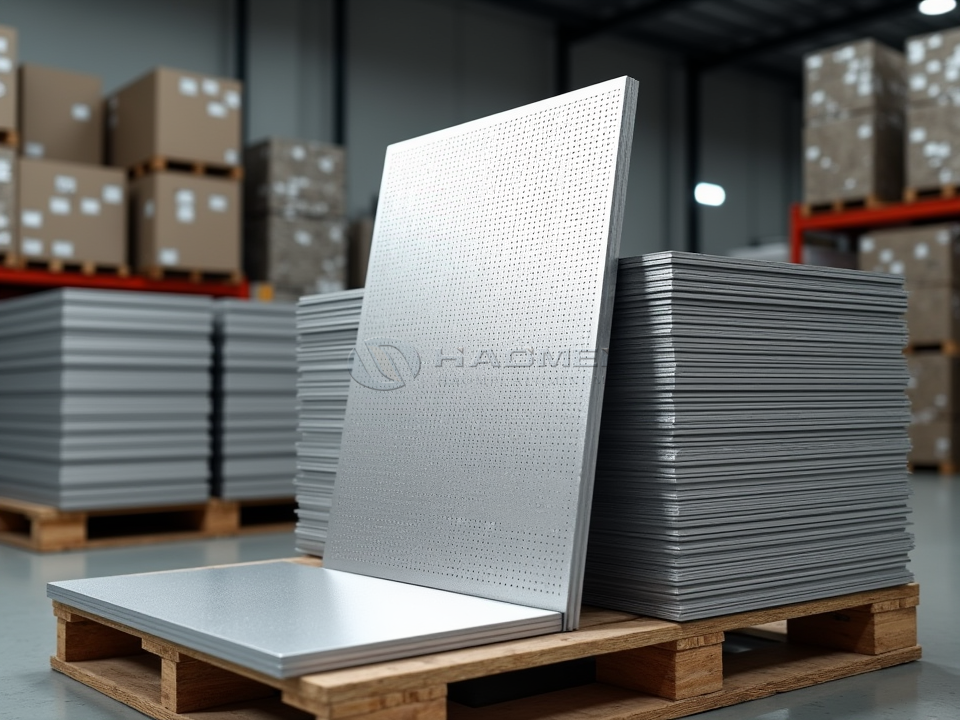
The hole diameter should generally not be smaller than the sheet thickness if conventional punching is used, although special tooling may handle tighter designs. Narrow bridges between holes can deform during punching, so pitch should be selected with strength in mind. Large panels with high open area may need edge flanges, rear stiffeners, or thicker material to remain flat.
Pattern direction also matters. Slotted holes can guide airflow, create visual movement, or reduce weight in one direction, but they may influence bending behavior. If the panel will be folded, the relationship between the bend line and punched pattern must be checked early. Bending across dense perforation can cause waves, cracks, or uneven corners.
Surface treatment should be chosen after the use environment is defined. Mill finish is economical for hidden industrial parts. Brushing gives a refined metallic texture for interiors. Anodizing adds a hard oxide layer and keeps the aluminum character visible. Powder coating offers rich color and good protection. PVDF coating is often selected for high-grade exterior cladding because of its weather resistance and color stability.
Where Custom CNC Punched Aluminum Panels Fit Best
The product is widely used in building facades, sunshades, balcony screens, ceilings, acoustic panels, air vents, filters, machine guards, elevator interiors, transportation panels, furniture inserts, electronic enclosures, and retail displays. Its value comes from combining low weight, corrosion resistance, clean appearance, and pattern freedom.
For purchasing teams, the fastest quotation usually comes from a complete drawing or specification that includes alloy, temper, thickness, panel size, hole pattern, open area, tolerance, finish, quantity, and packing requirements. If the design is still developing, samples can help confirm hole scale, transparency, touch quality, coating color, and installation detail before mass production.
A custom CNC punched aluminum panel is a practical material with a visual voice. It filters light, manages air, reduces weight, protects equipment, and gives flat metal a measured rhythm. When the alloy, temper, pattern, standards, and finish are chosen together, the panel becomes more than a punched sheet. It becomes a precise part of the final product.