Architectural Perforated Aluminum Plate
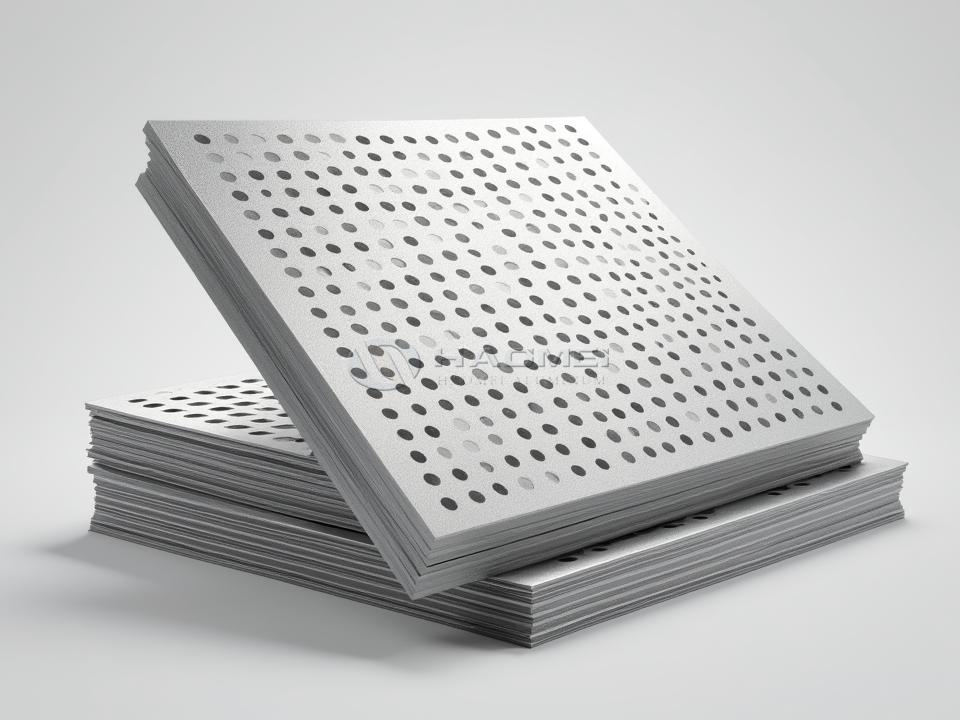
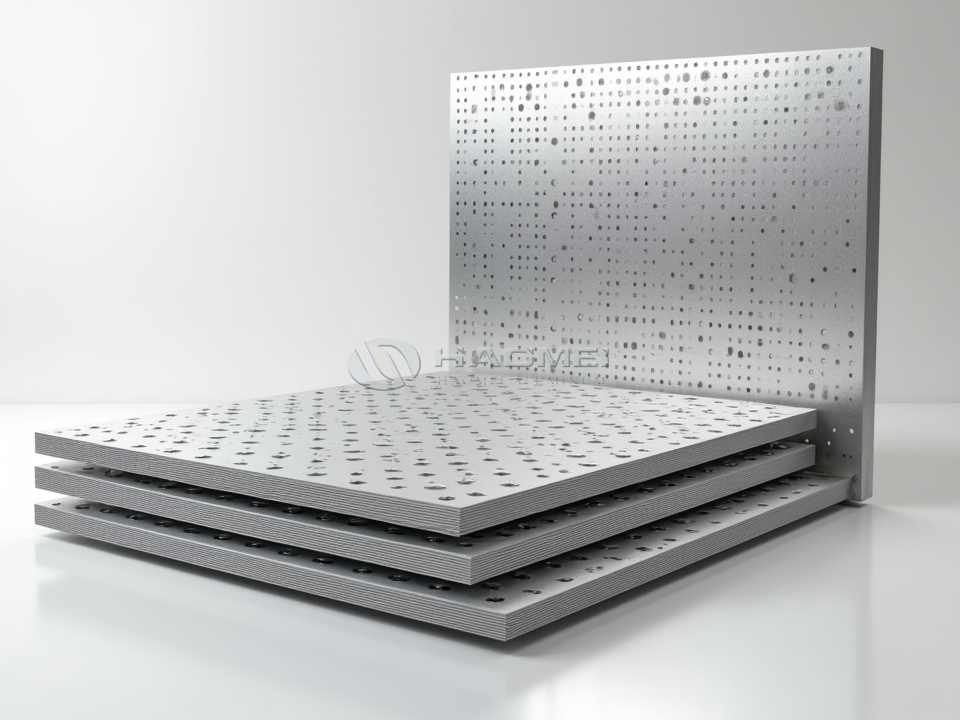
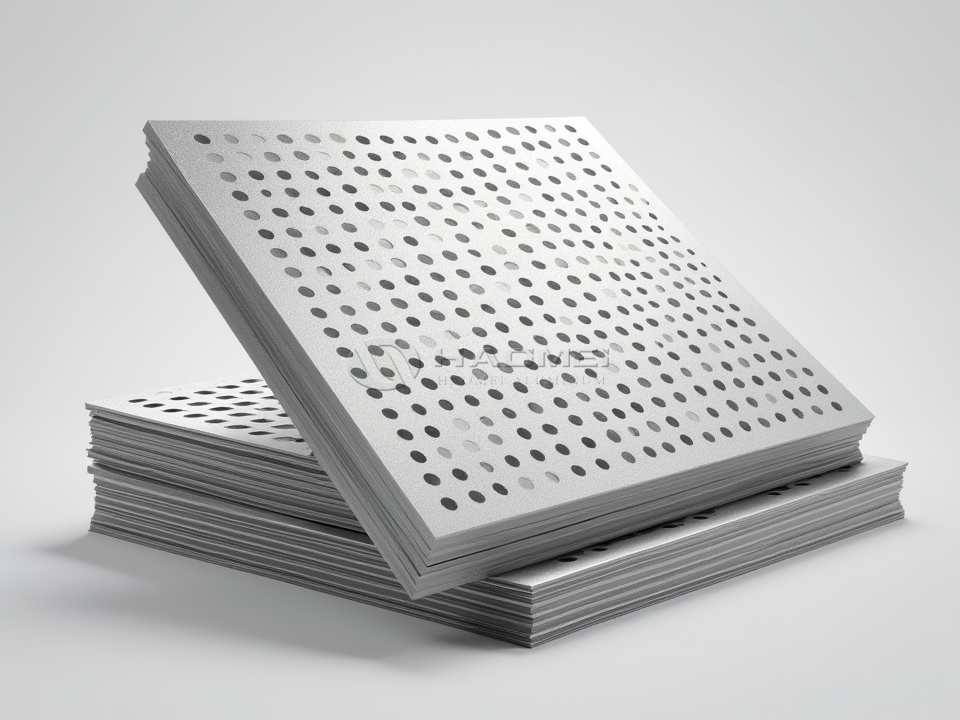
Architectural perforated aluminum plate is a lightweight metal panel processed with round, square, slotted, hexagonal, or custom-pattern holes. In building design, it works as more than a decorative skin. It manages sunlight, supports ventilation, improves visual depth, protects exterior walls, and helps architects create rhythmic surfaces that change with distance and daylight.
Compared with solid cladding, perforated aluminum plate offers a lighter structure and more expressive appearance. Compared with steel, it provides stronger corrosion resistance in many outdoor environments and is easier to form, cut, bend, and install. For projects that require long service life, clean detailing, and flexible visual effects, it has become a preferred material for facades, ceilings, balcony screens, sunshades, and interior partitions.
What Makes It Suitable for Architecture
The main advantage of architectural perforated aluminum plate is the balance between openness and strength. The hole pattern can be adjusted to control light, airflow, privacy, and appearance while the remaining metal web maintains panel rigidity. A fine round-hole pattern may create a soft, uniform surface. A slotted pattern gives a longer visual direction. A decorative pattern can turn a simple wall into a branded architectural feature.
Aluminum also has a naturally protective oxide film. With anodizing, powder coating, PVDF coating, or fluorocarbon coating, the surface can resist weathering, color fading, and urban pollution. This makes it suitable for airports, shopping centers, office towers, stadiums, hotels, schools, hospitals, and transport stations.
For buyers comparing product types, Perforated Aluminum Plate is often specified by thickness, alloy, hole size, pitch, open area, surface finish, and panel flatness. These details decide not only the look, but also wind resistance, installation method, acoustic effect, and maintenance cycle.
Main Features Customers Care About
| Feature | Practical Value for Projects |
|---|---|
| Light weight | Reduces load on curtain wall frames, ceilings, and secondary steelwork |
| Corrosion resistance | Performs well outdoors when paired with suitable coating or anodizing |
| Design flexibility | Supports round, square, slotted, hexagonal, irregular, and graphic patterns |
| Ventilation | Allows air movement through facades, equipment screens, and parking structures |
| Solar shading | Reduces direct sunlight while keeping a semi-open visual connection |
| Acoustic support | Works with backing felt or mineral wool to reduce noise reflection |
| Easy fabrication | Can be cut, bent, rolled, welded, framed, and CNC processed |
| Low maintenance | Smooth coated surfaces are easy to clean and retain color for years |
A well-designed perforated plate can be subtle or dramatic. During the day, it filters sunlight and casts patterned shadows. At night, backlighting can make the panel glow, creating a strong architectural identity without heavy decorative elements.
Common Specifications
| Parameter | Typical Range |
|---|---|
| Material | Aluminum alloy 1100, 3003, 5052, 6061, 6063 |
| Thickness | 1.0 mm to 6.0 mm for most architectural use |
| Width | Commonly up to 1500 mm, wider sizes available by project |
| Length | Custom cut length, often 2000 mm to 6000 mm |
| Hole shape | Round, square, slotted, hexagonal, diamond, custom pattern |
| Open area | About 10% to 60%, depending on function and strength needs |
| Surface finish | Mill finish, anodized, powder coated, PVDF coated, wood grain coating |
| Processing | Leveling, shearing, punching, bending, rolling, welding, framing |
| Installation | Cassette panel, screw-fixed panel, hook-on system, frame-mounted panel |
For strong facade performance, panel thickness and open area must be considered together. A thin plate with a large open area may need stiffeners, folded edges, or a support frame. A thicker plate can span longer distances but adds cost and weight. The best design is usually one that meets structural, visual, and budget needs at the same time.
Aluminum Alloy Choices
| Alloy | Main Character | Typical Architectural Use |
|---|---|---|
| 1100 | High aluminum purity, excellent formability | Interior ceilings, decorative screens, light-duty panels |
| 3003 | Good corrosion resistance and workability | Facade panels, soffits, wall cladding, sunshades |
| 5052 | Higher strength and marine-grade corrosion resistance | Coastal facades, exterior screens, balcony panels |
| 6061 | Strong and heat-treatable | Structural decorative parts, frames, heavy-duty panels |
| 6063 | Good extrusion compatibility and surface finish | Matched framing systems, louvers, architectural profiles |
For exterior building skins, 3003 and 5052 are frequently selected. 3003 offers cost-effective forming performance, while 5052 is better when the project is near the sea or exposed to more aggressive conditions.
Hole Patterns and Visual Effects
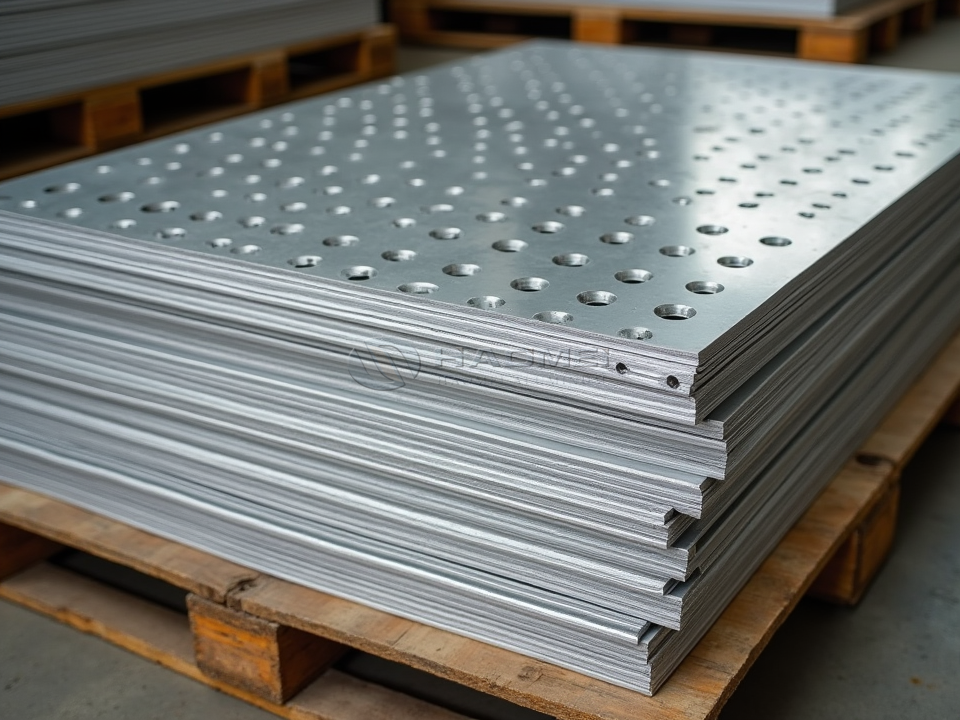
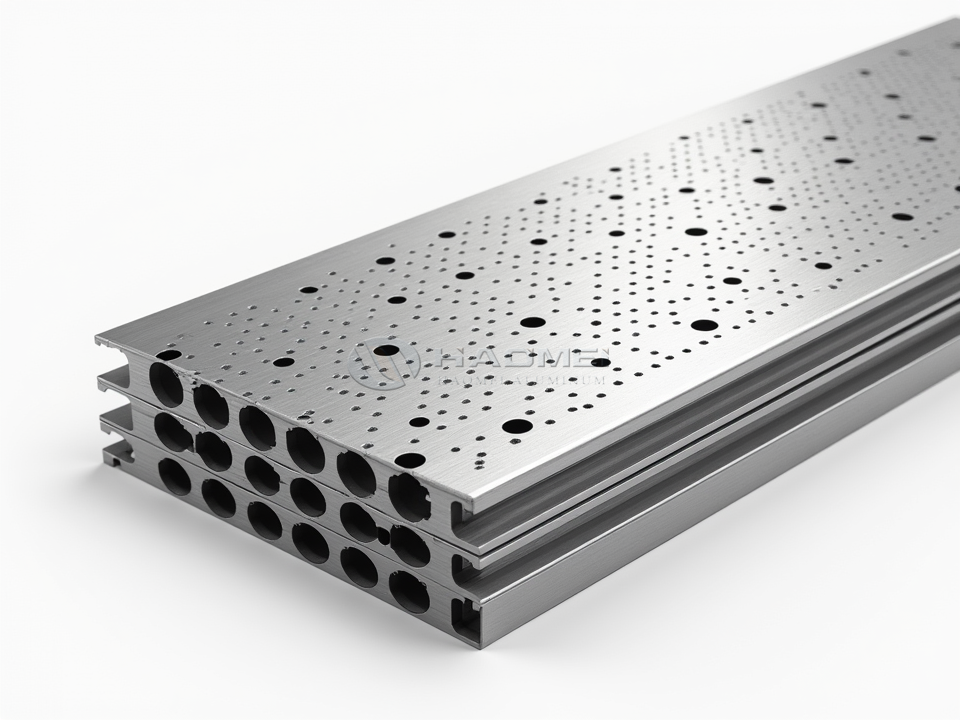
Round holes are the most widely used because they punch cleanly, distribute stress evenly, and suit both modern and industrial styles. If the project needs a balanced technical look, a Round Hole Perforated Aluminum Sheet can be a simple and reliable option.
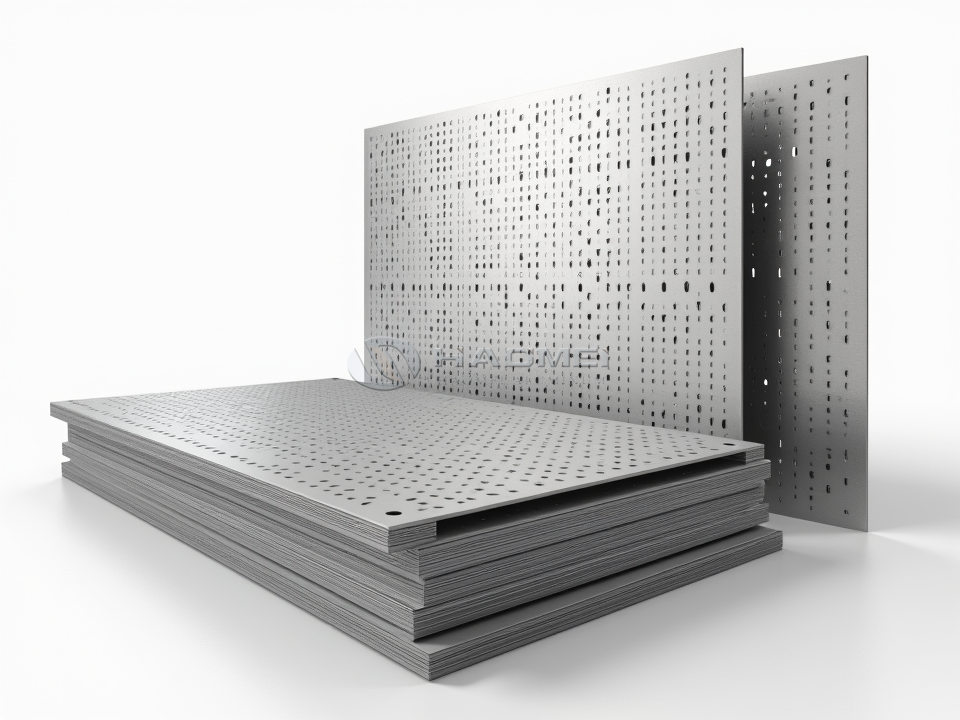
Square holes create a sharper grid effect. Slotted holes are useful when airflow or directional design is needed. Hexagonal patterns offer a honeycomb-like appearance with high open area. Custom perforations can also produce gradient shading, logos, maps, abstract images, or pixel-style graphics.
Open area is an important design figure. A lower open area gives more privacy and stronger shading. A higher open area improves airflow and transparency. For parking garages and mechanical screens, ventilation may be the priority. For office facades, glare control and visual privacy may matter more.
Surface Finishes for Long-Term Appearance
Powder coating is popular for interior and exterior use because it offers many colors, good hardness, and efficient production. PVDF coating is preferred for high-rise facades and harsh outdoor exposure because it provides excellent weather resistance and color stability. Anodizing creates a metallic surface that is durable and elegant, especially in silver, champagne, bronze, and black tones.
Wood grain and stone-look finishes are also available when designers want a warmer appearance without using heavy natural materials. These finishes can match aluminum windows, curtain wall frames, sun louvers, and ceiling systems.
Applications in Buildings
Architectural perforated aluminum plate can appear across the building envelope and interior space. On facades, it acts as a second skin that adds depth, reduces heat gain, and protects the main wall from direct weather. For commercial buildings, a Decorative Perforated Aluminum Facade Panel can help create a recognizable exterior without overly complex construction.
In ceilings, perforated aluminum panels provide a clean modular appearance and can hide lighting, sprinklers, air-conditioning outlets, and acoustic materials. In transport hubs and public halls, perforated ceilings are valued for fire resistance, clean lines, and easy access to services above.
For balconies, stairways, and corridors, perforated plates serve as safety screens while keeping air and light moving. In retail interiors, they are used for partitions, display backgrounds, feature walls, and brand installations. In industrial-style restaurants, galleries, and offices, perforated aluminum adds texture without making the space feel closed.
Selection Tips for a Better Result
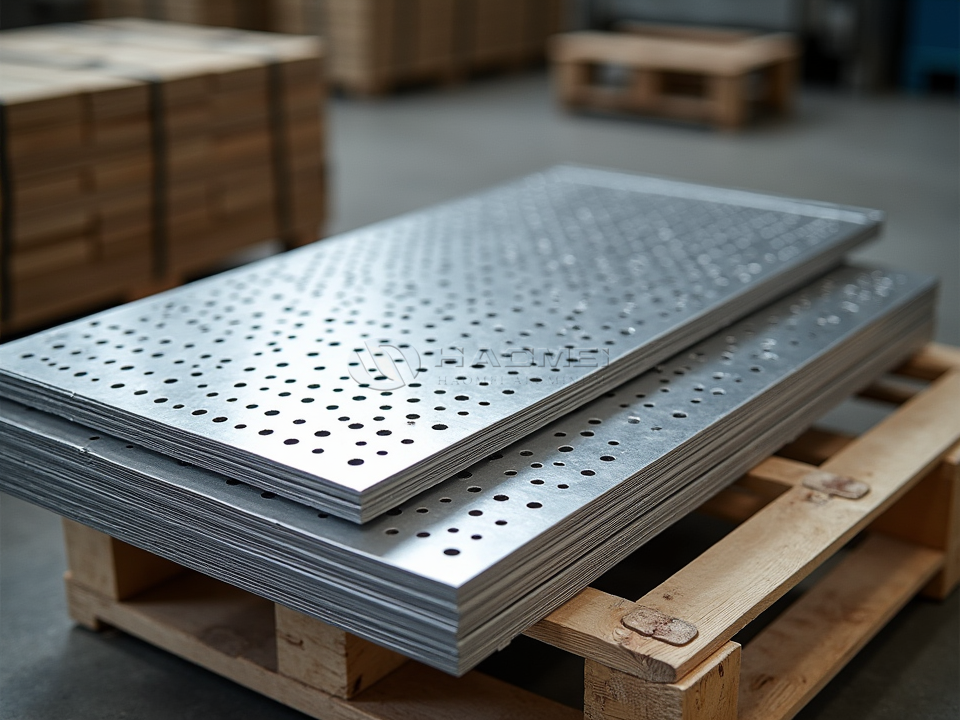
Before ordering, confirm whether the plate is mainly decorative, protective, acoustic, or ventilation-oriented. Check the viewing distance too. Small holes may look smooth from far away, while large holes create a bold pattern at close range. For outdoor panels, request coating thickness, color tolerance, salt spray performance, and sample approval. For large facades, ask for mock-up testing to verify flatness, joint width, fastening method, and night lighting effect.
A good architectural perforated aluminum plate should arrive flat, clean, deburred, and ready for installation. Edges should be safe to handle, hole spacing should be consistent, and coating should be even across the full panel surface. When the right alloy, pattern, finish, and fixing system are combined, the result is a durable metal surface that brings shade, airflow, privacy, and visual energy to the building.