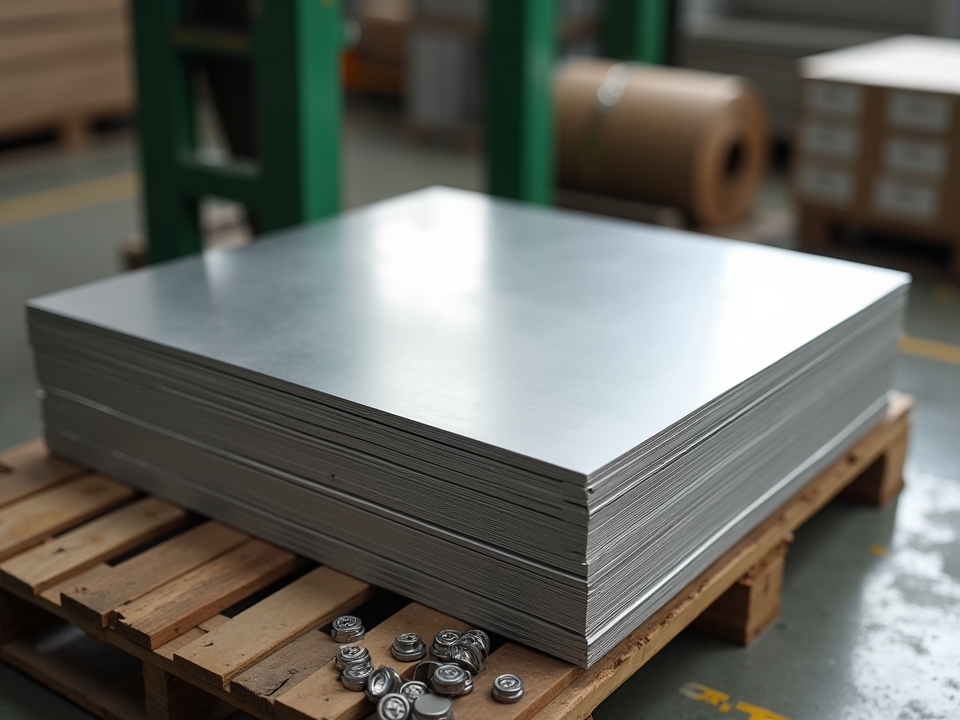
Powder Coated Perforated Aluminum Sheet
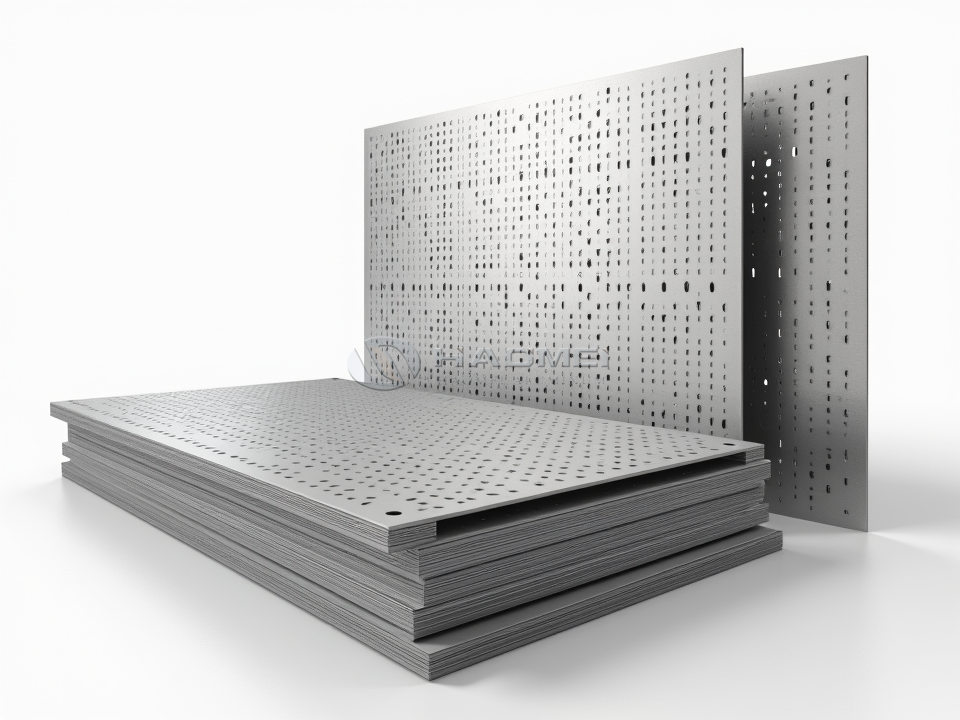
A powder coated perforated aluminum sheet is often selected for its color, but its real value is more practical. It controls sunlight, allows ventilation, reduces apparent panel weight, and creates visual depth without sacrificing the corrosion resistance that makes aluminum suitable for demanding environments.
Unlike a solid painted panel, a perforated sheet has exposed hole edges, a larger surface area, and more opportunities for moisture, dust, or chemical residue to settle. This makes coating quality especially important. A well-made panel is not simply aluminum sheet with holes and color. It is a coordinated system of alloy selection, hole geometry, pretreatment, powder application, curing, and fabrication control.
The Practical Advantage of Perforation
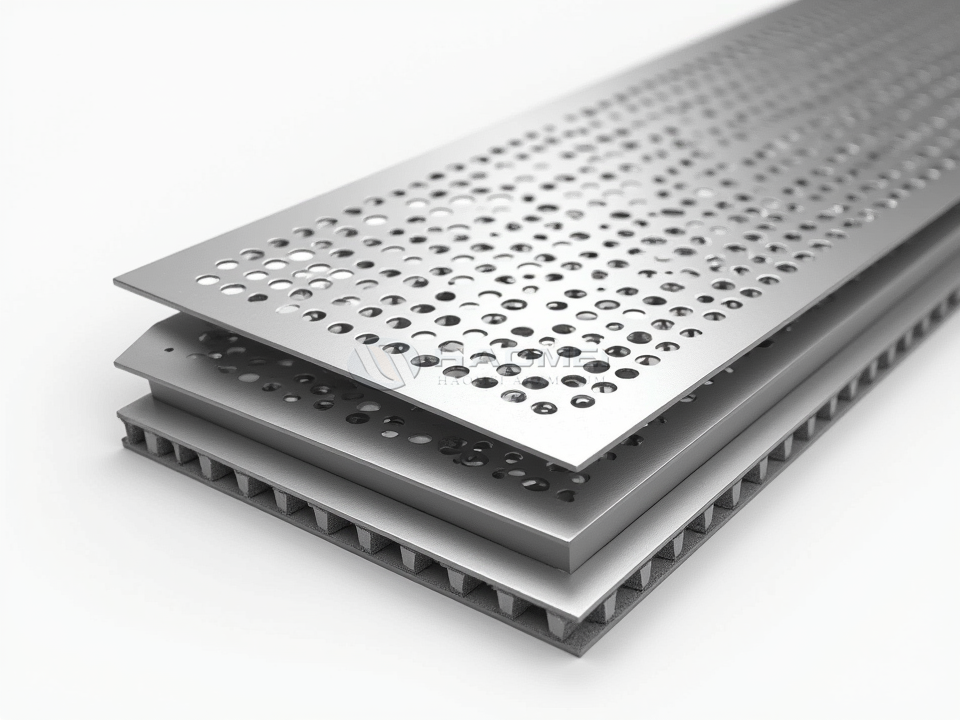
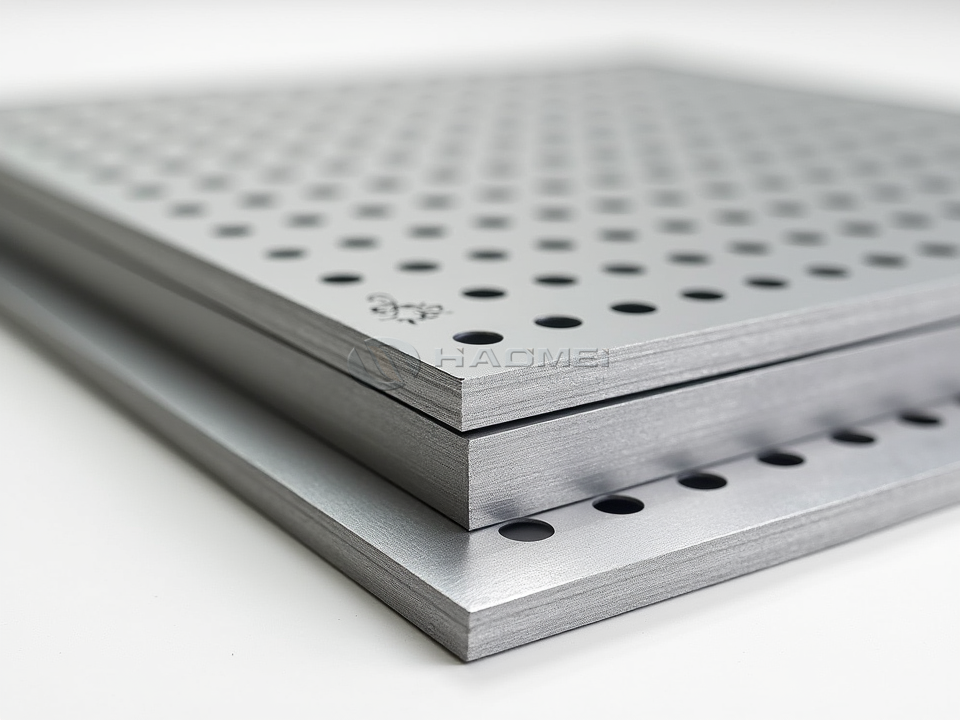
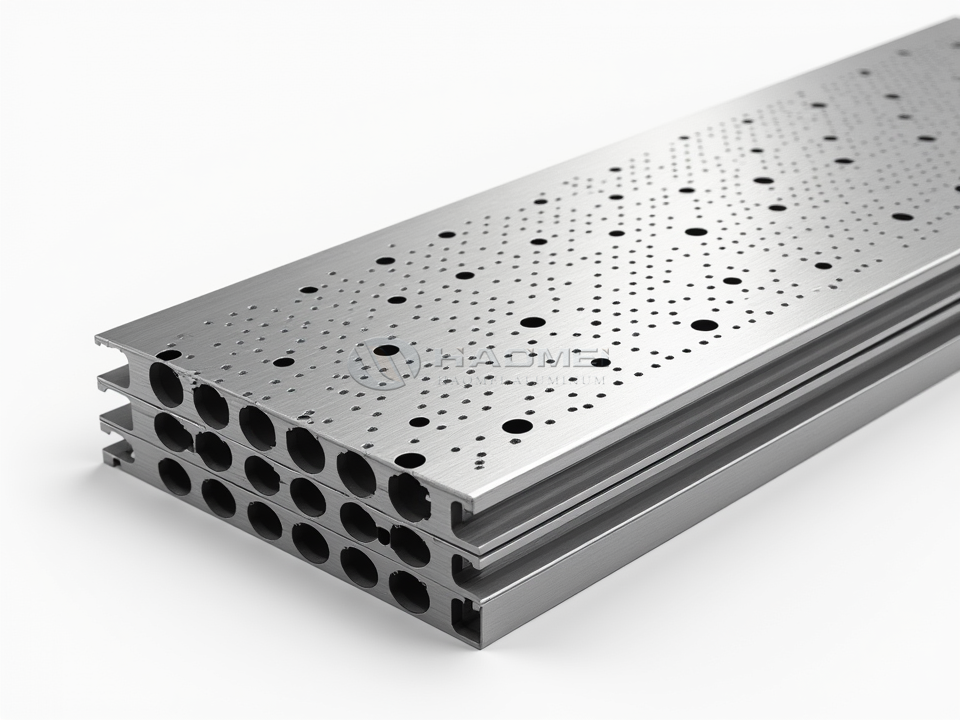
Perforation changes the behavior of aluminum in useful ways. Round holes provide balanced open area and a clean appearance. Square holes create a more graphic, architectural pattern. Slots can direct airflow or give a panel a horizontal or vertical visual rhythm. Hole diameter, pitch, arrangement, and open-area ratio should be considered together rather than selected separately.
For sunshades and privacy screens, a higher open area improves air movement and outward visibility while reducing direct solar gain. For acoustic ceilings or wall linings, perforations can work with acoustic fleece and mineral wool to absorb sound. For equipment guards, filters, and ventilation covers, the pattern must balance free airflow with protection.
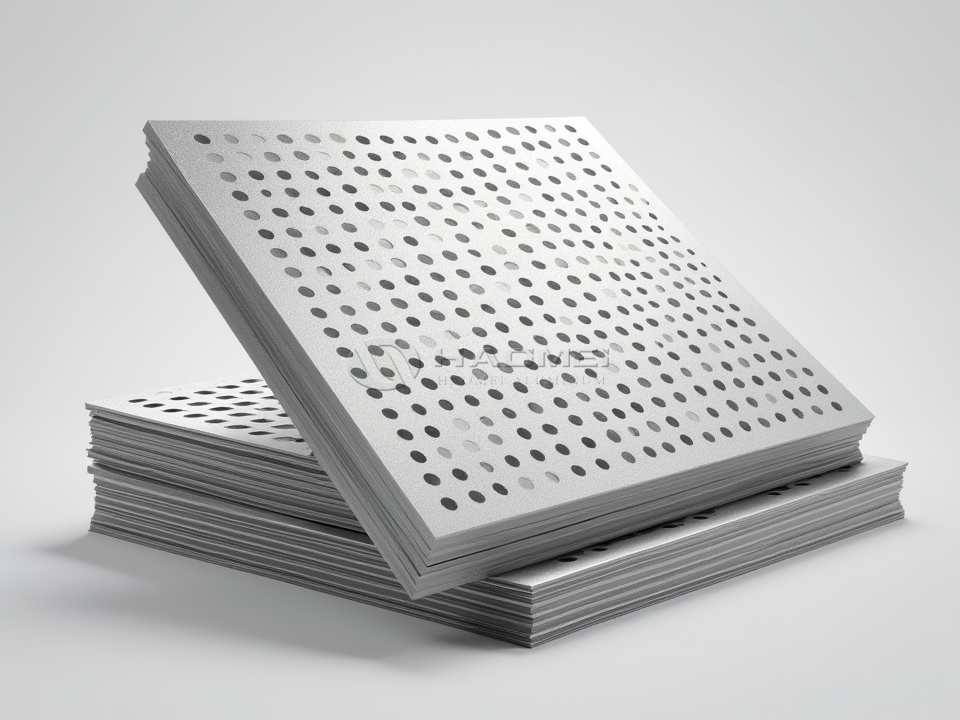
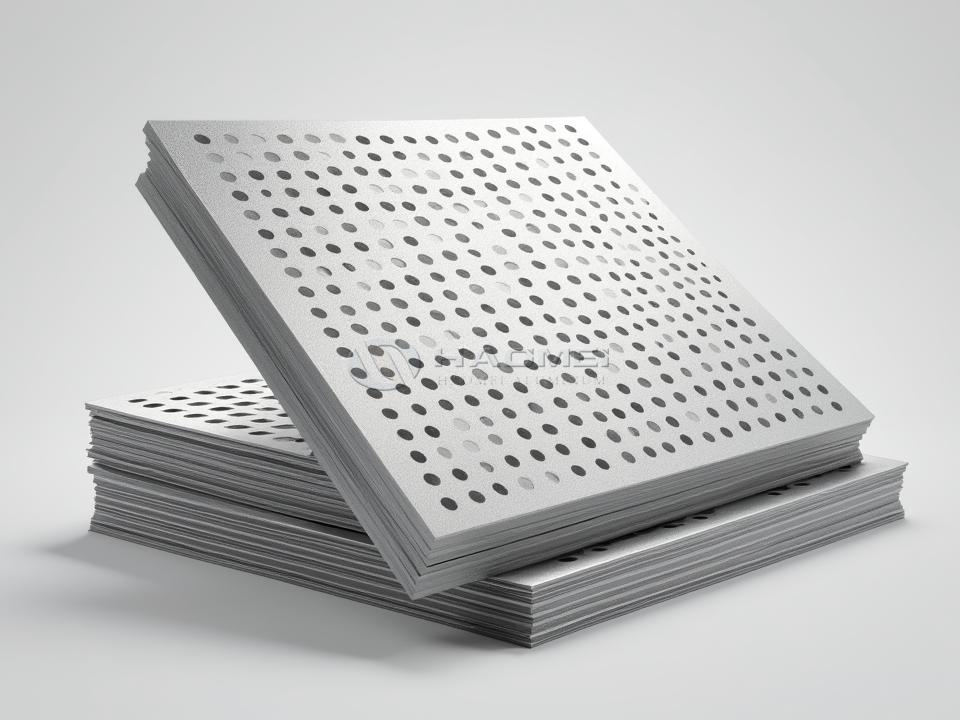
A Round Hole Perforated Aluminum Sheet is often preferred when a project requires consistent visual alignment and uniform light transmission. Decorative exterior systems may instead use a Decorative Perforated Aluminum Facade Panel to create shade, layered depth, and a recognizable building identity.
Typical Product Parameters
| Item | Common Specification Range |
|---|---|
| Base material | Aluminum sheet or coil |
| Common alloys | 1100, 3003, 3105, 5052 |
| Temper | H14, H24, H32, H34, H42, H46 |
| Sheet thickness | 0.5 mm to 6.0 mm |
| Common architectural thickness | 1.0 mm to 3.0 mm |
| Width | Up to 1,500 mm, subject to equipment capability |
| Length | Custom cut length, commonly up to 6,000 mm |
| Hole shape | Round, square, slotted, hexagonal, decorative pattern |
| Hole diameter or width | 1.0 mm to 50 mm or custom |
| Open area | Commonly 15% to 60% |
| Powder coating thickness | Typically 60 to 120 microns |
| Surface finish | Matte, satin, gloss, textured, metallic, wood-grain effect |
| Color options | RAL, Pantone, custom matched colors |
Thickness must be assessed after considering the open-area ratio. A sheet with 45% open area does not carry loads like a solid sheet of the same gauge. Wide panels, large holes, narrow bridges between holes, and folding requirements can all affect stiffness. For exterior cladding, framing design and fixing locations are as important as sheet thickness.
Alloy and Temper Selection
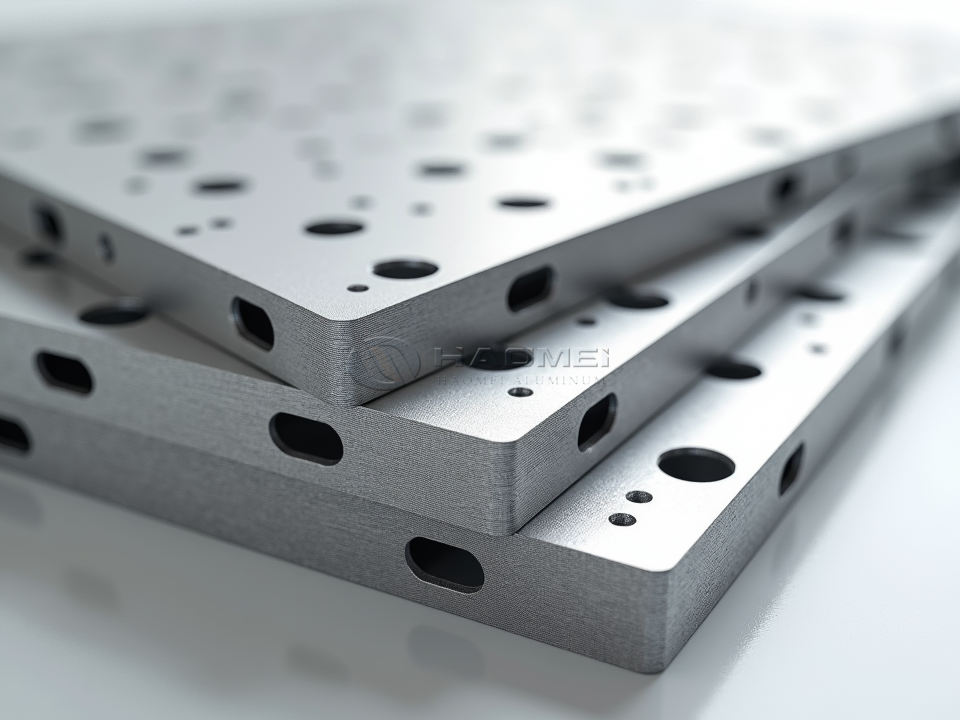
Alloy choice determines how the sheet punches, bends, resists corrosion, and performs after coating. Aluminum 1100 offers excellent formability and is suitable for decorative indoor uses where high mechanical strength is not essential. Its high aluminum content supports a smooth appearance after coating.
Aluminum 3003 is a widely used manganese alloy for perforated architectural sheet. It has better strength than 1100, good workability, and reliable general corrosion resistance. It is a practical choice for ceilings, interior screens, signage, and many protected exterior applications.
Aluminum 3105 contains manganese and magnesium, offering suitable strength and forming performance for painted sheet products. It is frequently specified where coated appearance and processing efficiency matter.
Aluminum 5052 is often selected for coastal, humid, or industrial settings. Its magnesium content improves corrosion resistance and strength. It is particularly suitable for exterior screens, marine-adjacent structures, equipment enclosures, and areas exposed to frequent wet conditions.
Tempers such as H14 or H24 offer moderate hardness and forming ability. H32 and H34 are commonly used when greater strength is needed with reasonable bending performance. The best temper depends on whether panels will be folded, rolled, pressed, or installed flat. Tight bends in heavily perforated material should be tested before production because punching can alter local stress behavior.
Typical Chemical Properties by Alloy
The values shown are typical composition limits or ranges by weight. Exact requirements should be confirmed against the selected material standard and mill certificate.
| Alloy | Si | Fe | Cu | Mn | Mg | Cr | Zn | Al |
|---|---|---|---|---|---|---|---|---|
| 1100 | 0.95 max | 0.95 max | 0.05-0.20 | 0.05 max | - | - | 0.10 max | 99.00 min |
| 3003 | 0.60 max | 0.70 max | 0.05-0.20 | 1.00-1.50 | - | - | 0.10 max | Balance |
| 3105 | 0.60 max | 0.70 max | 0.30 max | 0.30-0.80 | 0.20-0.80 | 0.20 max | 0.40 max | Balance |
| 5052 | 0.25 max | 0.40 max | 0.10 max | 0.10 max | 2.20-2.80 | 0.15-0.35 | 0.10 max | Balance |
Powder Coating Process and Performance
Powder coating begins with surface preparation. Aluminum sheets are commonly cleaned, chemically converted, rinsed, dried, powder sprayed electrostatically, and cured in an oven. Pretreatment is critical because it supports coating adhesion and improves resistance to under-film corrosion.
During spraying, powder must reach the hole walls and reverse side evenly. Dense patterns, very small holes, and deep formed sections can create a Faraday cage effect, where powder is less likely to deposit in recessed areas. Experienced coating lines adjust voltage, gun distance, airflow, and spray angle to maintain better coverage around perforations.
Polyester powder is commonly used for indoor products and moderate outdoor exposure. Super-durable polyester offers better color and gloss retention for exterior architectural panels. Fluoropolymer powder systems may be selected for severe UV exposure or landmark projects requiring extended finish stability.
Applicable Standards and Quality References
Material quality may be specified to ASTM B209 for aluminum sheet and plate, EN 485 for aluminum and aluminum-alloy sheet, strip, and plate, or GB/T 3880 where applicable. Dimensional tolerances, alloy, temper, and mechanical properties should be stated in the purchase specification.
For powder-coated architectural aluminum, AAMA 2603, AAMA 2604, and AAMA 2605 are commonly referenced according to expected exposure and durability requirements. EN 12206-1 is also widely used for organic coatings on aluminum and aluminum alloys.
Coating evaluation may include ISO 2360 for coating-thickness measurement, ISO 2409 for cross-cut adhesion, ISO 2813 for gloss measurement, and ISO 9227 for salt spray testing. Test selection should reflect the installation environment rather than relying on a single performance figure.
Installation and Care Considerations
Powder coated perforated aluminum sheet should be handled with clean gloves and stored away from standing water, cement dust, and dissimilar metals. Protective film may help during fabrication, but it should be removed promptly after installation to avoid adhesive residue or uneven weathering.
For long exterior panels, allow for thermal movement. Aluminum expands more than steel when temperatures change, so fixing details should permit controlled movement without deforming the sheet. Avoid direct contact with untreated steel, copper, or wet alkaline materials. Use suitable isolators, gaskets, or coated fasteners where required.
Routine cleaning with clean water and a mild neutral detergent preserves the surface appearance. Abrasive pads, strong solvents, and highly alkaline cleaners should be avoided. With the correct alloy, temper, perforation pattern, and powder system, this material becomes more than a decorative skin. It becomes a durable working layer that manages light, air, sound, protection, and architectural expression.