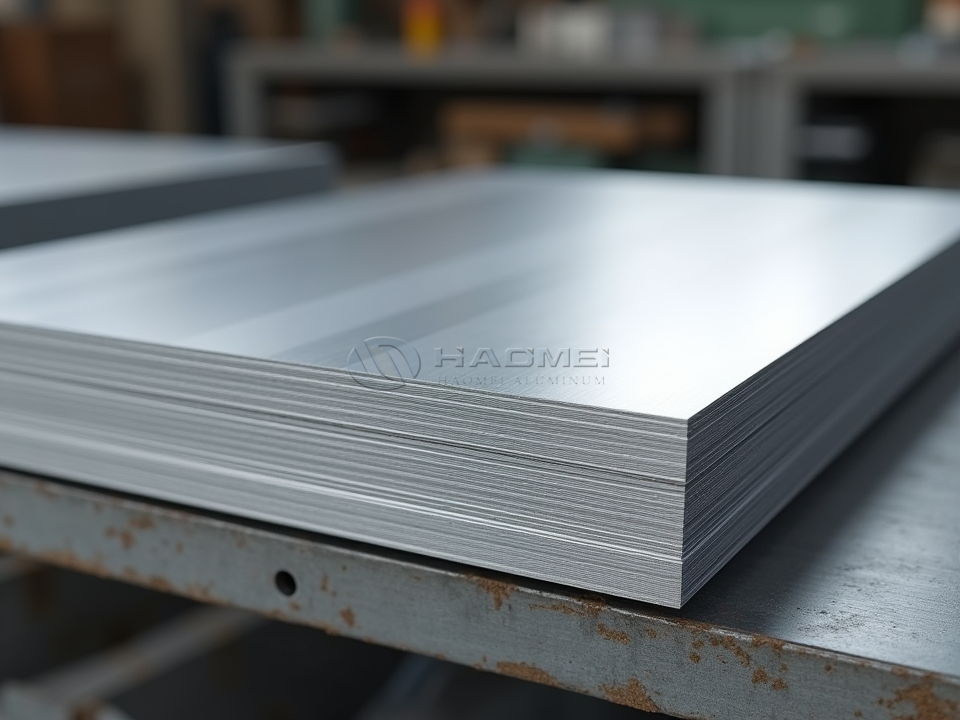
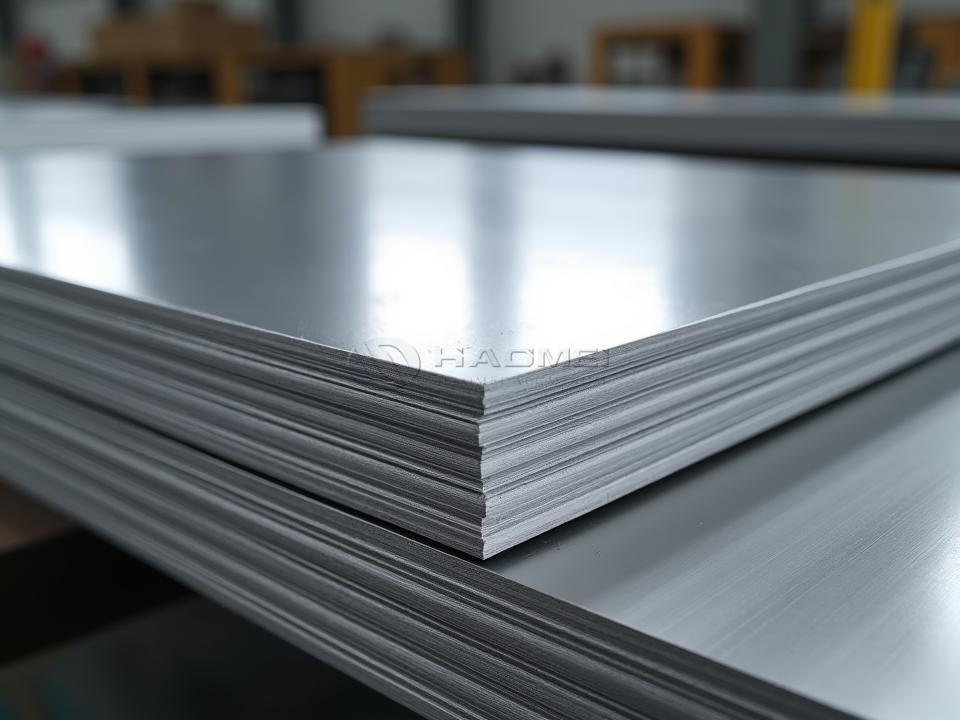
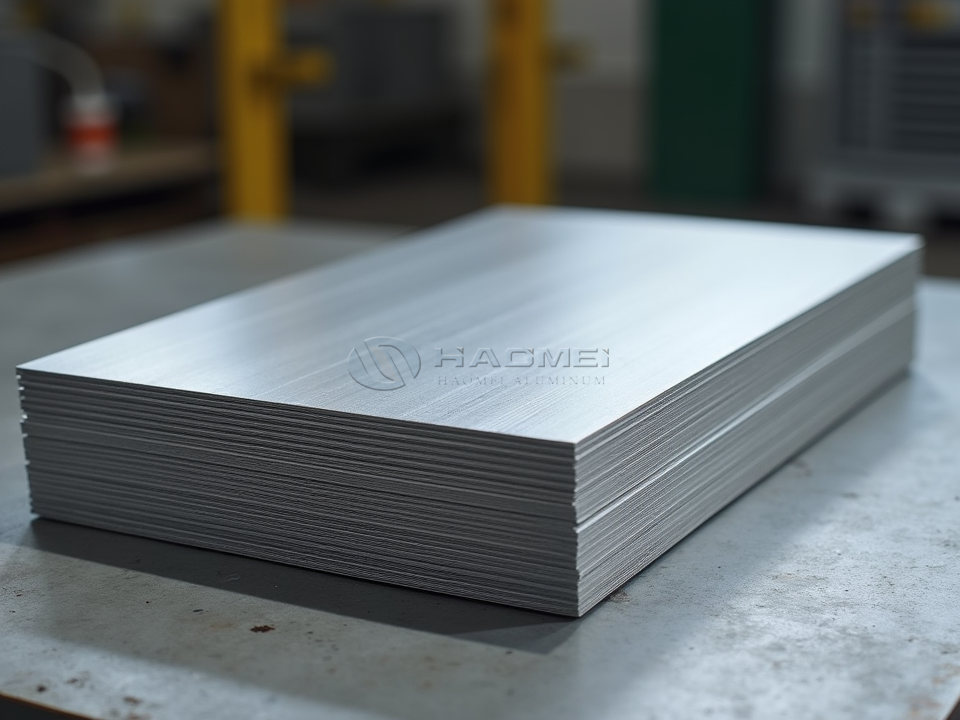
5052 Aluminum Sheet for Marine Fabrication: Alloy, Temper and Thickness Considerations
5052 aluminum sheet is a widely used Al-Mg alloy for marine fabrication where low weight, seawater resistance, forming performance, and dependable weldability matter. Its magnesium-rich chemistry gives the material much better corrosion resistance than standard commercial-purity aluminum, while chromium supports grain structure and durability in demanding environments.
For boat components, dock equipment, tanks, enclosures, and coastal structures, 5052 aluminum sheet delivers a practical balance between strength and fabrication flexibility. It is non-heat-treatable, meaning its strength is developed mainly through strain hardening rather than precipitation heat treatment. Choosing the correct temper and thickness is therefore central to reliable marine performance.
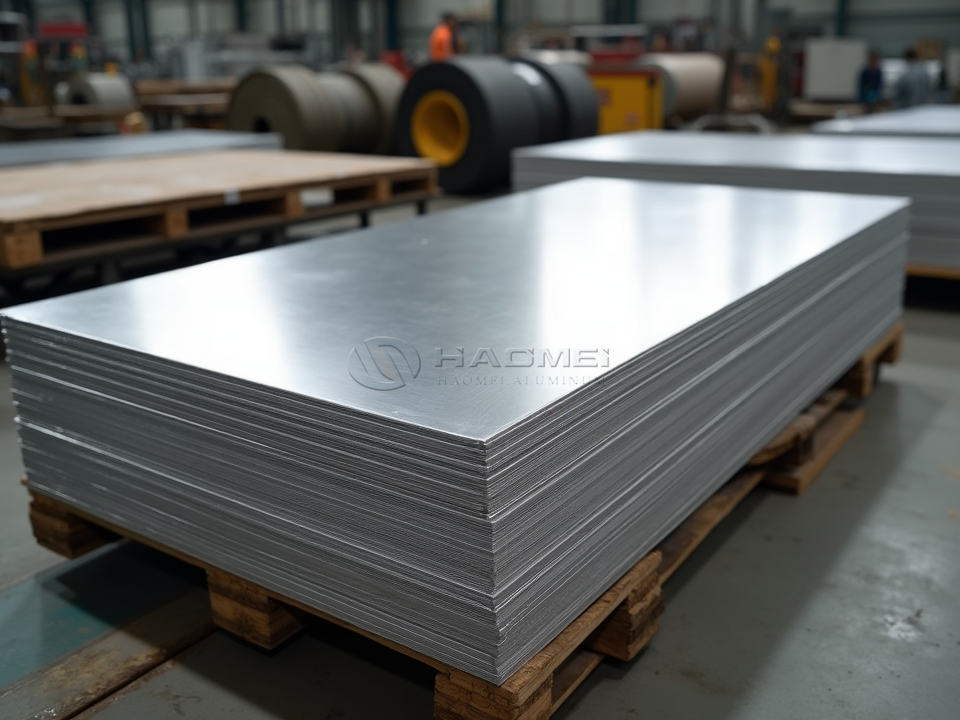
Why 5052 Aluminum Sheet Performs Well Near Seawater
Salt spray, condensation, wet-dry cycles, and dissimilar-metal contact all place pressure on marine materials. 5052 aluminum sheet forms a stable oxide film that protects the surface from ordinary atmospheric and seawater exposure. It is particularly suitable for fabricated parts that need bending, rolling, stamping, or welding before installation.
Compared with 3003, 5052 offers higher strength and markedly stronger corrosion resistance. Compared with 6061, it is generally easier to form in softer tempers and avoids the heat-affected-zone strength loss patterns associated with heat-treatable alloys. For high-strength vessel hull plating, 5083 or 5086 may be specified; however, 5052 remains an excellent choice for lighter-gauge and moderately loaded marine assemblies.
Typical marine uses include:
| Fabrication area | Typical use of 5052 aluminum sheet | Material benefit |
|---|---|---|
| Small craft | Console panels, seat bases, lockers, interior liners | Low mass and easy forming |
| Deck hardware | Hatch covers, brackets, trim, tread plate substrates | Corrosion resistance and moderate strength |
| Fluid containment | Fuel tanks, water tanks, oil reservoirs | Good weldability and marine compatibility |
| Coastal equipment | Electrical cabinets, access doors, covers | Durable finish under salt-laden air |
| Dock and marina systems | Gangway panels, service boxes, protective guards | Lightweight installation and low maintenance |
| Refrigerated marine equipment | Linings, housings, fabricated panels | Thermal conductivity and clean surface |
For project sourcing, a dedicated 5052 Aluminum Sheet specification should identify temper, dimensions, surface condition, applicable standard, and any inspection documentation required by the vessel builder or classification body.
Alloy Chemistry and Its Marine Value
The controlled magnesium content of 5052 creates solid-solution strengthening while preserving useful ductility. Chromium helps control grain growth and improves resistance to certain corrosion mechanisms. Copper is tightly limited because excessive copper can reduce corrosion resistance in saline conditions.
| Element | Composition, % by weight | Function in the alloy |
|---|---|---|
| Silicon, Si | 0.25 max | Controlled impurity level |
| Iron, Fe | 0.40 max | Controlled impurity level |
| Copper, Cu | 0.10 max | Kept low for corrosion performance |
| Manganese, Mn | 0.10 max | Minor strengthening contribution |
| Magnesium, Mg | 2.2-2.8 | Principal strengthening and corrosion-supporting element |
| Chromium, Cr | 0.15-0.35 | Grain structure control and corrosion support |
| Zinc, Zn | 0.10 max | Restricted residual element |
| Titanium, Ti | 0.15 max | Grain refinement contribution |
| Other elements | 0.05 each, 0.15 total max | Residual limits |
| Aluminum, Al | Balance | Base metal |
Chemical limits may vary slightly by governing specification, purchase agreement, or regional standard. Material certification should state the actual heat chemistry when marine construction rules require traceability.
Temper Selection for Forming and Service Strength
Temper describes the condition created after rolling and thermal stabilization. In 5052, the letter H indicates strain hardening. The second digit generally indicates the degree of hardening, while the third digit can indicate stabilized material.
| Temper | Condition | Relative strength | Formability | Common marine applications |
|---|---|---|---|---|
| O | Annealed, soft | Lowest | Excellent | Deep-drawn parts, complex curves, formed tanks |
| H32 | Strain hardened and stabilized, quarter hard | Medium | Good | General sheet-metal fabrication, lockers, panels, tanks |
| H34 | Strain hardened and stabilized, half hard | Higher | Moderate | Flat panels, brackets, covers, deck fittings |
| H36 | Strain hardened and stabilized, three-quarter hard | High | Limited | Stiffer formed panels with gentle bends |
| H38 | Full hard | Highest among common H tempers | Limited | Flat stock, lightly formed components |
H32 is often the preferred all-purpose condition for marine sheet work because it combines useful strength with reasonable bendability. O temper is better for tight-radius forming, while H34 is appropriate when panel stiffness is more important than severe bending.
Approximate room-temperature mechanical properties are shown for general comparison. Actual values depend on thickness and the applicable product standard.
| Temper | Tensile strength, MPa | Yield strength, MPa | Elongation, % | Fabrication note |
|---|---|---|---|---|
| O | 170-215 | 65 min | 12-25 | Best for demanding forming operations |
| H32 | 210-260 | 130 min | 10-16 | Balanced choice for marine fabrication |
| H34 | 230-280 | 160 min | 8-14 | Stronger, with reduced bend capability |
| H38 | 260 min | 220 min | 5-10 | Use primarily for flat or minimally formed parts |
Thickness Selection for Marine Fabrication
Thickness should be chosen from structural loading, span length, vibration, fastening method, corrosion allowance, and forming radius. Selecting sheet that is too thin can lead to oil-canning, distortion during welding, and fatigue around fasteners. Excess thickness adds cost and weight without always improving the finished design.
| Nominal thickness | Typical marine role | Fabrication considerations |
|---|---|---|
| 0.8-1.2 mm | Cabinet skins, light covers, interior panels | Use support flanges to prevent distortion |
| 1.5-2.0 mm | Hatches, lockers, console panels, small tanks | Common range for formed marine sheet parts |
| 2.5-3.0 mm | Fuel tanks, access covers, moderate-duty brackets | Good stiffness and welding margin |
| 4.0-5.0 mm | Heavy covers, equipment bases, structural details | Requires greater press brake capacity |
| 6.0 mm and above | Heavy fabricated components and plate applications | Confirm plate tolerances and structural design rules |
For bends, softer tempers permit tighter inside radii. H32 sheet commonly benefits from an inside bend radius around one to two times the material thickness, depending on bend direction, tooling, and surface requirements. Bending across the rolling direction generally reduces cracking risk in harder tempers.
Welding, Corrosion Control, and Surface Practice
5052 aluminum sheet is readily welded by MIG and TIG processes. ER5356 filler is frequently used for marine fabrication because it offers compatible chemistry and good seawater performance. ER5183 may also be selected for certain higher-strength marine alloy combinations. Weld qualification should match the joint design, base thickness, filler wire, and service conditions.
| Fabrication factor | Recommended practice | Marine benefit |
|---|---|---|
| Welding | Remove oxide and contamination immediately before welding | Reduces porosity and inconsistent weld appearance |
| Heat input | Use controlled heat input and balanced weld sequence | Limits distortion in thin sheet |
| Fasteners | Isolate stainless steel, carbon steel, and copper alloys where practical | Reduces galvanic corrosion risk |
| Drainage | Avoid water traps, unsealed lap joints, and trapped crevices | Reduces localized corrosion exposure |
| Surface finish | Maintain clean mill finish, brushed finish, or suitable coating system | Improves appearance and service life |
| Cleaning | Use chloride-free cleaners and rinse thoroughly | Prevents residue-driven staining or corrosion |
A welded area in strain-hardened 5052 will soften adjacent to the weld because local heat removes part of the cold-work strengthening. Design calculations should consider this heat-affected-zone condition, especially on load-bearing brackets, tanks, and supports.
Standards and Purchase Requirements
Marine fabrication orders should identify the governing standard and inspection expectations before production. ASTM B209 is widely referenced for aluminum and aluminum-alloy sheet and plate. European procurement may reference EN 485 material and mechanical property requirements. For vessels under classification, ABS, DNV, Lloyd's Register, or another class authority may require approved material, mill test reports, and traceable heat documentation.
| Requirement area | Common reference or request | Purpose |
|---|---|---|
| Sheet and plate delivery | ASTM B209 | Chemical, mechanical, dimensional, and quality requirements |
| European flat products | EN 485 series | Composition, mechanical properties, tolerances |
| Material traceability | Mill test certificate, EN 10204 3.1 where required | Links supplied material to production heat data |
| Dimensional control | Width, length, thickness tolerance, flatness | Supports accurate cutting and fabrication |
| Surface condition | Mill finish, PVC film, brushed surface, no oil requirement | Matches appearance and forming needs |
| Marine classification | Project-specific class approval | Supports vessel and offshore compliance |
5052 aluminum sheet is most effective when alloy condition, temper, thickness, welding procedure, and corrosion-control details are selected as one connected fabrication plan. With H32 or H34 material matched to the intended load and forming method, it provides a durable, lightweight solution for a broad range of marine components.