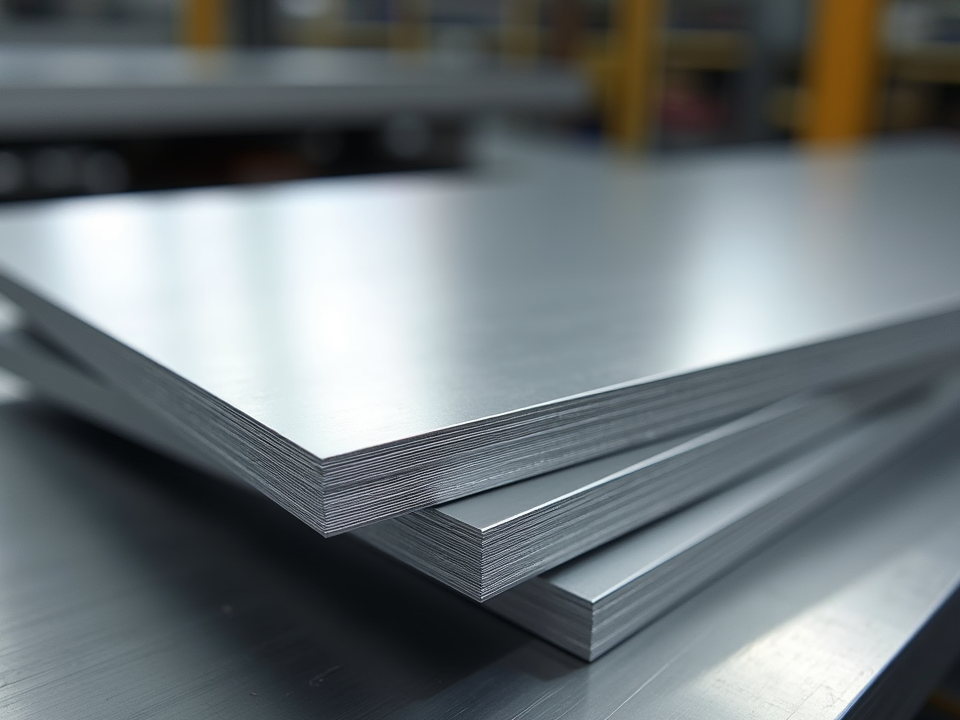
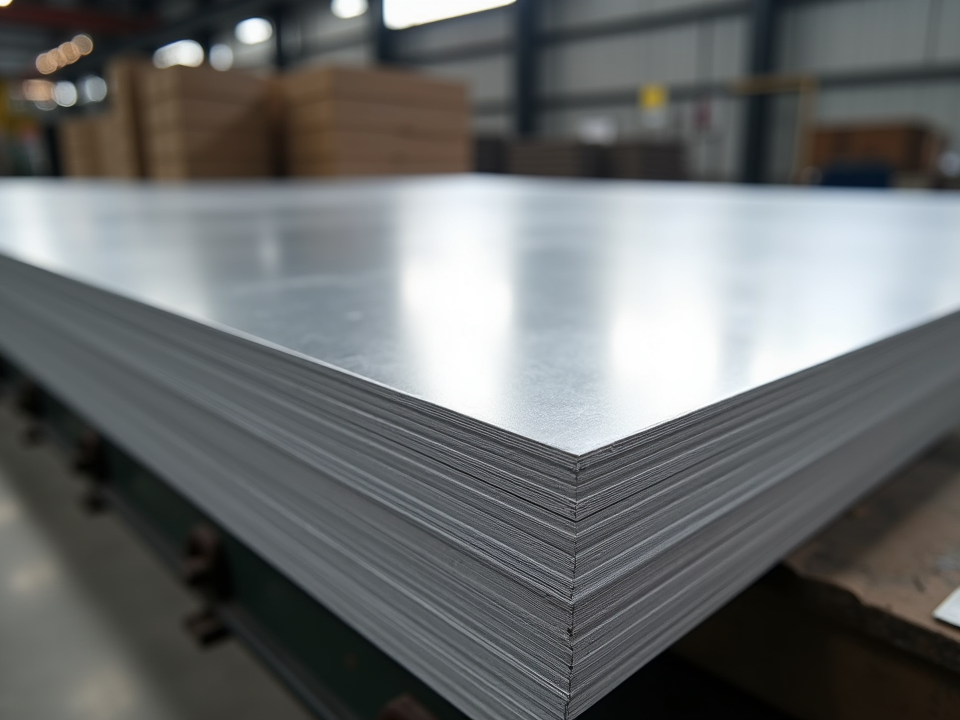
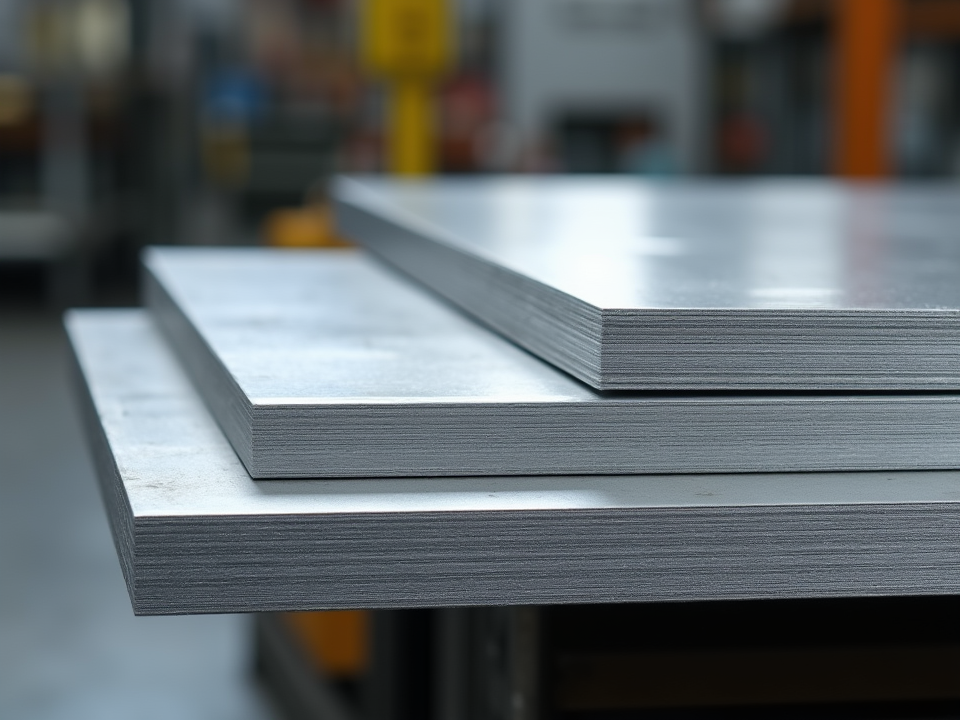
7050 Thick Aluminum Alloy Plate
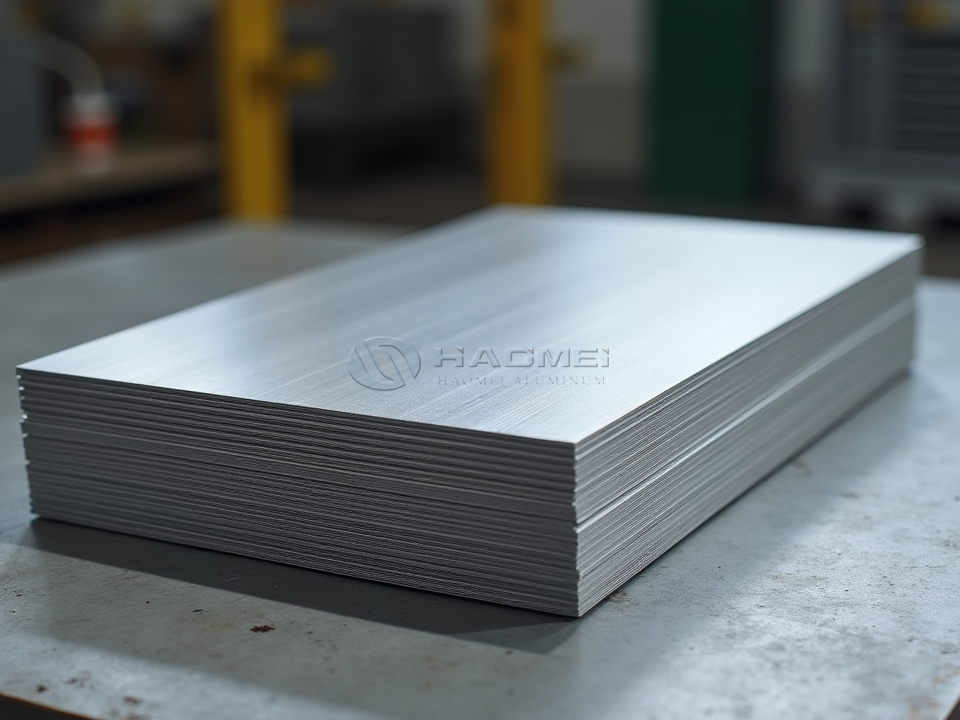
7050 thick aluminum alloy plate is often chosen not simply because it is strong, but because it holds its strength when the design becomes unforgiving. In aircraft frames, mold tooling, missile components, high-speed rail structures, and large precision fixtures, thickness changes the way aluminum behaves. A thin sheet is mainly judged by formability and surface finish; a thick 7050 plate is judged by internal soundness, residual stress control, fracture toughness, and the ability to remain stable after heavy machining.
In this sense, 7050 plate works like a reserve of structural confidence. It gives engineers room to remove material, create pockets, drill deep holes, and still retain a high strength-to-weight ratio. Compared with many general-purpose grades, 7050 is a zinc-magnesium-copper aluminum alloy designed for load-bearing service where fatigue and crack growth resistance matter as much as tensile strength.
Why 7050 Performs Well in Thick Sections
The chemistry of 7050 is built around the Al-Zn-Mg-Cu system. Zinc and magnesium form strengthening precipitates during artificial aging, copper improves strength and toughness balance, and zirconium refines grain structure. The result is a plate that can reach high mechanical properties while maintaining better resistance to stress corrosion cracking than many older 7xxx alloys in thick products.
The real value appears after heat treatment and stretching. Thick plate can store internal stress from rolling, quenching, and aging. If that stress is not controlled, the material may distort during CNC machining. For 7050, tempers such as T7451, T7651, and T7351 are widely used because they combine solution heat treatment, controlled aging, and stress relief by stretching. This makes the plate more predictable during machining and in long-term service.
For buyers already familiar with Alloy Aluminum Sheet grades, 7050 sits at the high-strength end of the family. It is not selected for simple bending or decorative work; it is selected when the part must carry load with minimal weight penalty.
Common Technical Parameters
| Item | Typical Value or Range |
|---|---|
| Alloy | 7050 aluminum alloy |
| Product form | Thick plate, precision cut plate, machined plate blank |
| Typical thickness | 6 mm to 200 mm, with thicker custom ranges by mill capability |
| Density | About 2.83 g/cm3 |
| Elastic modulus | About 71.7 GPa |
| Thermal expansion | About 23.5 x 10⁻⁶/K |
| Electrical conductivity | Around 36% to 41% IACS, depending on temper |
| Surface condition | Mill finish, sawn, peeled, machined, or protected surface |
| Flatness | Controlled according to plate thickness and order tolerance |
| Inspection options | Ultrasonic testing, tensile testing, grain flow check, hardness test |
These values should be treated as ordering references rather than absolute guarantees. Final properties depend on thickness, temper, rolling route, heat treatment, inspection class, and applicable standard.
Chemical Composition of 7050 Aluminum Plate
| Element | Content, % |
|---|---|
| Zinc, Zn | 5.7-6.7 |
| Magnesium, Mg | 1.9-2.6 |
| Copper, Cu | 2.0-2.6 |
| Zirconium, Zr | 0.08-0.15 |
| Iron, Fe | Max 0.15 |
| Silicon, Si | Max 0.12 |
| Manganese, Mn | Max 0.10 |
| Chromium, Cr | Max 0.04 |
| Titanium, Ti | Max 0.06 |
| Other elements, each | Max 0.05 |
| Other elements, total | Max 0.15 |
| Aluminum, Al | Remainder |
This chemistry explains why 7050 thick aluminum alloy plate is different from ordinary commercial aluminum. It sacrifices weldability and easy forming in exchange for high static strength, fatigue performance, and toughness in thick cross sections.
Temper Conditions and Mechanical Behavior
| Temper | Processing Meaning | Typical Use Direction |
|---|---|---|
| T651 | Solution heat treated, stress relieved by stretching, artificially aged | High strength parts where SCC exposure is moderate |
| T7451 | Solution heat treated, stress relieved by stretching, overaged | Aerospace structures needing improved SCC resistance and toughness |
| T7651 | Solution heat treated, stress relieved by stretching, controlled aging | Balance between strength and corrosion resistance |
| T7351 | Solution heat treated, stress relieved by stretching, more overaged | Severe corrosion-risk environments with lower strength demand |
Typical mechanical values for 7050-T7451 thick plate may reach tensile strength around 480-540 MPa and yield strength around 410-480 MPa, depending on thickness and test direction. Elongation commonly falls around 6% to 10%. Thicker plates often show different values in longitudinal, long-transverse, and short-transverse directions, so engineering drawings should specify the test direction when the part is safety-related.
A useful comparison is 6061. A 6061 Aluminum Sheet is easier to weld, form, and machine for general structures, but it cannot match 7050 when high strength and aerospace-level fatigue performance are required.
Implementation Standards and Order Control
7050 thick plate may be supplied according to several industrial or aerospace standards, depending on market and application. Common references include ASTM B209/B209M, AMS 4050, AMS 4051, AMS-QQ-A-250/13, EN 485, ISO 6361, and GB/T 3880. Aerospace projects may also require customer-specific material specifications, NADCAP-related processing records, ultrasonic inspection class, and complete mill test certificates.
For procurement, the purchase specification should define alloy, temper, thickness, width, length, tolerance, surface condition, ultrasonic testing requirement, mechanical test direction, packaging method, and certificate format. For machined components, it is also wise to discuss residual stress requirements and cutting allowance before ordering.
Functions Seen Through Real Applications
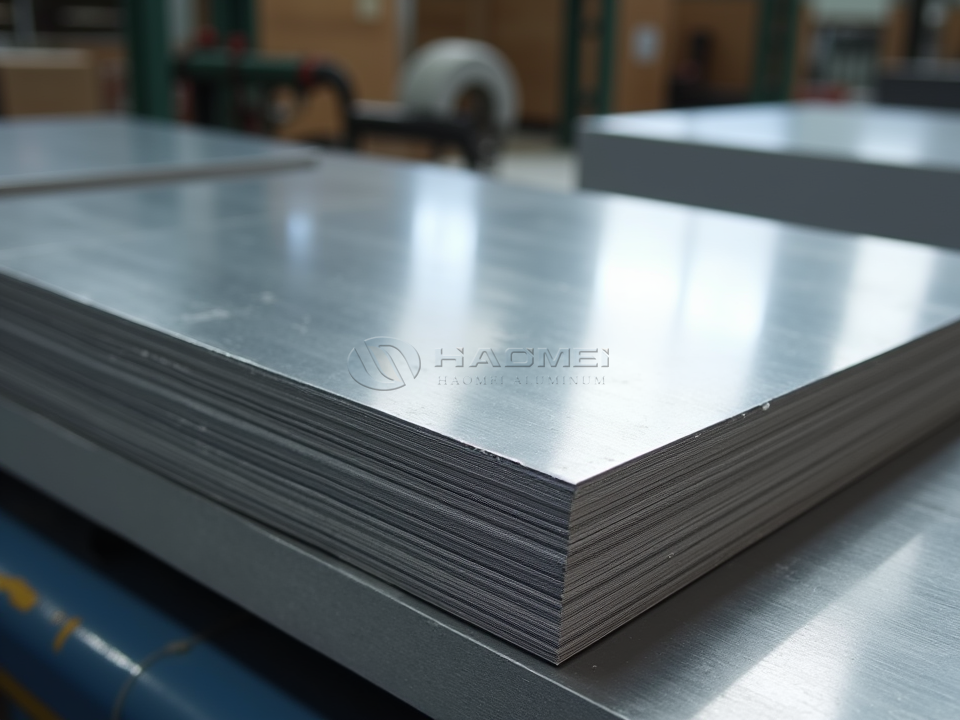
In aerospace bulkheads and wing ribs, 7050 plate functions as a weight-saving load path. The plate can be heavily machined into an integrated part, reducing fasteners and assembly weight. Its fatigue resistance helps parts survive repeated takeoff, landing, vibration, and pressure cycles.
In mold and tooling applications, 7050 provides rigidity with lower weight than steel. Large molds, foam tooling, composite layup tools, and inspection fixtures benefit from its machinability and dimensional stability. The material removes cleanly under CNC cutting, and the stress-relieved temper helps reduce movement after pocketing.
In defense and high-speed equipment, 7050 thick aluminum alloy plate is used where shock load, vibration, and stiffness must be controlled. Missile parts, launcher frames, radar supports, and precision mechanical bases can benefit from its balance of strength and mass reduction.
In transportation, the alloy can support lightweight structural modules where 5xxx or 6xxx alloys may not provide enough strength. It is especially useful when the designer wants fewer welded joints and more machined or bolted high-strength members.
Processing Notes for Better Results
7050 is generally machined rather than formed. Sharp tools, proper coolant, stable clamping, and balanced roughing on both sides help maintain flatness. For thick blocks, staged machining is recommended: rough cut, allow stress relaxation, then finish machine to final tolerance.
Welding is not its strongest feature because heat can reduce mechanical properties and increase cracking risk. When joining is required, mechanical fastening, riveting, or adhesive bonding is often preferred. Surface protection is also important. Although T7451 and similar tempers improve stress corrosion resistance, 7050 is still a high-strength aluminum alloy and should be protected by anodizing, conversion coating, primer, paint, or controlled storage when exposed to harsh environments.
Buying Perspective
A good 7050 thick aluminum alloy plate purchase is not only about price per kilogram. It is about usable yield, machining stability, test documentation, and confidence that the plate interior is as reliable as its surface. For high-value parts, ultrasonic inspection, accurate thickness tolerance, proper temper selection, and traceable certification can save far more than the small cost difference between grades.
7050 is the aluminum plate for projects where failure margins are narrow, machining time is expensive, and performance must remain steady under load. When selected with the right temper and standard, it becomes more than raw material; it becomes the foundation of a lighter, stronger, and more dependable structure.