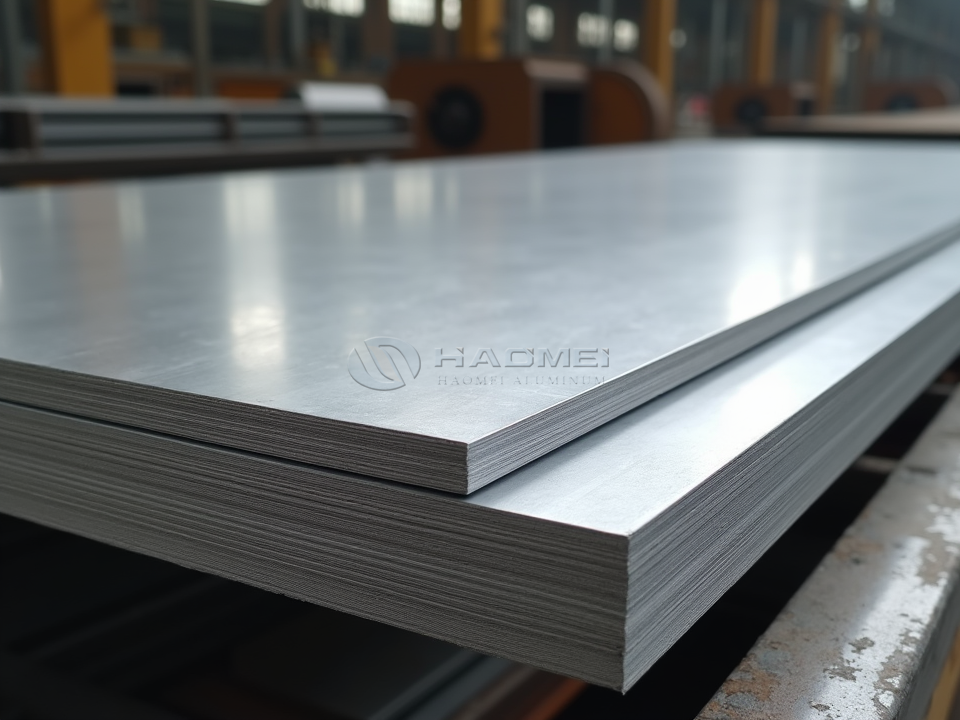
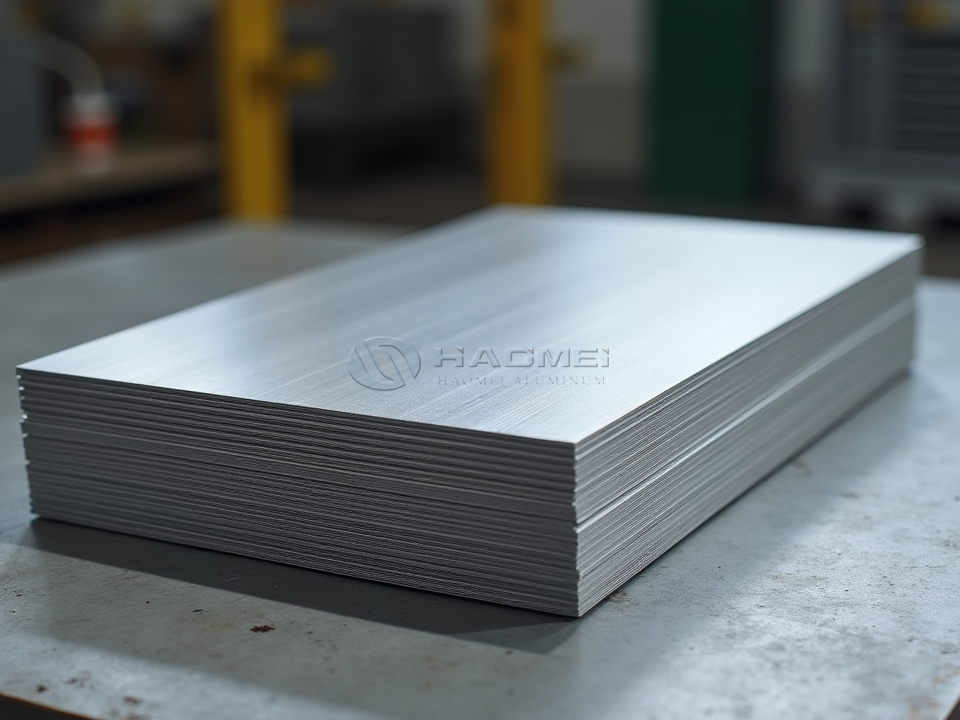
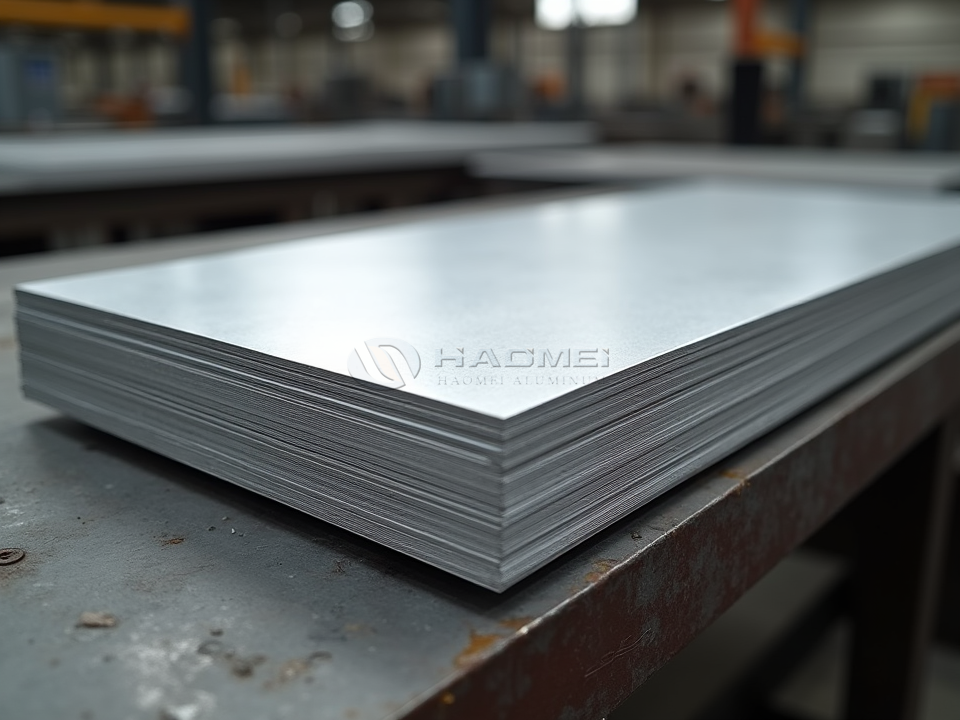
3003 H14 Aluminum Sheet Manufacturer
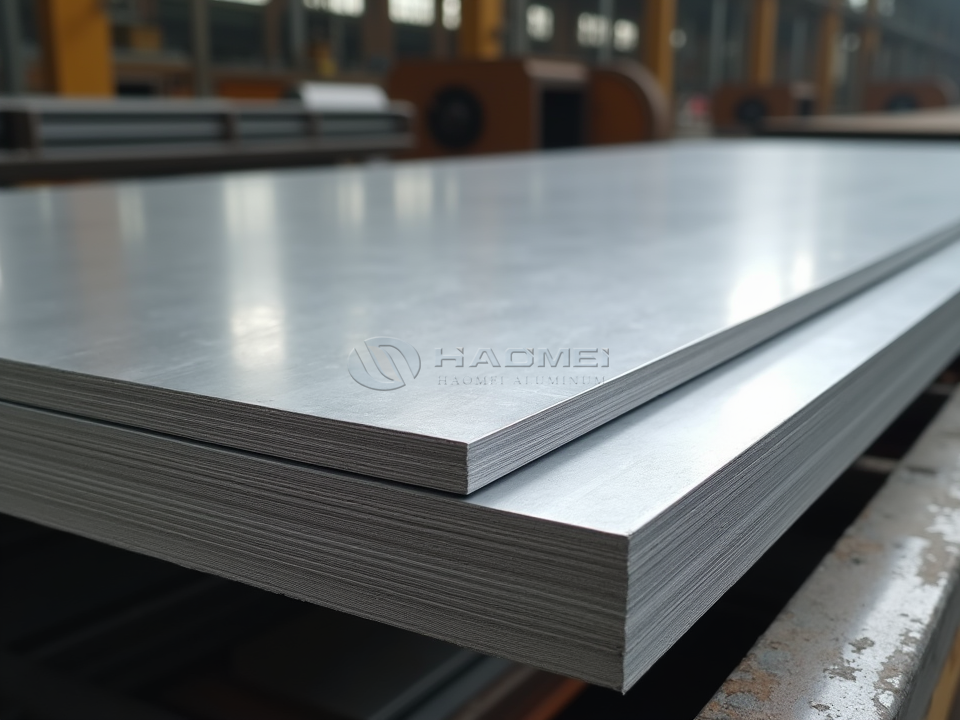
A professional 3003 H14 aluminum sheet manufacturer supplies material that balances corrosion resistance, moderate strength, formability, and dependable surface quality. As an Al-Mn alloy, 3003 is stronger than 1100 aluminum while keeping excellent workability for bending, rolling, spinning, stamping, and light structural fabrication. The H14 temper gives the sheet a half-hard condition, making it firmer than O temper but still practical for many forming operations.
Haomei Aluminum CO., LTD., Inc. provides 3003 H14 aluminum sheet for customers who need stable dimensions, clean surfaces, traceable chemistry, and consistent mechanical performance. For buyers comparing alloy grades, our 3003 Aluminum Sheet range is a widely used option for roofing, cladding, tanks, insulation jackets, HVAC parts, and general sheet metal fabrication.

What 3003 H14 Aluminum Sheet Does
3003 H14 aluminum sheet is designed for applications where pure aluminum is too soft, but high-strength heat-treatable alloys are not necessary. Manganese improves strength and grain stability, while aluminum provides low density, corrosion resistance, and good thermal conductivity.
| Function | Customer Value | Typical Result |
|---|---|---|
| Corrosion resistance | Performs well in outdoor and humid environments | Lower maintenance in cladding, roofing, and jacketing |
| Moderate strength | Stronger than 1xxx aluminum grades | Better dent resistance and handling stability |
| Formability | Supports bending, roll forming, and shallow drawing | Efficient fabrication with fewer cracks |
| Thermal conductivity | Transfers heat efficiently | Useful for heat shields, HVAC parts, and cookware |
| Weldability | Compatible with common welding methods | Easy assembly for tanks and fabricated parts |
| Lightweight design | Reduces component weight | Easier transport, installation, and handling |
Alloy Tempering Condition
The H14 temper means the sheet has been strain hardened to a half-hard condition. It is not strengthened by solution heat treatment like 6061 or 7075. Instead, strength is created through cold working after rolling.
| Item | Detail |
|---|---|
| Alloy | 3003 aluminum alloy |
| Main alloying element | Manganese |
| Temper | H14, strain hardened, half hard |
| Heat-treatable | No |
| Main strengthening method | Cold working |
| Typical forming behavior | Good for bending, roll forming, stamping, and moderate drawing |
| Annealing behavior | Can be softened by annealing when deeper forming is required |
| Typical annealing range | About 345-415 °C, adjusted by thickness and mill practice |
For projects requiring maximum softness, 3003 O may be more suitable. For higher stiffness, H16 or H18 can be considered, but forming radius and crack risk must be reviewed.
Chemical Composition
The chemical composition of 3003 aluminum sheet is controlled to maintain stable forming behavior, corrosion resistance, and mechanical properties. Values may vary slightly according to ASTM, EN, GB, or JIS standards.
| Element | Content, % |
|---|---|
| Aluminum, Al | Remainder |
| Manganese, Mn | 1.00-1.50 |
| Copper, Cu | 0.05-0.20 |
| Iron, Fe | Max 0.70 |
| Silicon, Si | Max 0.60 |
| Zinc, Zn | Max 0.10 |
| Magnesium, Mg | Max 0.05, typical control |
| Other, each | Max 0.05 |
| Other, total | Max 0.15 |
Manganese is the main reason 3003 has better strength than commercially pure aluminum. The small copper addition can also contribute to strength, while the low zinc and controlled impurities help preserve corrosion performance.
Technical Specifications
Haomei Aluminum CO., LTD., Inc. can supply 3003 H14 aluminum sheet in common mill sizes or cut-to-length formats. Custom width, surface protection, and packaging can be arranged for fabrication shops, distributors, construction contractors, and OEM users.
| Parameter | Common Supply Range |
|---|---|
| Thickness | 0.20-6.00 mm |
| Width | 100-2600 mm |
| Length | 500-12000 mm or coil cut-to-length |
| Surface | Mill finish, brushed, embossed, coated, film protected |
| Flatness | Controlled according to order thickness and standard tolerance |
| Edge | Slit edge, trimmed edge, mill edge |
| MOQ | Flexible according to size, temper, and processing route |
| Packaging | Wooden pallets, waterproof paper, plastic film, steel straps |
| Certificates | Mill test certificate, chemical report, mechanical report when required |
Mechanical and Physical Properties
Mechanical values depend on sheet thickness, testing direction, production route, and governing standard. The following data are practical reference values for 3003 H14 aluminum sheet.
| Property | Typical Value |
|---|---|
| Tensile strength | 140-180 MPa |
| Yield strength | 115 MPa min, typical |
| Elongation | 2-10%, thickness dependent |
| Brinell hardness | About 40-47 HB |
| Density | 2.73 g/cm³ |
| Elastic modulus | About 69 GPa |
| Thermal conductivity | About 160-193 W/m·K |
| Electrical conductivity | About 40% IACS |
| Melting range | About 643-654 °C |
| Poisson ratio | About 0.33 |
Implementation Standards
A dependable 3003 H14 aluminum sheet manufacturer should control production according to recognized international standards. This supports material traceability, stable inspection, and easier approval by engineering teams.
| Standard | Scope |
|---|---|
| ASTM B209 | Aluminum and aluminum-alloy sheet and plate |
| EN 485 | Aluminum sheet, strip, and plate mechanical properties and tolerances |
| EN 573 | Chemical composition and product forms of aluminum alloys |
| GB/T 3880 | Aluminum and aluminum alloy plates, sheets, and strips |
| JIS H4000 | Aluminum and aluminum alloy sheets, strips, and plates |
| ISO 6361 | Wrought aluminum and aluminum alloy sheets, strips, and plates |
When purchasing, customers should confirm the required standard, thickness tolerance, flatness tolerance, surface condition, test certificate format, and whether protective film is needed.
Common Applications
3003 H14 aluminum sheet is used across construction, transportation, packaging, household equipment, and industrial processing because it offers balanced performance without excessive material cost.
| Industry | Applications | Reason for Selection |
|---|---|---|
| Building and construction | Roofing panels, wall cladding, gutters, fascia, ceiling panels | Light weight, weather resistance, easy forming |
| HVAC | Duct panels, air handling parts, heat exchange components | Good thermal conductivity and workability |
| Chemical and storage | Low-pressure tanks, covers, containers, pipe insulation jackets | Corrosion resistance and weldability |
| Food and kitchenware | Cookware parts, trays, cabinets, storage equipment | Clean surface and formability |
| Transportation | Trailer panels, vehicle interior panels, protective covers | Weight reduction and moderate strength |
| Signage and decoration | Sign boards, nameplates, display panels | Smooth surface and easy processing |
| Industrial fabrication | Stamped parts, brackets, housings, machine covers | Stable temper and fabrication efficiency |
Fabrication Guidance
3003 H14 aluminum sheet is friendly to many fabrication processes, but correct tooling and bend design help protect surface quality and prevent edge cracking.
| Process | Recommendation |
|---|---|
| Cutting | Shearing, laser cutting, sawing, and CNC routing are suitable |
| Bending | Use proper inside radius, especially on thicker sheet |
| Deep drawing | Choose O temper for severe drawing; H14 suits moderate forming |
| Welding | MIG, TIG, resistance welding, and brazing are commonly used |
| Surface treatment | Brushing, painting, coating, and chemical conversion are suitable |
| Anodizing | Functional anodizing is possible, decorative color consistency should be tested |
| Cleaning | Use non-alkaline or mild cleaners to avoid surface staining |
For visible panels, protective film and careful handling are recommended. For roll forming, coil camber, burr direction, lubrication, and grain direction should be checked before mass production.
Surface Quality and Packing Control
A reliable sheet must arrive ready for fabrication. Haomei Aluminum CO., LTD., Inc. controls rolling marks, oil stain, oxidation, scratches, wave, burr, and surface dents through inspection before packing. For export orders, sheets are usually packed with moisture-proof paper, plastic wrapping, corner protection, fumigation-free wooden pallets, and steel strapping.
| Quality Control Point | Inspection Focus |
|---|---|
| Chemical analysis | Confirms alloy grade and element limits |
| Mechanical testing | Verifies H14 temper strength and elongation |
| Thickness measurement | Checks tolerance across width and length |
| Surface inspection | Detects scratches, stains, dents, and rolling defects |
| Flatness check | Reduces installation and fabrication problems |
| Packing inspection | Protects sheets during ocean, truck, or rail transport |
Buying From Haomei Aluminum CO., LTD., Inc.
Choosing Haomei Aluminum CO., LTD., Inc. as your 3003 H14 aluminum sheet manufacturer gives your purchasing team access to stable supply, technical communication, custom processing, and documentation support. Whether the order is for standard sheet stock or project-based cut sizes, our team can help match alloy, temper, thickness, surface, and packing to your application.
Customers are encouraged to provide drawings, target standard, annual demand, surface requirements, and processing method. With the right specification from the beginning, 3003 H14 aluminum sheet can reduce production waste, improve forming performance, and deliver long-term value in demanding industrial and architectural environments.