5 Bar Aluminum Tread Plate
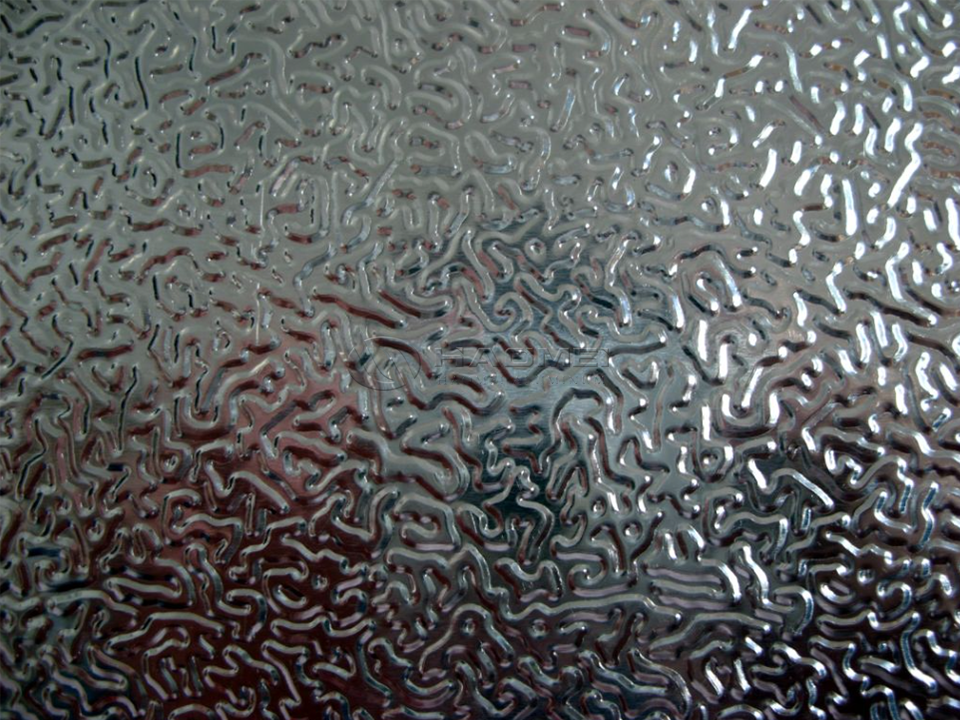
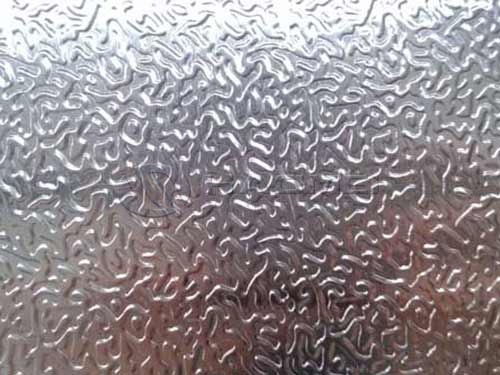
A 5 bar aluminum tread plate is often judged first by its bright patterned surface, but its real value is in how that pattern changes the way a floor, ramp, step, vehicle bed, or work platform behaves under pressure. The raised five-bar ribs are not decoration. They interrupt sliding motion, move water and dust away from the contact area, and add surface stiffness without turning the sheet into a heavy structural plate.
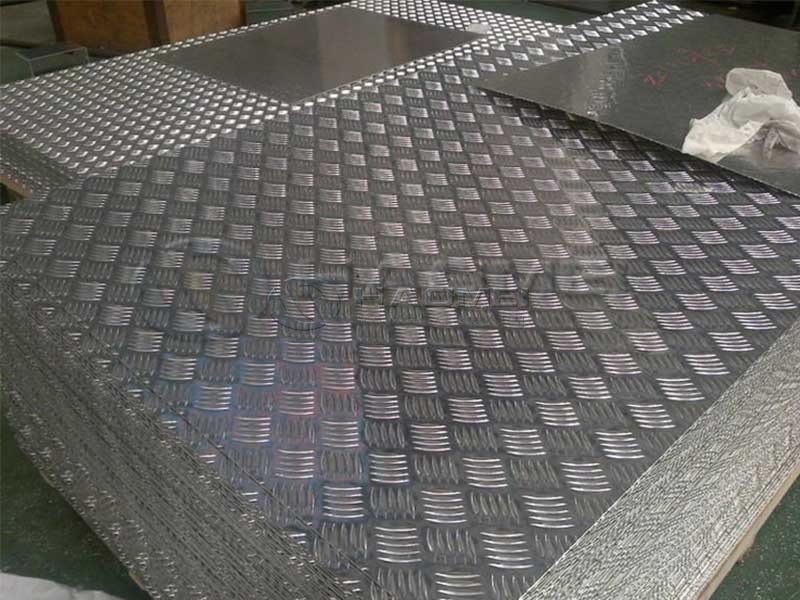
From a practical engineering angle, the plate can be seen as a lightweight grip layer. The aluminum base gives corrosion resistance and easy fabrication, while the five-bar pattern provides directional traction. This is why Five Bar Aluminum Tread Plate is widely used where people, tires, tools, and cargo meet metal surfaces every day.
Why the Five-Bar Pattern Performs So Well
The raised pattern is arranged in alternating groups of five bars. This layout creates many small contact edges, so shoes or tires do not rely on a flat sheet for friction. When a foot lands on the plate, pressure is distributed across both the base surface and the raised ribs. The ribs bite lightly into the shoe sole, reducing slip risk, especially when the surface is wet, oily, muddy, or covered with fine dust.
Compared with smooth aluminum sheet, the 5 bar plate offers better grip without adding coatings that may peel or wear away. Compared with steel checker plate, it is easier to lift, cut, bend, and install. Compared with some aggressive anti-slip surfaces, it is friendlier to cleaning tools and does not trap dirt as deeply.
The pattern also stiffens the surface. A thin tread plate can feel more rigid than a smooth plate of similar base thickness because the embossed ribs act like shallow reinforcements. For vehicle flooring and walkways, this balance between grip, weight, and rigidity is often more important than thickness alone.
Common Product Parameters
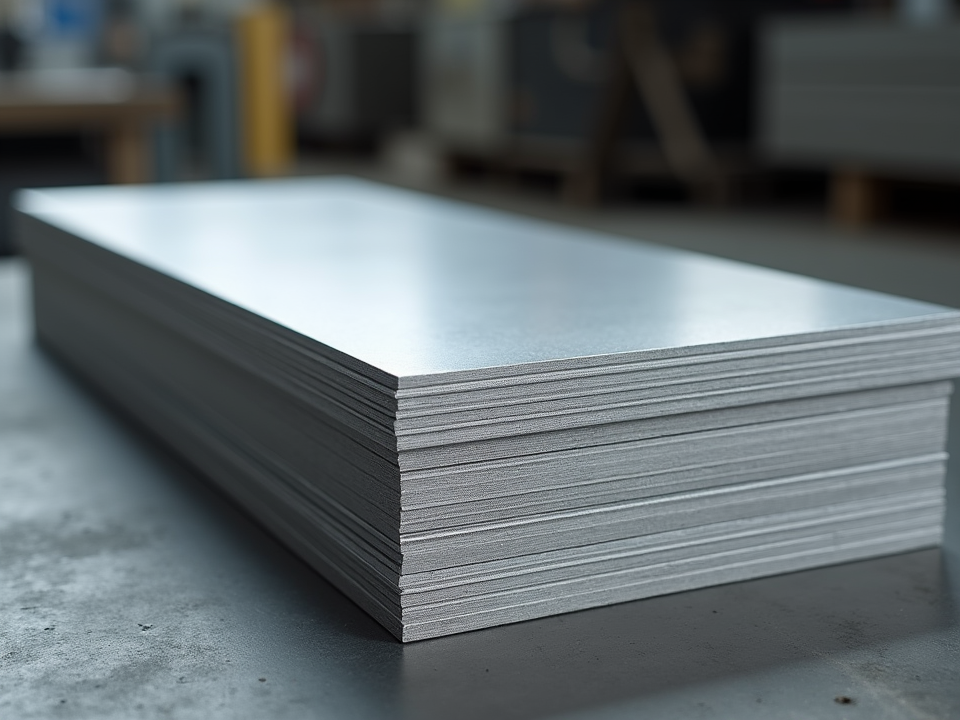
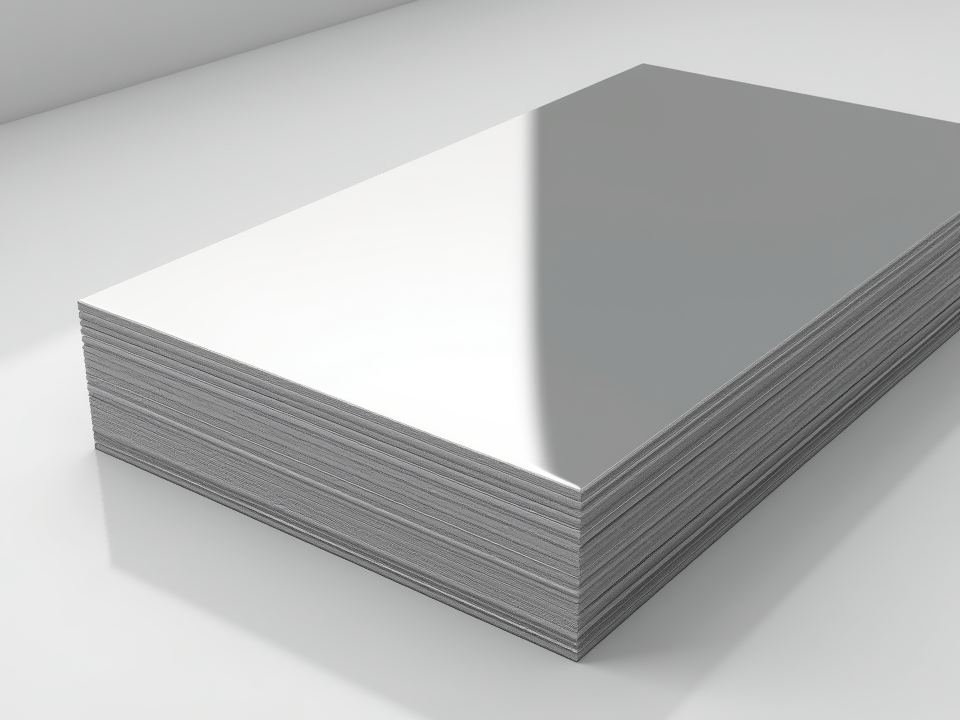
Standard 5 bar aluminum tread plate can be supplied in sheet, coil, or cut-to-size blanks. Typical production ranges vary by mill, alloy, and temper, but common commercial specifications include the following:
| Item | Common Range or Option |
|---|---|
| Alloy | 1050, 1060, 1100, 3003, 3105, 5052, 5754, 5083, 6061 |
| Temper | O, H12, H14, H22, H24, H32, H34, H114, T6 |
| Base thickness | 1.2 mm to 8.0 mm, heavier gauges available by request |
| Pattern height | About 0.8 mm to 1.5 mm, depending on thickness and rolling design |
| Width | 1000 mm, 1219 mm, 1250 mm, 1500 mm, 1524 mm, custom widths |
| Length | 2000 mm, 2440 mm, 2500 mm, 3000 mm, 6000 mm, cut to size |
| Surface | Mill finish, bright finish, anodized, painted, coated, film protected |
| Form | Sheet, plate, coil, strip, flooring panel |
For many buyers, 3003-H22 or 3003-H24 is a good general-purpose choice because it combines moderate strength, good corrosion resistance, and stable forming behavior. For marine, chemical, or outdoor environments, 5052-H32 or 5754-H114 is often preferred due to higher magnesium content and stronger corrosion resistance. For applications requiring higher strength, 6061-T6 may be selected, although it is less formable than softer tempers.
Alloy Temper and Working Behavior
Temper affects how the plate cuts, bends, welds, and performs under load. O temper is soft and highly formable, making it suitable for deep shaping or complex bending. H14 and H24 tempers provide a harder surface and better flatness for flooring panels. H32 and H34 are common in magnesium alloys such as 5052, giving a practical mix of strength and corrosion resistance. H114 is often associated with tread plate where stable pattern quality and service performance are needed.
When bending 5 bar aluminum tread plate, fabricators should consider the pattern direction. Bending parallel or perpendicular to the ribs can produce different stress distribution. A larger inside bend radius is recommended for harder tempers and higher-magnesium alloys. For visible installations, protective film can prevent scratches during cutting, punching, and assembly.
Welding is generally possible with 3003, 5052, 5754, and 5083 alloys. Filler selection should match the alloy family and service environment. 6061 can be welded, but strength near the weld zone may be reduced unless post-weld heat treatment is considered.
Chemical Properties of Common Alloys
The chemical composition of aluminum tread plate determines corrosion resistance, strength, weldability, and forming performance. Values are typical percentage ranges or maximum limits used in common standards.
| Alloy | Si | Fe | Cu | Mn | Mg | Cr | Zn | Ti | Al |
|---|---|---|---|---|---|---|---|---|---|
| 1060 | 0.25 max | 0.35 max | 0.05 max | 0.03 max | 0.03 max | - | 0.05 max | 0.03 max | 99.60 min |
| 3003 | 0.60 max | 0.70 max | 0.05-0.20 | 1.00-1.50 | - | - | 0.10 max | - | Remainder |
| 5052 | 0.25 max | 0.40 max | 0.10 max | 0.10 max | 2.20-2.80 | 0.15-0.35 | 0.10 max | - | Remainder |
| 5754 | 0.40 max | 0.40 max | 0.10 max | 0.50 max | 2.60-3.60 | 0.30 max | 0.20 max | 0.15 max | Remainder |
| 6061 | 0.40-0.80 | 0.70 max | 0.15-0.40 | 0.15 max | 0.80-1.20 | 0.04-0.35 | 0.25 max | 0.15 max | Remainder |
High-purity 1060 is easy to form and has excellent corrosion resistance, but strength is limited. 3003 gains strength from manganese and is popular for general flooring and decorative panels. 5052 and 5754 use magnesium to improve strength and resistance to marine atmosphere. 6061 contains magnesium and silicon, allowing heat treatment for higher mechanical strength.
Implementation Standards and Quality Control
Reliable 5 bar aluminum tread plate is produced and inspected according to recognized standards. Common references include ASTM B209 for aluminum and aluminum-alloy sheet and plate, EN 485 for sheet, strip, and plate requirements, EN 573 for alloy chemical composition, EN 515 for temper designation, GB/T 3880 for aluminum alloy plates and strips, and JIS H4000 for aluminum sheets and plates.
Quality inspection normally covers alloy verification, thickness tolerance, width and length tolerance, diagonal tolerance, flatness, pattern clarity, surface defects, tensile strength, elongation, and bend performance. For flooring use, consistency of rib height matters because uneven pattern height can affect traction and appearance. For architectural use, surface color, gloss, and scratch control may be just as important as mechanical values.
Where 5 Bar Aluminum Tread Plate Is Used
The product appears in many places where movement must remain controlled. In transport, it is used for truck beds, trailer floors, bus steps, van interiors, toolboxes, loading ramps, and railway access panels. Its low weight helps reduce vehicle mass while keeping the loading surface durable.
In industrial facilities, it is used for stair treads, platforms, catwalks, trench covers, maintenance walkways, equipment decks, and machine guards. Workers benefit from better footing, while maintenance teams appreciate that aluminum does not need heavy rust protection in many environments.
In marine and outdoor projects, 5052 or 5754 tread plate is often selected for docks, gangways, ship steps, fishing boat decks, and service platforms. The natural oxide film on aluminum helps resist weathering, while the raised pattern supports safer walking in wet conditions.
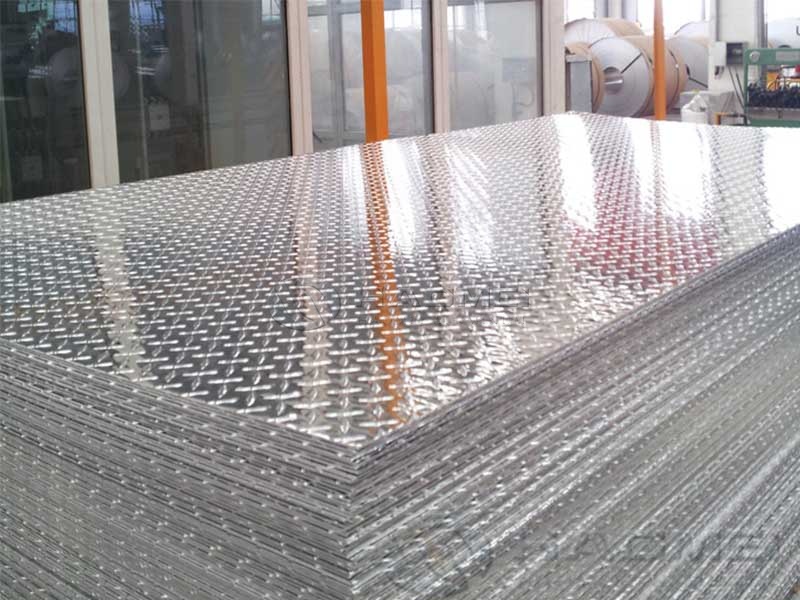
For interior and commercial design, 5 bar plate can be used on wall panels, elevator decoration, counter fronts, kick plates, display platforms, and protective corner areas. When a more angular visual style is preferred, some customers compare it with Diamond Aluminum Tread Plate, which offers a different pattern geometry while serving a similar anti-slip purpose.
Selection Advice for Buyers
Choosing the right 5 bar aluminum tread plate starts with the environment. Dry indoor use may only require 3003-H22 or 3003-H24. Wet, coastal, or chemical exposure usually calls for 5052 or 5754. Heavy-duty structural or machinery applications may need thicker gauges or higher-strength alloys.
Thickness should be selected according to span, load, fixing method, and deflection limits. A plate fixed firmly over a solid base can be thinner than a plate spanning open supports. If the plate will be walked on frequently, surface feel and vibration should also be considered, not just static load.
Surface finish depends on the final setting. Mill finish is economical and practical. Anodized finish improves surface hardness and appearance. Painted or coated plate can support color matching, branding, or extra protection. For export, PVC film, waterproof paper, wooden pallets, and edge protection help reduce transit damage.
A well-selected 5 bar aluminum tread plate does more than cover a surface. It adds grip, reduces weight, resists corrosion, supports fabrication, and improves the working life of equipment and spaces. For customers comparing materials, its advantage lies in the way pattern, alloy, temper, and finish work together as one practical metal solution.