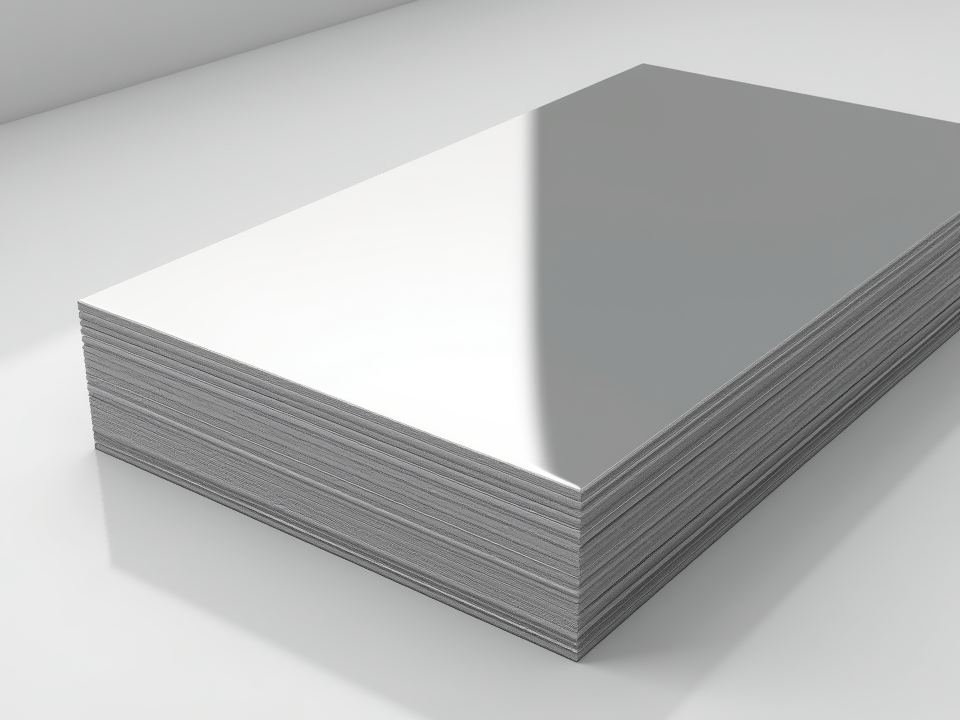
Anodized Embossed Aluminum Sheet
Anodized embossed aluminum sheet is often chosen for its visual texture, but its value goes much further than decoration. The raised pattern changes how the material performs in daily use: it improves grip, scatters reflected light, masks minor scratches, and gives thin aluminum sheet a more substantial appearance. When anodizing is added, the surface becomes harder, more corrosion resistant, and easier to maintain.
This combination is especially practical where a plain polished surface would quickly show fingerprints, dents, or wear. It serves building facades, appliance panels, cold-room cladding, vehicle interiors, stair treads, marine fittings, toolboxes, and decorative wall systems. In many projects, the embossed surface acts as a practical visual language: it tells users where to stand, where to grip, and where durability matters.
How Embossing and Anodizing Work Together
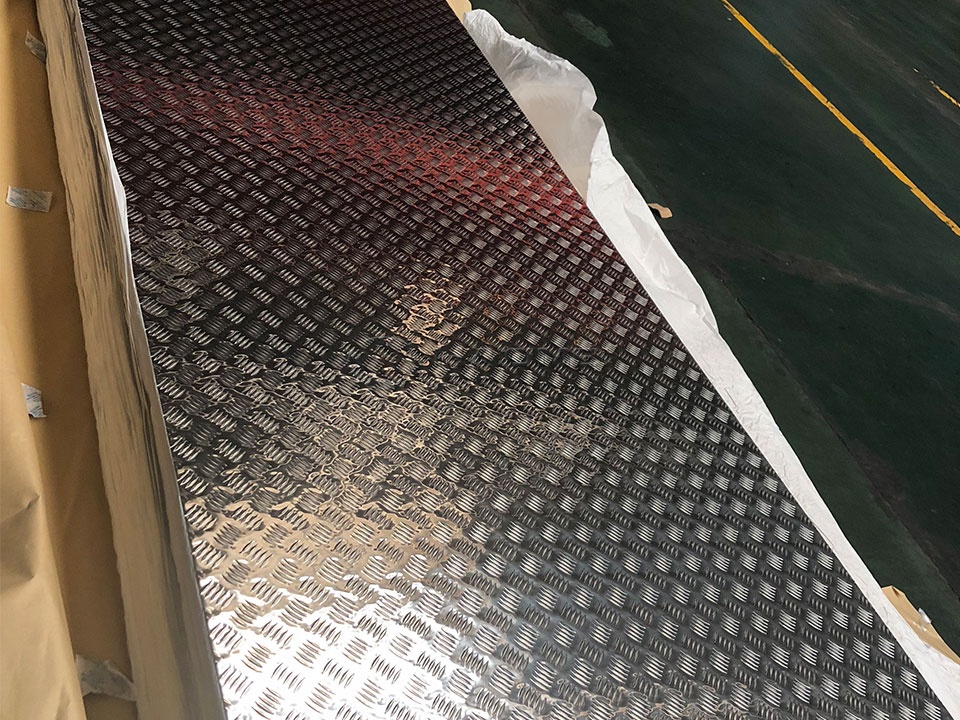
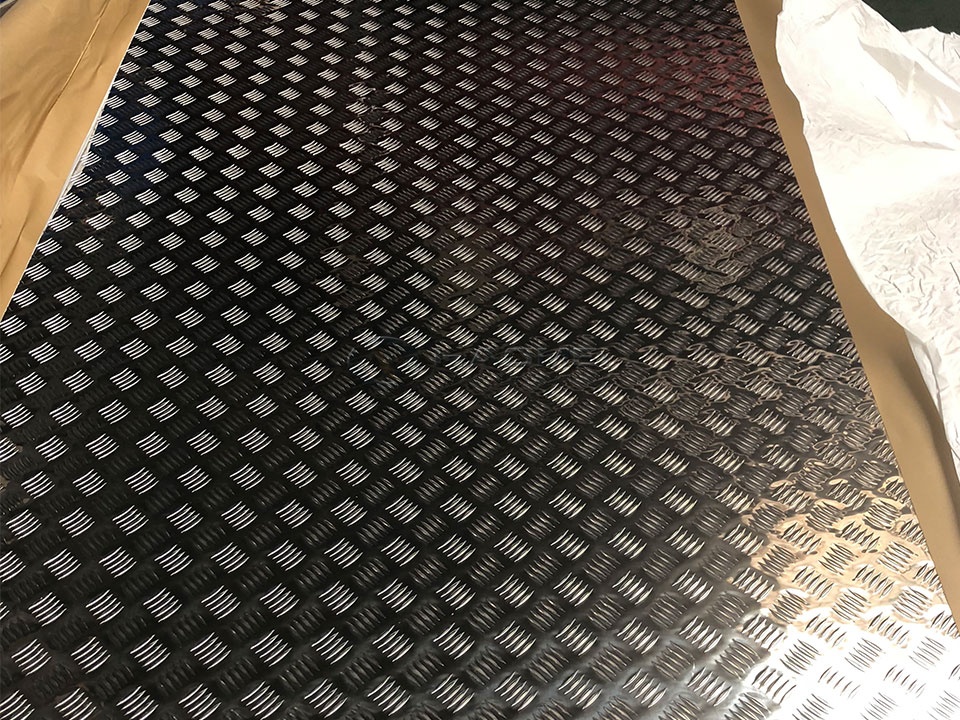
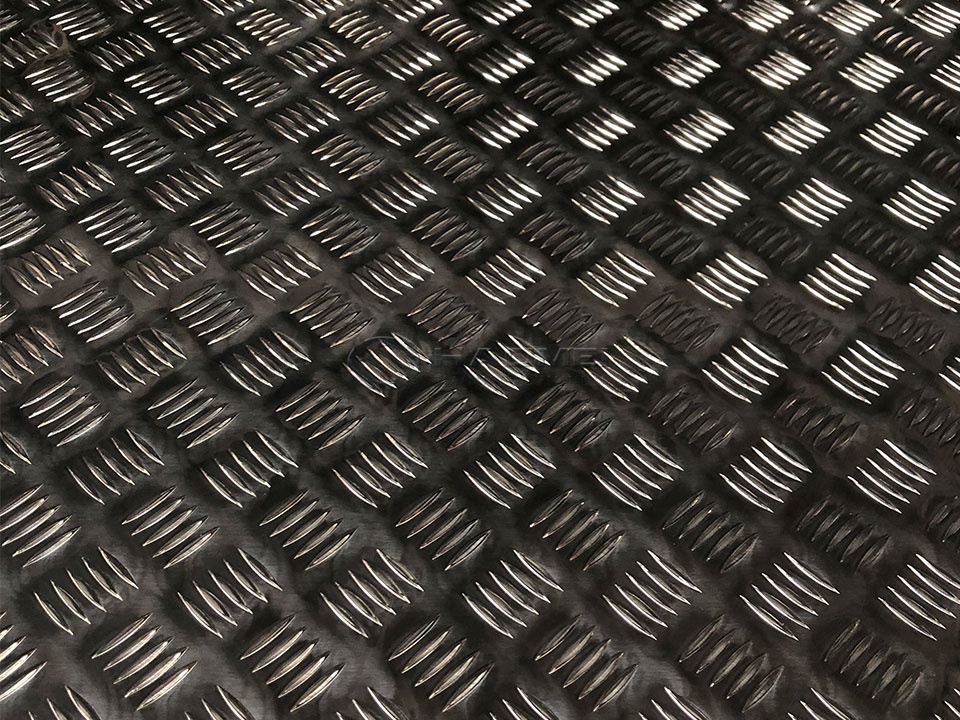
Embossing is produced by passing aluminum coil or sheet through engraved rolls under controlled pressure. The process forms a repeated surface pattern without cutting the metal. Common patterns include stucco, orange peel, five bar, diamond, and small hammered textures. The pattern can increase rigidity across the sheet and reduce the visible effect of minor handling damage.
Anodizing is an electrochemical finishing process. The aluminum surface is converted into a controlled aluminum oxide layer, rather than simply receiving a coating placed on top. This oxide layer is integrated with the base metal, giving the sheet a clean metallic appearance and improved resistance to weathering and abrasion.
For embossed products, process order matters. In many cases, the aluminum is embossed first and anodized afterward so the peaks, valleys, and edges receive continuous oxide protection. The finished surface must be properly cleaned and sealed after anodizing. Good sealing closes the pores of the oxide film and improves stain resistance, color stability, and service life.
A fine stucco pattern is commonly selected for insulation jacketing and interior panels because it diffuses glare. For applications requiring pronounced footing traction, Five Bar Aluminum Tread Plate offers raised ribs that are suited to steps, walkways, transport floors, and work platforms.
Typical Product Parameters
Anodized embossed aluminum sheet can be produced to project-specific dimensions, surface patterns, alloys, and anodic film requirements. Common commercial parameters include:
| Property | Typical Range or Option |
|---|---|
| Alloy | 1050, 1060, 1100, 3003, 3105, 5005, 5052 |
| Thickness | 0.30 mm to 5.00 mm, subject to pattern and alloy |
| Width | 300 mm to 1,600 mm |
| Length | Coil form, cut sheets, or customized lengths |
| Temper | O, H14, H16, H18, H22, H24, H32, H34 |
| Embossing pattern | Stucco, orange peel, five bar, diamond, custom roll pattern |
| Anodized finish | Natural silver, champagne, bronze, black, or specified color |
| Anodic film thickness | 5 μm to 25 μm or project-defined requirement |
| Surface treatment | Brushed, mill finish, bright finish, anodized and sealed |
| Protective film | Optional PE or laser-compatible protective film |
Thickness selection should consider both the base sheet and the raised pattern. A decorative wall panel may use 0.5 mm to 1.2 mm material, while equipment guards and traffic-contact surfaces often require thicker stock. For frequently walked-on areas, pattern geometry, substrate support, and sheet thickness should be considered together rather than treating the embossed profile as a substitute for structural strength.
Alloy and Temper Choices
The correct alloy is determined by forming demand, corrosion exposure, strength expectations, and appearance after anodizing.
The 1050, 1060, and 1100 grades are commercially pure aluminum families with excellent formability and bright anodizing potential. They are suitable for reflectors, decorative trims, indoor panels, insulation cladding, and light-duty fabricated parts. Their lower strength means they are less suitable for heavily loaded flooring.
Alloy 3003 is one of the most widely used choices for embossed sheet. Manganese improves strength while retaining dependable formability and corrosion resistance. It performs well in trailer panels, building accessories, storage equipment, and general industrial cladding. H14 and H24 tempers are popular where a balance of forming ability and stiffness is needed.
Alloy 5005 is valued for architectural anodizing because it can provide an even, attractive anodized appearance. It is a strong candidate for decorative facades, ceiling systems, signage, retail interiors, and metal furniture. Alloy 5052 has higher magnesium content and stronger marine corrosion resistance. It is often selected for marine environments, vehicle components, access panels, and higher-strength tread surfaces.
| Alloy | Main Alloying Elements | Typical Chemical Composition, % | Common Tempers | Suitable Uses |
|---|---|---|---|---|
| 1050 | High-purity aluminum | Al 99.50 min; Si+Fe 0.40 max | O, H14, H18 | Decorative panels, reflectors, cladding |
| 1060 | High-purity aluminum | Al 99.60 min; Si+Fe 0.35 max | O, H14, H18 | Embossed trim, appliances, insulation |
| 1100 | Aluminum with copper | Al 99.00 min; Cu 0.05-0.20; Si+Fe 0.95 max | O, H14, H24 | Interior panels, formed parts |
| 3003 | Aluminum-manganese | Mn 1.0-1.5; Cu 0.05-0.20; Si 0.60 max; Fe 0.70 max | H14, H24, H26 | General embossed sheet, trailers, cladding |
| 5005 | Aluminum-magnesium | Mg 0.50-1.10; Mn 0.20 max; Si 0.30 max; Fe 0.70 max | H14, H24, H34 | Architectural anodized panels |
| 5052 | Aluminum-magnesium-chromium | Mg 2.2-2.8; Cr 0.15-0.35; Si 0.25 max; Fe 0.40 max | H32, H34 | Marine, transport, durable tread surfaces |
Chemical values may vary slightly according to the governing material specification and agreed purchasing condition.
Standards and Quality Conditions
Material requirements for aluminum sheet and plate are commonly referenced to ASTM B209. For anodized aluminum used in architectural work, AAMA 611 is frequently specified for anodic coating quality and finishing performance. ASTM B580 may be referenced for anodic oxide coating requirements, while ISO 7599 provides internationally recognized guidance for anodized aluminum and its alloys.
A purchase specification should state the alloy, temper, thickness tolerance, width tolerance, embossing pattern, anodic film thickness, color range, sealing requirement, protective film, and inspection method. It should also define whether the visible face is the embossed side, whether both sides require anodizing, and what degree of surface variation is acceptable.
The raised areas of an embossed sheet naturally receive more contact during handling. Protective film, careful stacking, dry storage, and non-abrasive separators are therefore important. Anodized material should be protected from cement dust, strong alkalis, chlorides, and trapped moisture during construction. These contaminants can stain or attack the anodic layer if left in contact with the surface.
Selecting a Pattern for the Job
Pattern selection should follow the function of the sheet. A shallow texture offers a refined, low-glare appearance for interiors and equipment panels. A deeper tread pattern gives better traction and a more industrial character. Stucco Embossed Aluminum Sheet is well suited to insulation jackets, refrigeration equipment, ceilings, and wall cladding because its dense texture conceals handling marks while producing a calm, uniform visual effect.
Anodized embossed aluminum sheet is not merely aluminum with a pattern. It is a deliberately engineered surface where alloy chemistry, temper, roll design, oxide thickness, sealing quality, and fabrication conditions all influence the finished result. When these factors are specified clearly, the material delivers a surface that remains functional, attractive, and durable long after installation.