3 Bar Aluminum Checker Plate
A 3 bar aluminum checker plate is more than a decorative metal sheet. Its raised parallel bars turn a flat aluminum surface into a practical working material that improves footing, protects panels, sheds water, and adds visual direction to fabricated structures. Compared with plain aluminum sheet, the patterned face provides a more purposeful surface for areas exposed to shoes, wheels, vibration, moisture, or repeated handling.
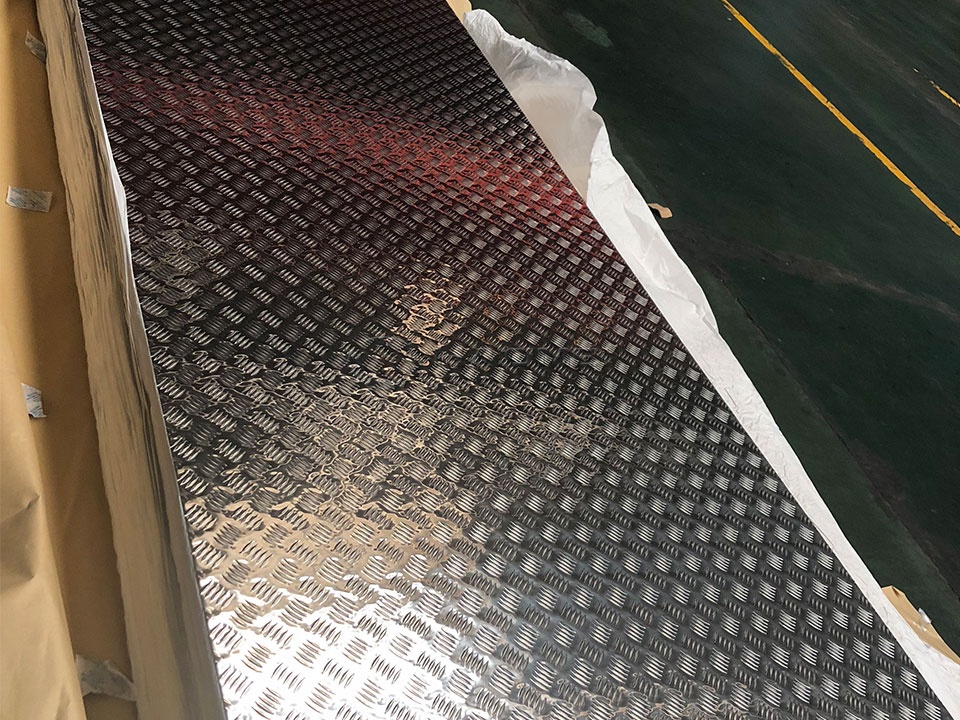
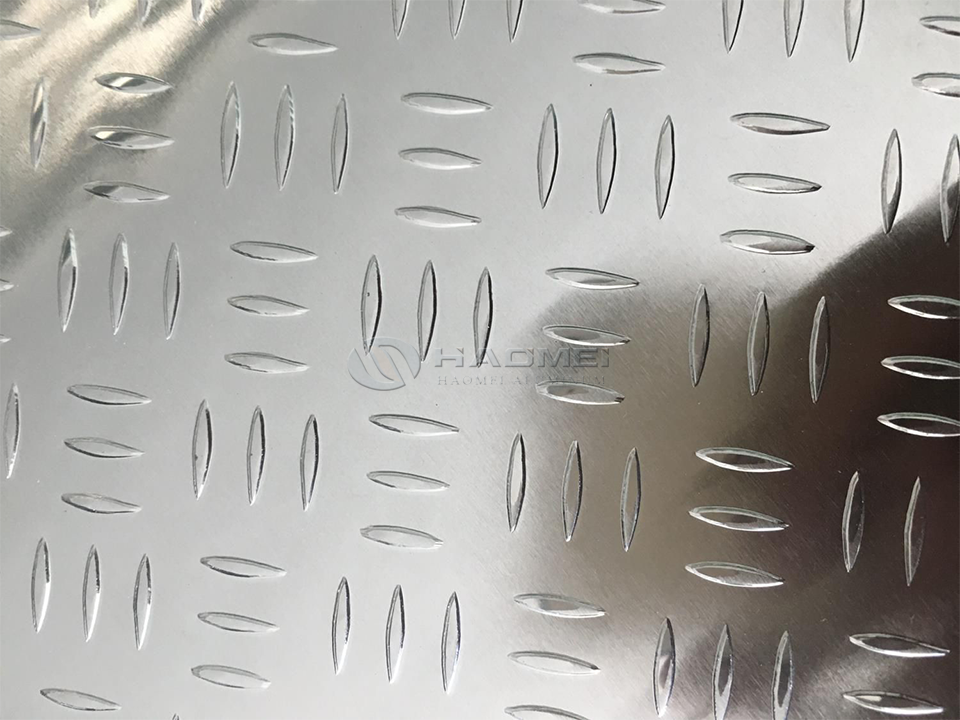
The three-bar pattern consists of grouped raised ribs arranged in a consistent direction. This directional texture gives the material a clean industrial appearance while also creating channels that help move water, dust, and light debris away from the contact surface. For fabricators, the pattern is especially useful because it brings slip resistance and visual value without requiring an added coating or separate non-slip layer.
A Surface That Works With Movement
The function of 3 bar aluminum checker plate is best understood through movement. People step across it, carts roll over it, equipment rests against it, and weather lands on it. The raised bars interrupt the smooth contact area between footwear or tires and the metal, improving grip in many dry and moderately wet conditions. The bars also help hide minor scratches and daily wear that would be immediately visible on a polished flat sheet.
Its directional profile matters in fabrication. When the bars run across the direction of travel, they can provide a more pronounced tactile grip for steps, walkways, and access platforms. When aligned with the length of a vehicle floor or wall panel, they create a streamlined visual effect and can help guide runoff. Pattern orientation should therefore be specified before cutting, bending, or nesting sheets.
The material is widely used for truck bodies, trailer floors, utility vehicle interiors, marine gangways, loading ramps, stair treads, refrigeration equipment panels, machine guards, wall protection, toolboxes, and architectural cladding. In lighter-duty settings, it is also selected for garage interiors, retail displays, workshop benches, and decorative protective panels.
For projects requiring a different tread geometry, Five Bar Aluminum Tread Plate provides a denser rib pattern that may suit frequent pedestrian traffic and broader walking surfaces.
Material Parameters and Supply Conditions
Three-bar tread material is usually supplied as coil, sheet, cut-to-length plate, or customized blanks. Actual dimensions depend on the mill capability, alloy, pattern depth, and purchaser tolerance requirements. Thickness must be discussed carefully because the nominal base metal thickness and the total thickness including raised bars are not always the same.
| Parameter | Common Supply Range | Practical Note |
|---|---|---|
| Base metal thickness | 1.0-6.0 mm | Thicker gauges are common for floors, ramps, and protective structures. |
| Total thickness | Base thickness plus pattern height | Confirm measurement method in the purchase specification. |
| Width | 1,000-1,500 mm | Custom slit widths may be available from coil. |
| Length | 2,000-6,000 mm | Cut-to-length sheets can reduce fabrication scrap. |
| Coil weight | By agreement | Selected according to handling equipment and production needs. |
| Surface | Mill finish, bright finish, coated finish | Protective film can be specified for appearance-sensitive panels. |
| Pattern direction | Longitudinal or transverse | Important for traction, drainage, and visual consistency. |
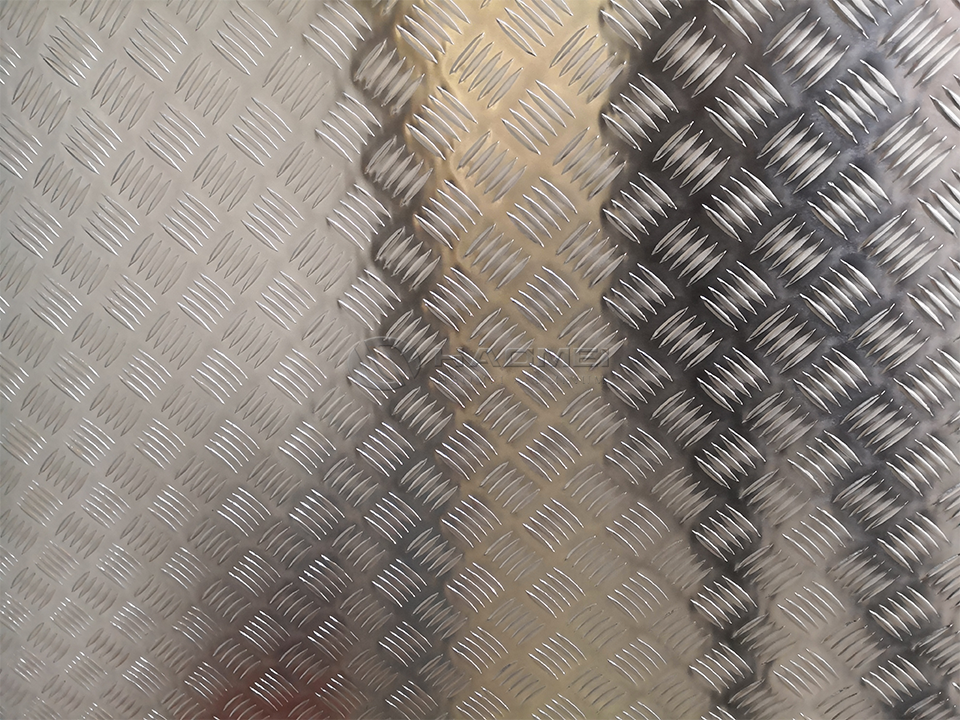
A standard 4 x 8 ft format is often convenient for workshop flooring, wall lining, and equipment enclosures, while coils support high-volume stamping and continuous fabrication. Edges may be mill edge, trimmed edge, or slit edge depending on the intended process.
Alloy Selection: Match the Plate to Its Environment
The pattern creates traction, but the alloy determines how the plate behaves in service. The most common choices are 1060, 3003, and 5052 aluminum alloy.
1060 aluminum checker plate is a commercially pure aluminum option with high aluminum content, good formability, and good corrosion resistance in ordinary indoor or mildly exposed conditions. It is often chosen for decorative panels, light-duty wall protection, and applications where low weight and easy processing matter more than high strength.
3003 aluminum checker plate adds manganese, raising strength over 1060 while retaining good workability. It is a practical choice for general vehicle panels, walkways, storage equipment, and industrial surfaces. Its balance of cost, formability, and corrosion performance makes it one of the most frequently specified tread alloys.
5052 aluminum checker plate contains magnesium and is preferred where moisture, salt exposure, vibration, or higher mechanical demand is expected. It is widely used for marine structures, vehicle floors, ramps, and outdoor equipment. Its stronger corrosion resistance makes it particularly suitable for coastal and wet service conditions.
| Alloy | Si | Fe | Cu | Mn | Mg | Cr | Al |
|---|---|---|---|---|---|---|---|
| 1060 | 0.25% max | 0.35% max | 0.05% max | 0.03% max | 0.03% max | - | 99.60% min |
| 3003 | 0.60% max | 0.70% max | 0.05-0.20% | 1.00-1.50% | - | - | Balance |
| 5052 | 0.25% max | 0.40% max | 0.10% max | 0.10% max | 2.20-2.80% | 0.15-0.35% | Balance |
Values are typical composition limits based on common alloy specifications. Exact chemistry, trace-element limits, and certification requirements should be confirmed against the agreed production standard.
Temper and Forming Considerations
Temper describes the material condition after rolling or heat treatment and directly affects hardness, bendability, and resistance to denting. Common tempers for 3 bar aluminum checker plate include H114, H14, H24, H32, and H34.
H114 is commonly supplied for tread plate and offers a practical balance for general fabrication. H14 provides a half-hard condition suitable for panels that need better shape retention while still allowing ordinary forming. H24 is strain-hardened and partially annealed, making it useful where moderate strength and improved bending behavior are both desired. For 5052, H32 and H34 are frequent choices when higher strength and stronger resistance to service deformation are required.
Bending should be planned with the raised pattern in mind. Tight bends can flatten ribs or create uneven visual distortion on the patterned face. When appearance matters, test bends should be made using the final alloy, thickness, temper, bend radius, and bar direction.
Standards That Support Reliable Purchasing
3 bar aluminum checker plate may be manufactured and inspected according to ASTM B632 for aluminum-alloy rolled tread plate, ASTM B209 for aluminum and aluminum-alloy sheet and plate, EN 1386 for aluminum checkered sheets, EN 485 for tolerances and mechanical properties, or GB/T 3618 for aluminum alloy chequered plates.
A complete order description should state alloy, temper, base thickness, overall thickness measurement method, width, length, pattern direction, surface finish, protective film requirement, applicable standard, and inspection documents. This level of detail prevents a frequent purchasing problem: receiving a visually correct tread pattern with unsuitable strength, dimensional tolerance, or corrosion performance.
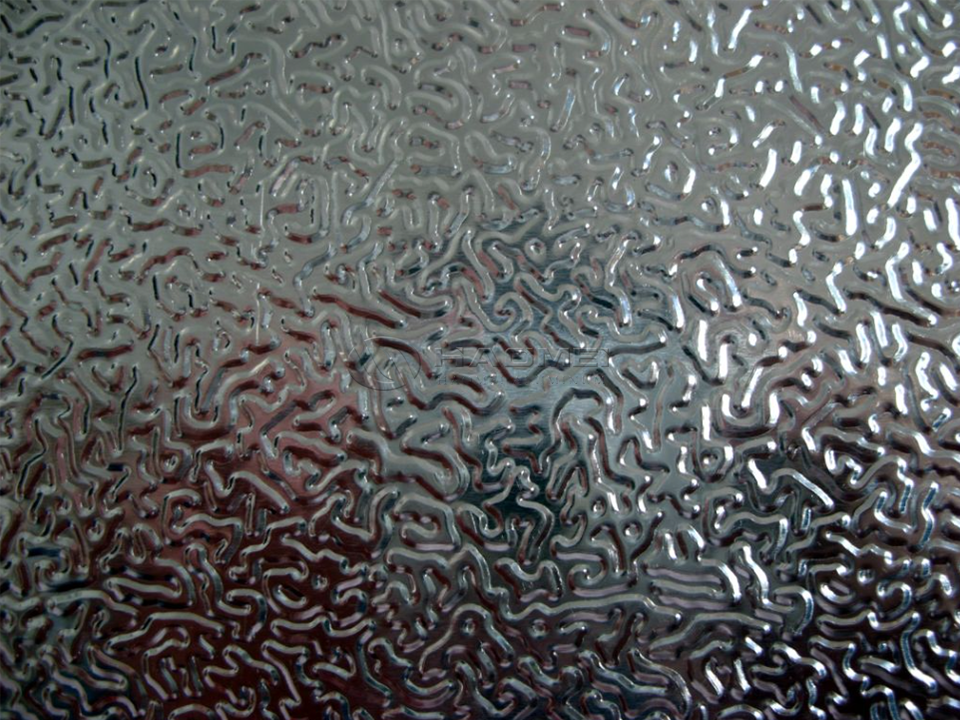
For applications where texture is selected mainly for visual protection rather than foot traffic, an Embossed Aluminum Sheet can offer additional pattern options for appliances, interiors, insulation jackets, and decorative fabrication.
Practical Installation and Care
Aluminum checker plate can be cut, drilled, riveted, bolted, welded, or bonded according to the alloy and end use. Use clean cutting tools to avoid embedding steel particles into the surface, especially for outdoor or marine installations. When fastening aluminum to carbon steel, isolate dissimilar metals with suitable non-conductive washers, sealants, or barrier tapes to reduce galvanic corrosion risk.
Routine cleaning requires mild detergent, clean water, and a soft brush that can reach between the raised bars. Avoid aggressive alkaline cleaners and abrasive steel wool. In transport and industrial settings, regular cleaning is not only cosmetic; it prevents packed dirt, oil, and chemical residue from reducing the functional benefit of the tread pattern.
A properly specified 3 bar aluminum checker plate delivers a combination of traction, light weight, corrosion resistance, and durable appearance. By selecting the proper alloy, temper, thickness, and bar orientation, fabricators can turn a patterned sheet into a dependable working surface rather than simply a decorative metal panel.